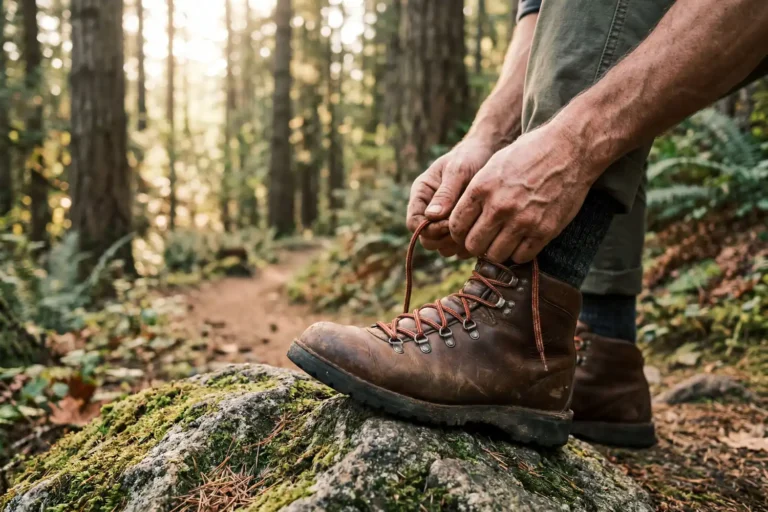
Can You Run in Hiking Shoes? What Works and What Hurts

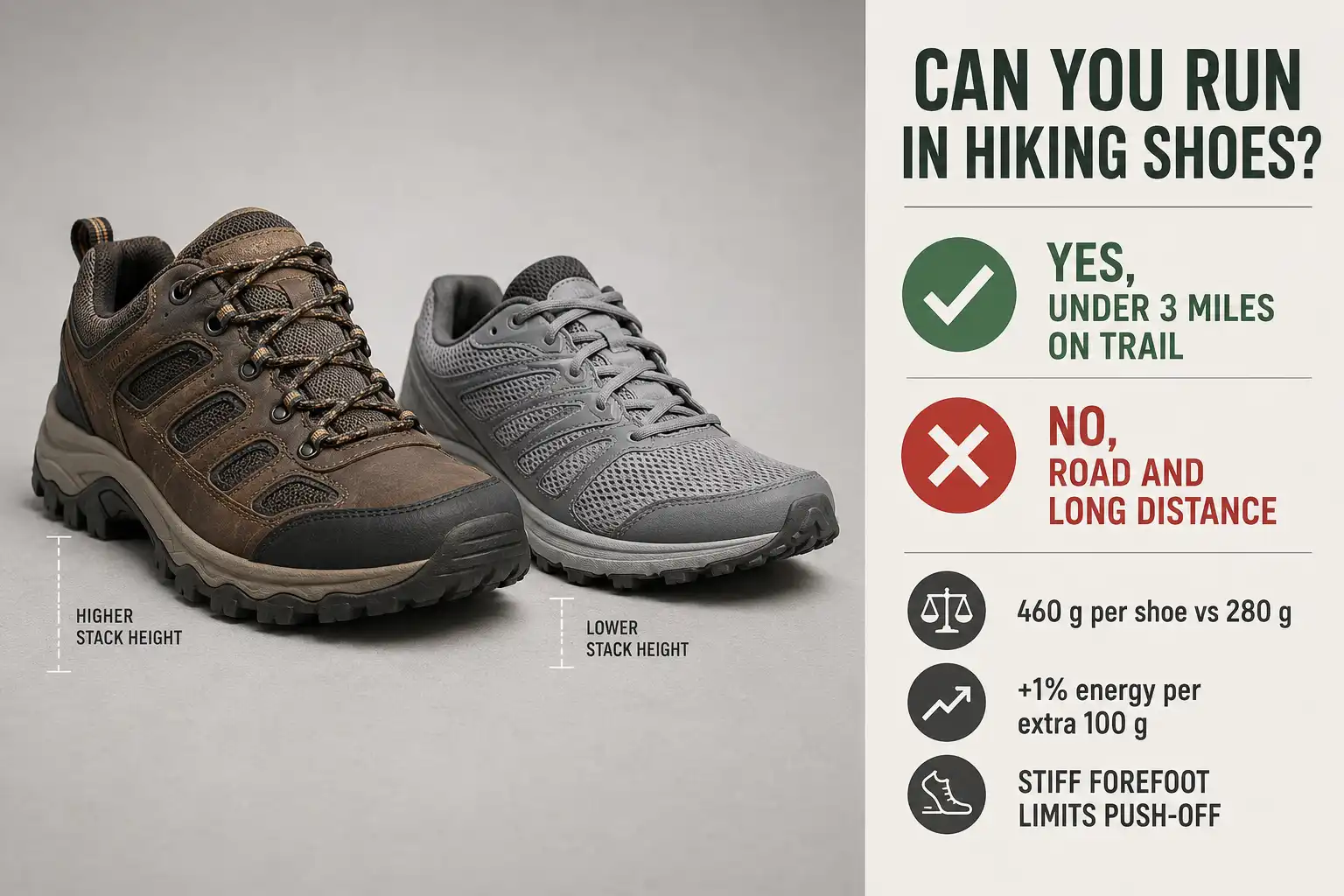
I get asked this a lot, usually by hikers who already own one solid pair of trail shoes and would rather not buy another. So this article covers whether hiking shoes handle running, how much they slow you down, when they work fine, and when you should switch.
Yes, you can run in hiking shoes. However, they suit short runs on dirt or rocky trail best, roughly under 3 miles. Hiking shoes weigh more, bend less at the forefoot, and breathe worse than trail runners. Therefore they cost you extra energy and raise blister risk once the distance climbs.
What makes a hiking shoe different from a trail running shoe?
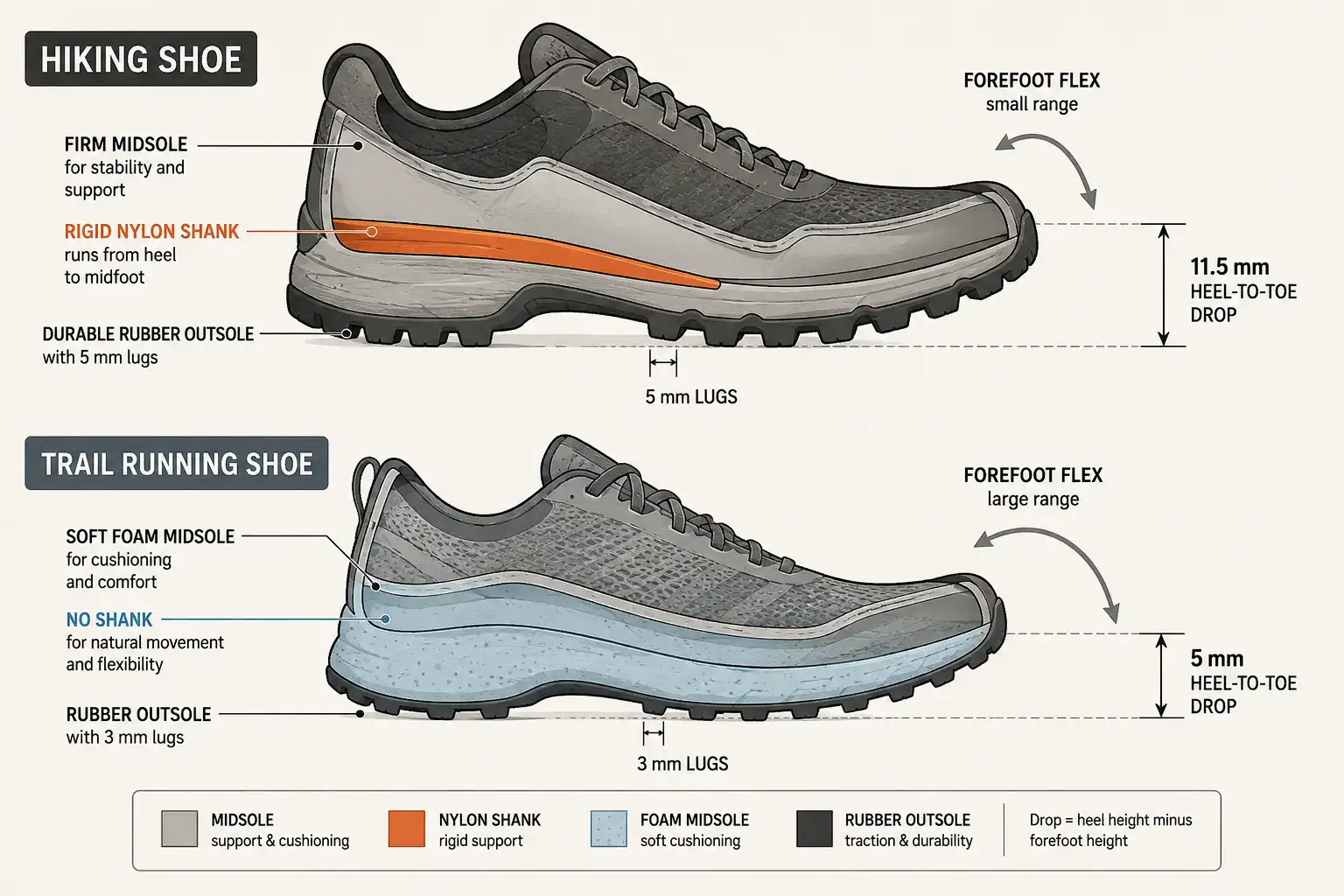
Four things separate them: weight, forefoot flex, upper breathability, and outsole rubber.
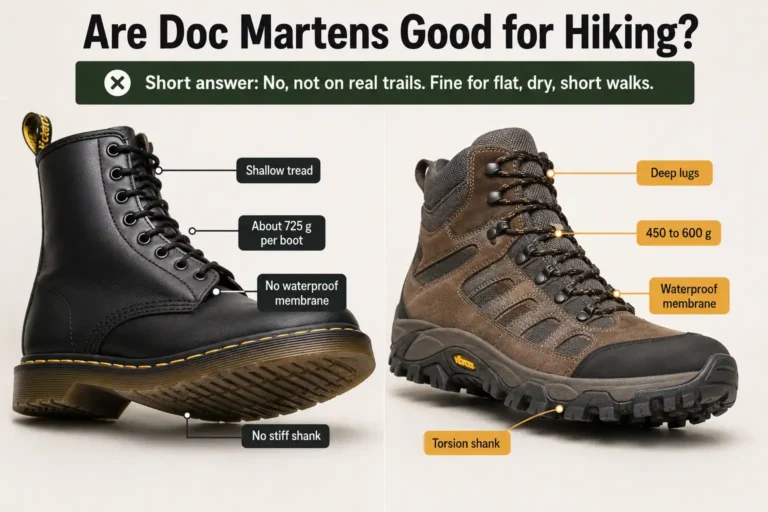
Weight comes first. Merrell lists the Moab 3 at 460 g per shoe, and reviewers who weigh their own pairs often measure closer to 2 pounds 2 ounces for the men’s pair. Salomon’s X Ultra 5 GTX lands near 1 pound 10 ounces per pair for men’s. Meanwhile a running-first trail shoe like the Hoka Speedgoat sits around 275 to 280 g per shoe. That gap of 150 to 200 g per foot drives most of what you feel.
Next comes stiffness. Most hiking shoes hide a nylon or TPU shank between the midsole and outsole. Gear testers describe the ideal hiking shoe as stiff from heel to midfoot but flexible up front. Running asks for more bend at the forefoot than hiking does, so a shank you never notice while walking becomes obvious once you push off at speed.
Drop differs too. The Moab 3 uses an 11.5 mm heel-to-toe drop, while many trail runners sit between 0 and 8 mm.
Finally, materials. Hiking shoes lean on leather, thick mesh, and waterproof membranes, plus harder rubber with about 5 mm lugs. Trail runners use thin mesh that drains and dries fast. As a result, hiking shoes protect better and vent worse.
Also learn: Hiking Pole Size by Height
How much slower will hiking shoes make you?
Plan on roughly 1% more energy for every extra 100 g per shoe. Researchers have measured this repeatedly since the 1980s. In a University of Colorado Boulder study, adding 100 g per shoe raised metabolic rate by 1.11%, and 3,000 m time trial results slowed by about 0.78% per 100 g added.
Now apply that to footwear. A 460 g hiking shoe carries roughly 180 g more per foot than a 280 g trail runner. Based on those published figures, you burn close to 2% more energy at the same pace, and a hard 3,000 m effort might run about 1.4% slower. On a 30 minute jog, that difference sits under a minute.
So the weight penalty stays small for casual running. It matters for racing. It fades to almost nothing on a short trail loop.
One caveat: those studies used level treadmill running and trained runners. Real trails add mud, roots, and climbs, so treat the numbers as a ballpark rather than a promise.
When running in hiking shoes works fine
Five situations make hiking shoes a reasonable running choice.
Jogging sections of a hike. This covers most cases. You are already wearing them, the flat stretch invites a trot, and nobody is timing you. Around the Kaptai hills I do this constantly on the easy descents.
Short runs under 3 miles. At that distance the weight penalty and the heat buildup barely register.
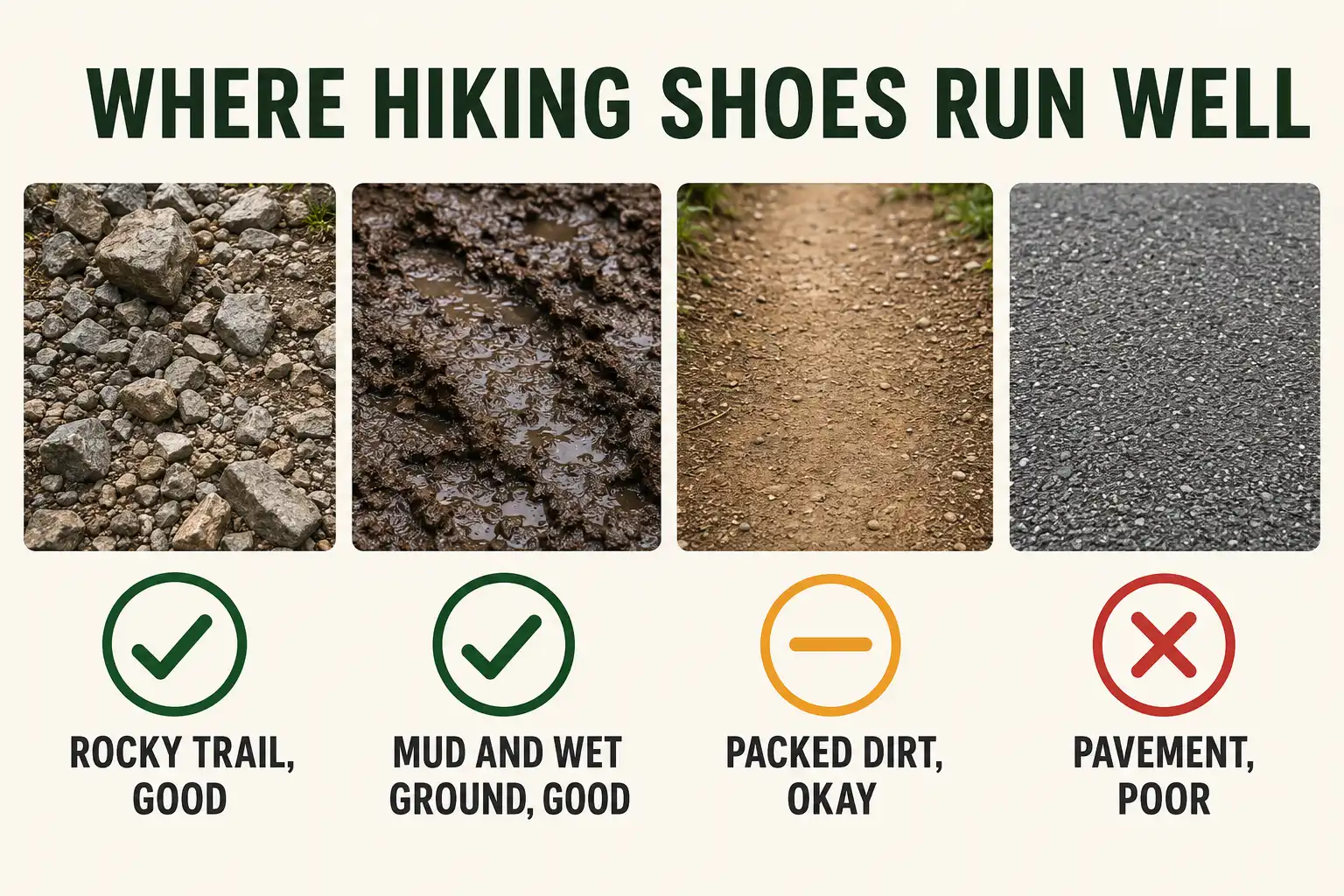
Rough, rocky, root-heavy trail. Here the firmer midsole and thicker outsole actually help. Sharp rock hurts less through a hiking shoe than through thin mesh.
Cold, wet, or muddy days. Deep 5 mm lugs bite soft ground well, and a waterproof upper stops chill soak-through.
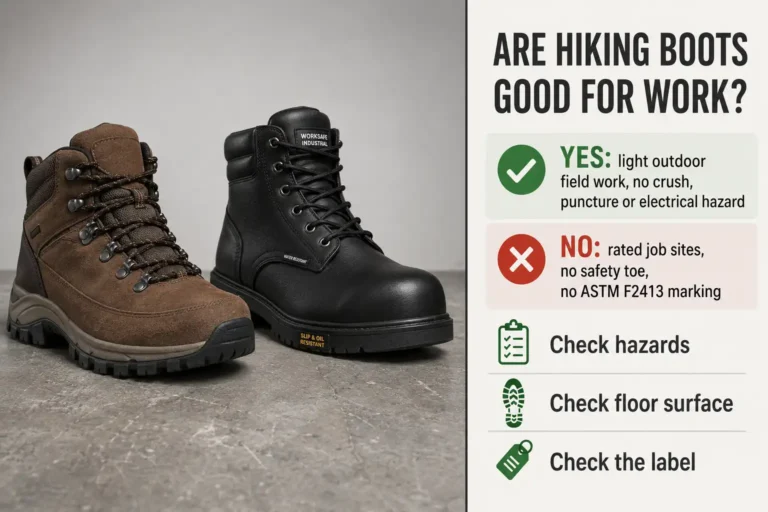
Modern trail-runner-style hiking shoes. Models like the Merrell Moab Speed 2 and Salomon X Ultra 5 borrow their build from running shoes. They sit within a few ounces of a true trail runner, so they run far better than a traditional leather hiker. If you are still weighing up low-cut trail shoes against taller boots, the weight difference matters more than most beginners expect.

When you should not run in hiking shoes
Skip them for road running, long distances, and speed work.
Pavement punishes hiking shoes. Hard rubber lugs grind down quickly on concrete, and the firm midsole gives back very little. Because of that, road miles feel harsh and wear your outsole fast. Hiking shoes do fine worn around town on city pavement, but running on asphalt is a different load entirely.
Distance is the second limit. Past roughly 5 miles, the extra mass on each foot adds up across thousands of steps, and tired legs start landing sloppily.
Heat is the third. Waterproof membranes trap warmth, and testers note that thicker uppers hold extra heat in summer. Sweaty skin plus friction equals blisters, so a Gore-Tex hiker is a poor pick for a hot afternoon run.
Also skip them for tempo runs and races. Additionally, hold off if you already carry an Achilles, calf, plantar fascia, or knee complaint, since new footwear plus new impact is a bad pairing.
Will running in hiking shoes hurt your feet or legs?
Hiking shoes do not cause injury on their own. However, running changes the load your feet handle in three ways.
First, force. Peak vertical force during running reaches about 2 to 3 times body weight, while walking sits closer to 1 to 1.5 times. Your shoes did not change, but the impact roughly doubled.
Second, swing effort. Extra mass sits at the end of a long lever, so each stride costs more to accelerate. This is the same effect behind that 1% per 100 g figure.
Third, push-off mechanics. A stiff forefoot resists bending, so your calf and the muscles under your arch work harder to complete each toe-off. Over a few miles, that shows up as calf tightness or arch soreness rather than sudden pain.
Higher drop plays both ways. An 11.5 mm heel takes strain off the Achilles, yet it also shifts load toward the knee. If you normally run in low-drop shoes, expect a period of adjustment either way.
Treat it as a new stimulus. Start with 1 to 2 miles, then build slowly.
Will running wear out your hiking shoes faster?
Yes, and the midsole usually fails before the outsole does.
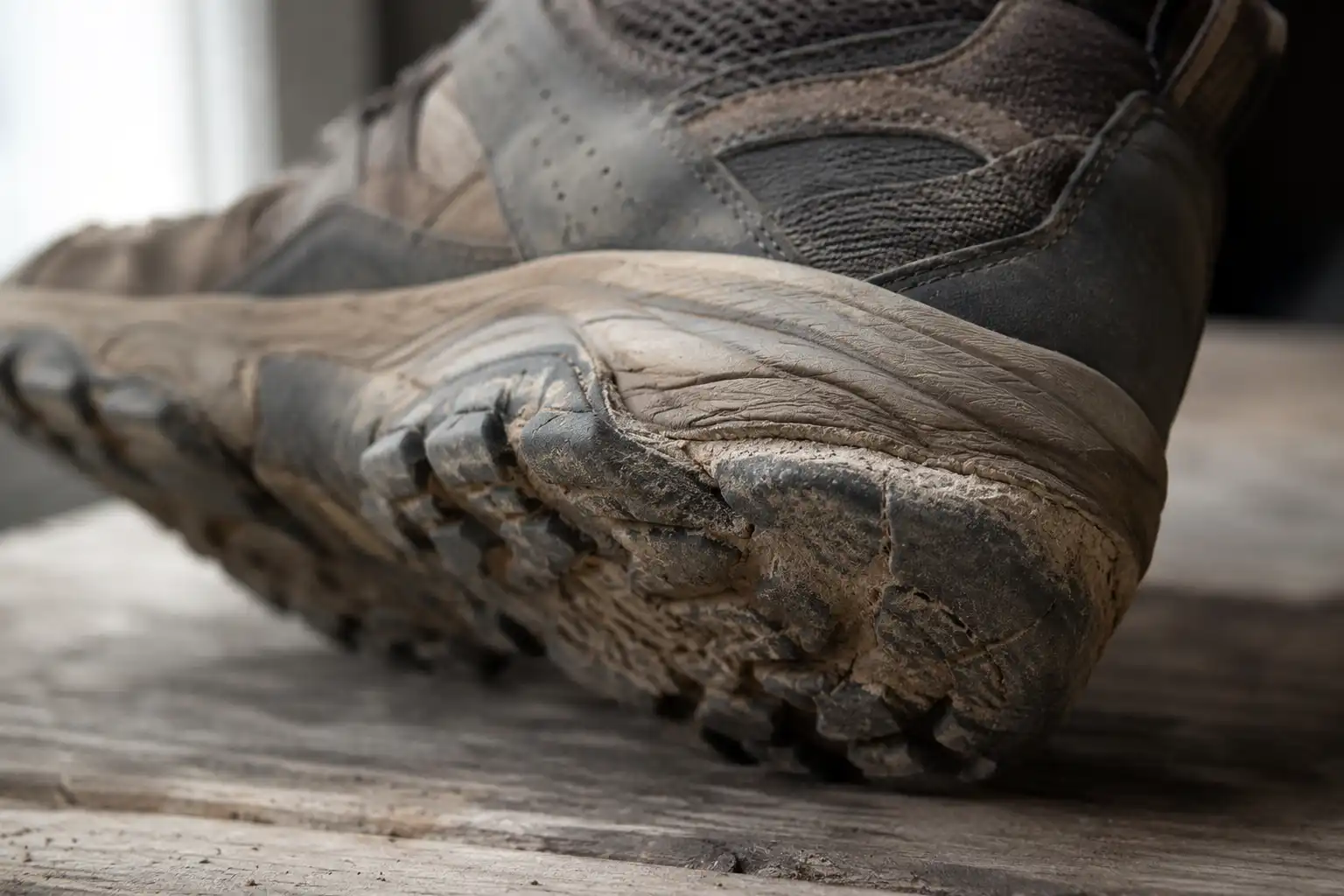
Hiking shoe outsoles use dense, hard rubber, so tread wear stays slow on dirt. Running load hits the midsole instead. EVA foam compresses under repeated impact, and running delivers far more impact per mile than walking. Once that foam packs out, the shoe loses both cushioning and the support you bought it for.
Mileage expectations help here. Hiking shoes commonly last 500 to 1,000 miles of hiking, while trail runners typically retire between 300 and 500 miles. Add running mileage and you pull that hiking lifespan down.
Pavement accelerates everything. Consequently, if you plan to run regularly, keep those runs on soft ground and save the shoes for their main job.
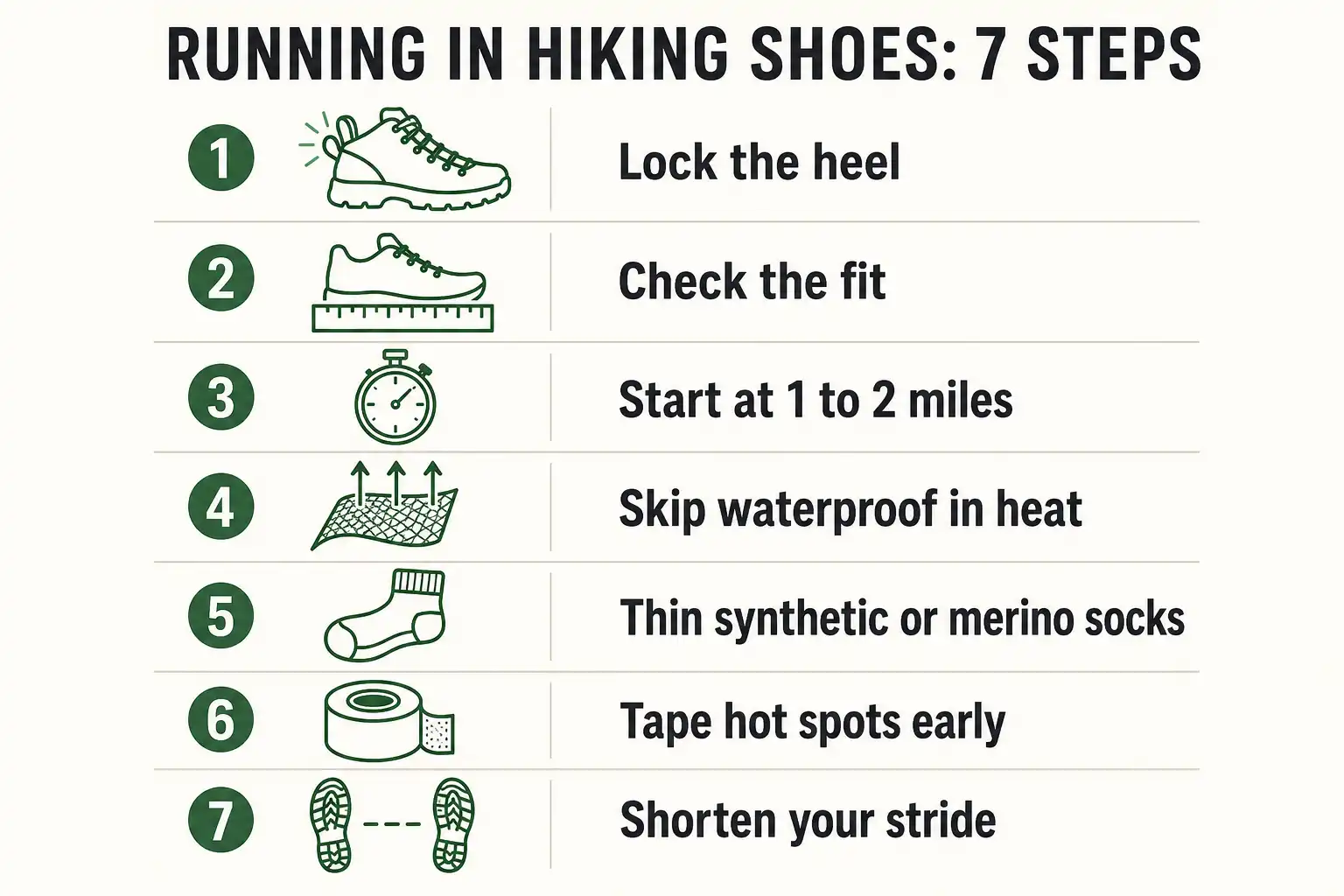
Seven ways to run in hiking shoes more comfortably
These steps solve most of the problems people run into.
- Lock your heel down. Heel lift creates friction, and friction creates blisters. A lacing pattern that pins the heel down and spares your toes takes 20 seconds and prevents most damage.
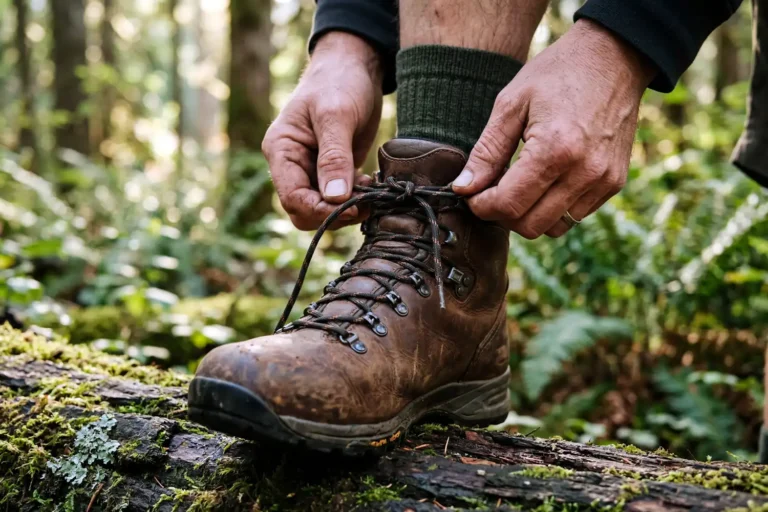
- Get the fit right first. Feet swell during hard efforts, so leave a thumb’s width of space at the toe and confirm the heel pocket grips once laced. Both checks come from the way a hiking shoe should sit on your foot at rest.
- Keep early runs short. One to two miles tells you where the hot spots sit.
- Choose the non-waterproof version in heat. Ventilation beats waterproofing whenever you are sweating hard.
- Wear thin synthetic or merino socks. Cotton holds sweat against your skin and bunches into folds that rub. Moisture handling is the main reason purpose-built hiking socks change anything on trail.
- Tape hot spots before they open. Athletic tape over a known trouble area stops blisters forming on your feet before the friction cycle starts.
- Shorten your stride slightly. Faster, smaller steps reduce impact peaks, which helps in a firmer shoe.
FAQs on Running in Hiking Shoes

Can you run a 5K in hiking shoes?
Can you run in hiking boots?
Should I just hike in trail running shoes instead?
Do waterproof hiking shoes work for running?
Final thoughts
Running in hiking shoes is fine within limits. Short trail runs, jogged descents, and rough terrain all suit them. Long road miles, hot afternoons, and any kind of speed work do not. If you find yourself running more than a couple of miles at a time, a dedicated trail runner will feel noticeably better and will cost your legs less. Until then, the shoes already on your feet handle the occasional run without drama.