Are Doc Martens Good for Hiking? Read This Before Your Next Trail

Doc Martens look tough, and a lot of people already own a pair. So the question comes up often. Can you actually hike in them? Below that, you get what Docs handle well, where they fail, and what to do if they are the only boots you own.
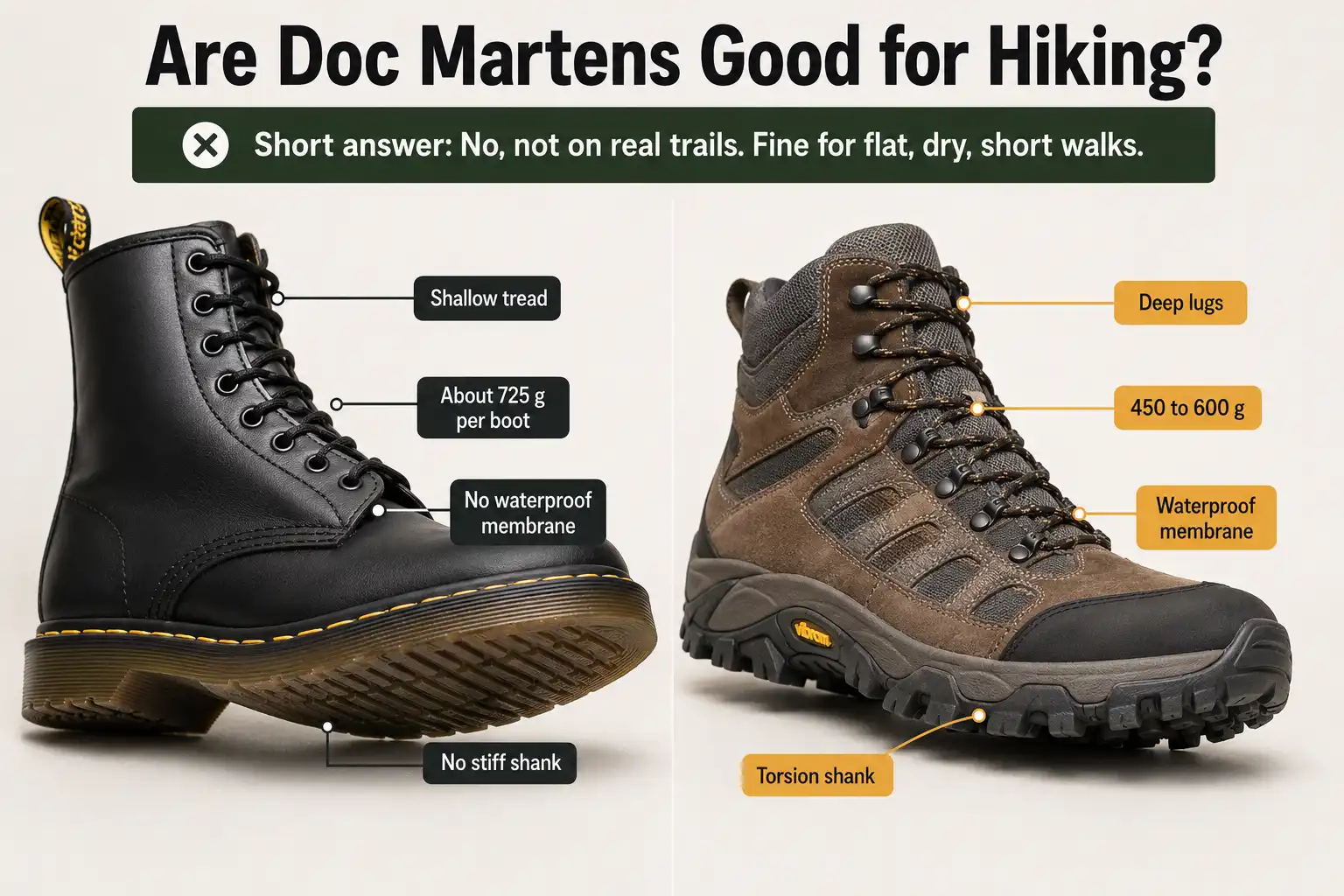
No, Doc Martens are not good for hiking on real trails. The tread is too shallow for mud and loose rock. On top of that, the leather soaks through in wet weather, and each boot weighs close to a pound and a half. For flat gravel paths and short dry walks, though, they hold up fine.
Are Doc Martens good for hiking?
Doc Martens are not good for hiking anything steeper or wetter than a park path. The classic 1460 was built as a factory work boot in 1960, and the design has barely changed since. Its strengths sit in durability and comfort on hard, flat, predictable ground.
Trails are none of those things. A trail throws loose gravel, wet roots, mud, stream crossings, and side-slope at your feet. Docs were never engineered for that mix.
I should be upfront here. I do not own a pair of Docs myself. But I lead people up trails around Bandarban and Rangamati often enough, and every season a few visitors show up at the trailhead in them. So I have watched exactly how they perform on wet rock, and the pattern repeats every time.
Also learn: How to choose Hiking Pants
What Doc Martens get right outdoors
Docs do have genuine strengths, and ignoring them would be unfair. The leather is thick and takes abuse well. Sharp gravel and thorny brush do not chew through it the way they chew through mesh trail runners.
Construction helps too. Dr. Martens builds most of its classic lines with a Goodyear welt that gets heat sealed to the sole. Because of that welt, a good cobbler can resole the boots instead of throwing them out. Very few hiking boots under $200 offer that.
The AirWair sole material also earns some credit. Dr. Martens makes it from PVC, and the brand notes it resists oil, fat, and abrasion while offering decent slip resistance. On a smooth surface, that grip is real.
Finally, the 8-eye shaft covers your ankle. Full coverage keeps grit, ticks, and small stones out of your socks. That alone puts Docs ahead of low sneakers for a rough walk.
Why the AirWair sole struggles on a trail
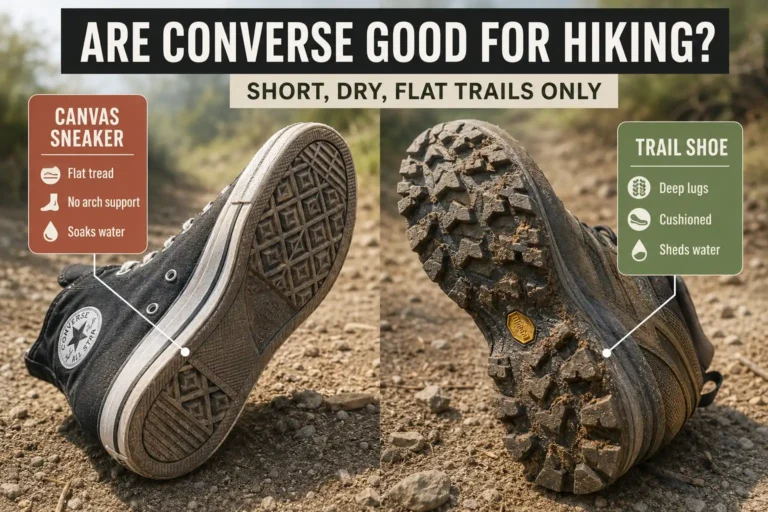
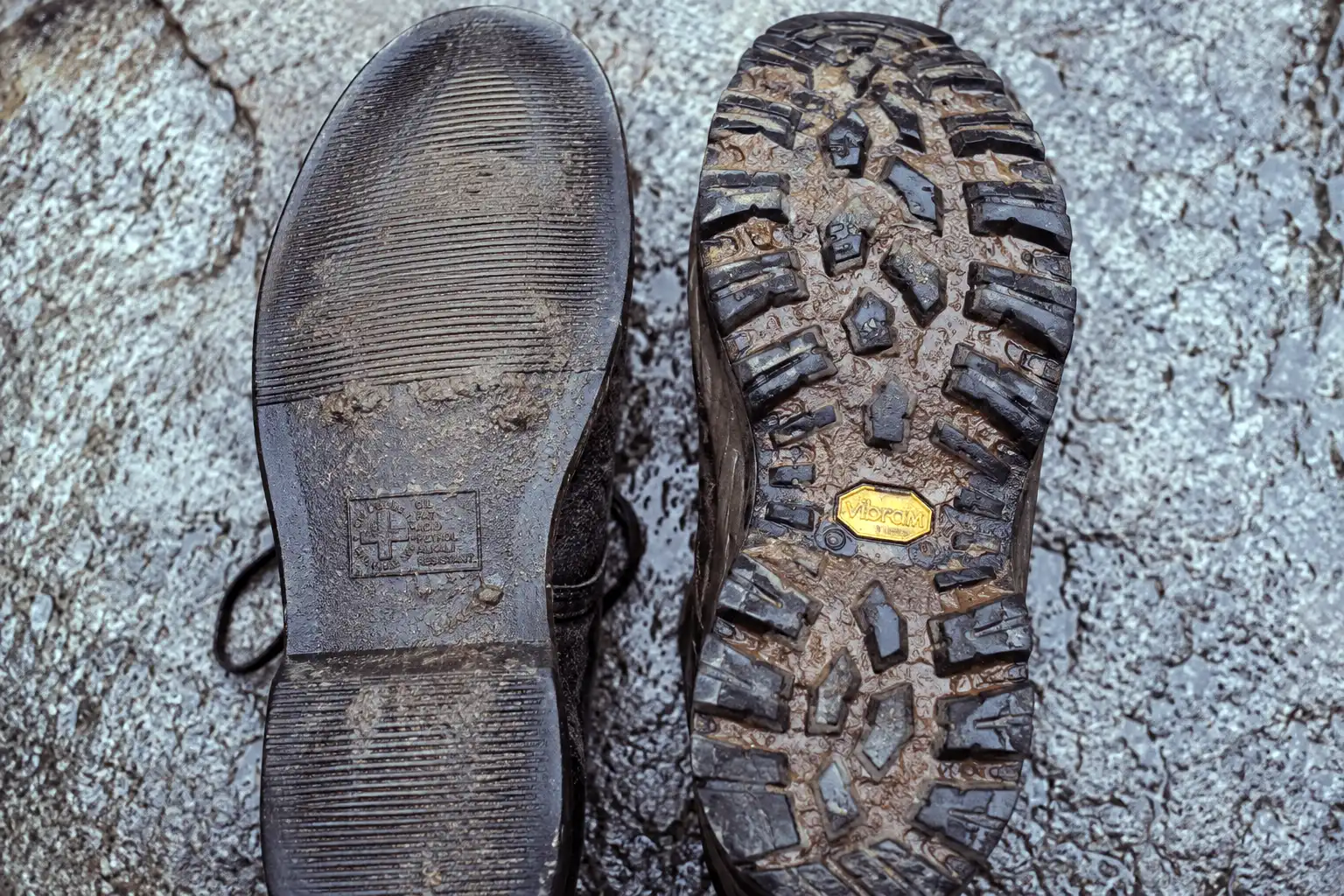
The sole is the single biggest reason Docs fail on trails. Look at the bottom of a 1460 and you see a shallow, closely spaced pattern. Then compare it to a hiking outsole, which uses deep lugs with wide gaps between them.
Those gaps matter more than the rubber does. Deep lugs bite into soft ground and shed mud as you walk. A shallow tread packs full of mud within a few hundred meters, and after that you are sliding on a smooth plate.
Slip resistance also means something specific here. Dr. Martens tests its slip-resistant work models for wet indoor floors, the kind found in kitchens and hospitals. That rating says nothing about wet granite or a muddy descent.
Underfoot support falls short as well. Hiking boots use a stiff shank between the insole and outsole to stop the boot twisting on uneven rock. Boot reviewers who examine the classic 1460 consistently report no shank in there. So the boot folds around whatever it lands on, and your ankle absorbs the rest.
Are Doc Martens waterproof enough for hiking?
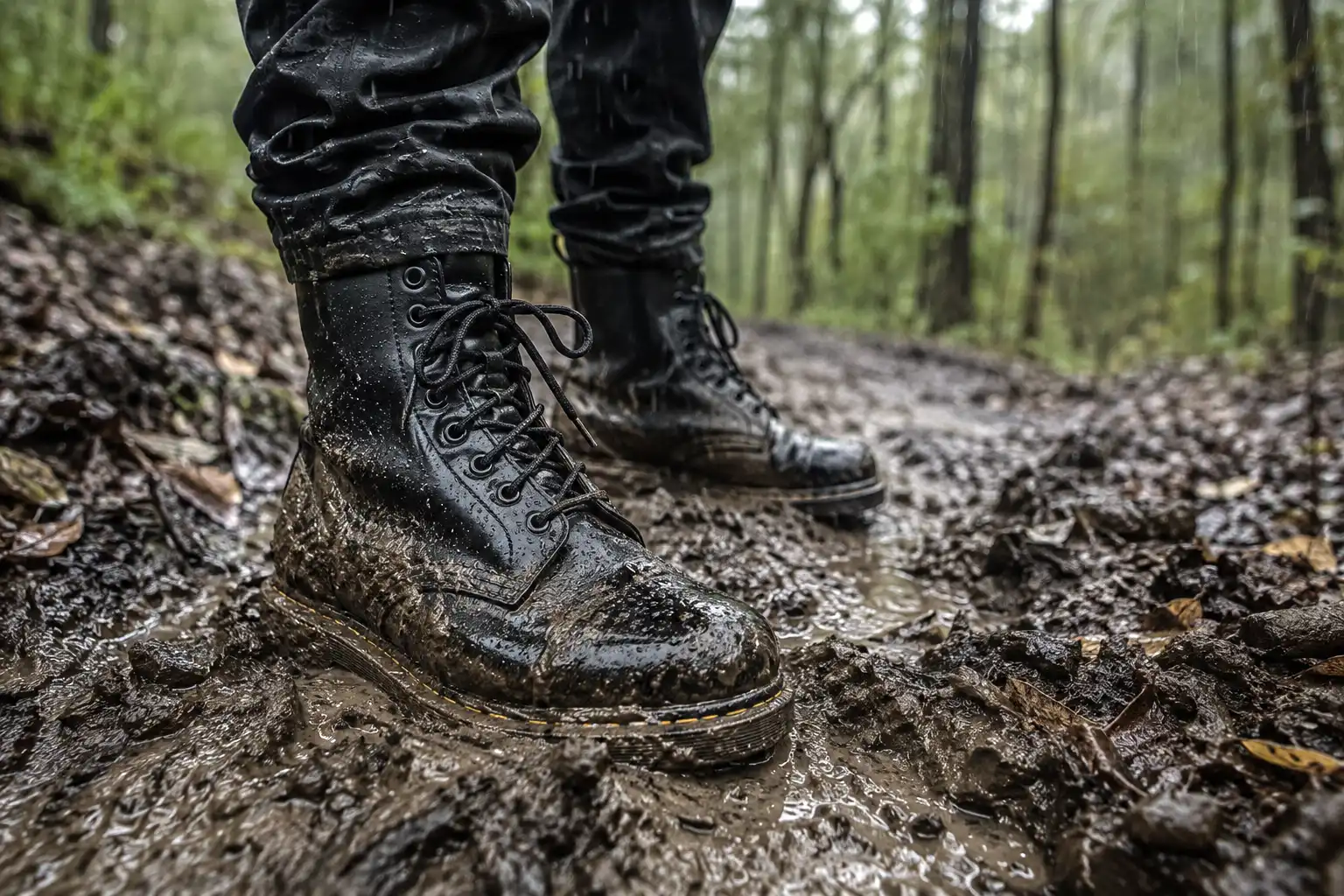
Standard Doc Martens are not waterproof. Most classic models use smooth or greasy leather with a light wax finish, which handles a splash but soaks through in sustained rain. Dr. Martens actually sells waterproof styles as a separate category, which tells you the regular ones are not.
Wet leather then creates two problems. First, the boots get noticeably heavier as the leather absorbs water. Second, they dry slowly, so an overnight trip means starting day two in damp boots.
Damp leather plus friction equals blisters. That combination causes more early trip endings than any other footwear issue I see.
You can improve things with wax or dubbin, and the same care rules apply that keep leather hiking boots watertight without stiffening them. Still, treatment only slows water down. It does not seal a boot that was never built to be sealed.
How much do Doc Martens weigh compared to hiking boots?
A men’s classic 1460 weighs roughly 1 pound 9 ounces, or about 725 grams, per boot. Women’s sizes land closer to 1 pound 5 ounces. Sizes and models vary, so treat those numbers as a ballpark.
Now put that next to a modern mid-cut hiking boot. Most sit between 450 and 600 grams per boot, and lightweight trail shoes drop under 400 grams.
That gap sounds small on paper. On the trail it compounds. Every extra 100 grams on your foot costs far more energy than 100 grams in your pack. That happens because you lift and swing your feet thousands of times per hour.
So on a 10 kilometer hike, Docs feel fine for the first hour. After that, your hip flexors start complaining, and your pace drops.
Do Doc Martens give real ankle support?
Doc Martens give ankle coverage, not ankle support, and the two get confused constantly. The 8-eye shaft is unlined and fairly soft above the heel counter. It wraps your ankle without bracing it.
Real support comes from three things working together: a stiff heel counter, a torsionally rigid midsole, and a lacing system that locks your heel down. Docs deliver the first one reasonably well. The other two are missing.
Lacing is the weak link. Docs use plain round eyelets all the way up, with no locking hooks and no heel-lock hardware. As a result, tension slides around, and your heel lifts on climbs.
Combat boots share a similar silhouette but handle rough ground differently. The same logic applies when people ask whether Chelsea boots like Blundstones survive a trail. Height alone never equals support.
The break-in problem nobody warns you about
New Docs need a genuine break-in period, and hiking during that window is a bad idea. The leather starts stiff, and the internal heel edge sits right where your Achilles tendon runs. Dr. Martens even addresses the break-in openly in its own size guide.
Most owners report two to four weeks of short daily wear before the boots soften. Some report longer. During that stretch, heel and ankle rubbing is common.
A trail multiplies that friction. Downhill sections push your foot forward, climbs pull your heel up, and both actions grind skin against stiff leather. Knowing how to stop hot spots turning into blisters helps, but prevention beats treatment every time.
So if your Docs are new, keep them off trails entirely. Break them in on sidewalks first.
When Doc Martens are actually fine outdoors
Docs work perfectly well for easy, dry, flat walking. I would not hesitate in these situations:
- Gravel and packed dirt paths in a park or nature reserve
- Flat woodland trails in dry weather, under about 5 kilometers
- Campground walking, firewood collecting, and general camp chores
- Cool weather walks where breathability matters less
- Urban hikes, waterfront paths, and paved rail trails
Notice the pattern. Flat, dry, short, and predictable. Remove any one of those and the calculation changes.
Cold weather actually suits Docs better than heat. Leather traps warmth, which helps in winter and hurts badly in humidity. Here in the hills around Kaptai, heavy leather boots turn into a swamp by mid morning.

Are Dr. Martens hiker style boots any better?
The hiker style Dr. Martens models are marginally better, but the name promises more than the boot delivers. Dr. Martens groups styles like the Combs and Combs Tech under a hiker style heading. Yet its own product pages describe them as casual boots with hiker inspired laces.
Read that wording carefully. The brand markets the look, not trail performance.
Some upgrades are real, to be fair. Certain Combs Tech versions use Cordura canvas and a water resistant Republic leather, and the whole boot feels lighter than a 1460. Padded collars also reduce heel rub.
However, the sole stays the same PVC platform with a shallow grooved pattern. Several Combs models also switch to cemented construction rather than a welt, so you lose the resoling benefit. In short, you get a lighter Doc that looks like a hiker. You do not get a hiking boot.
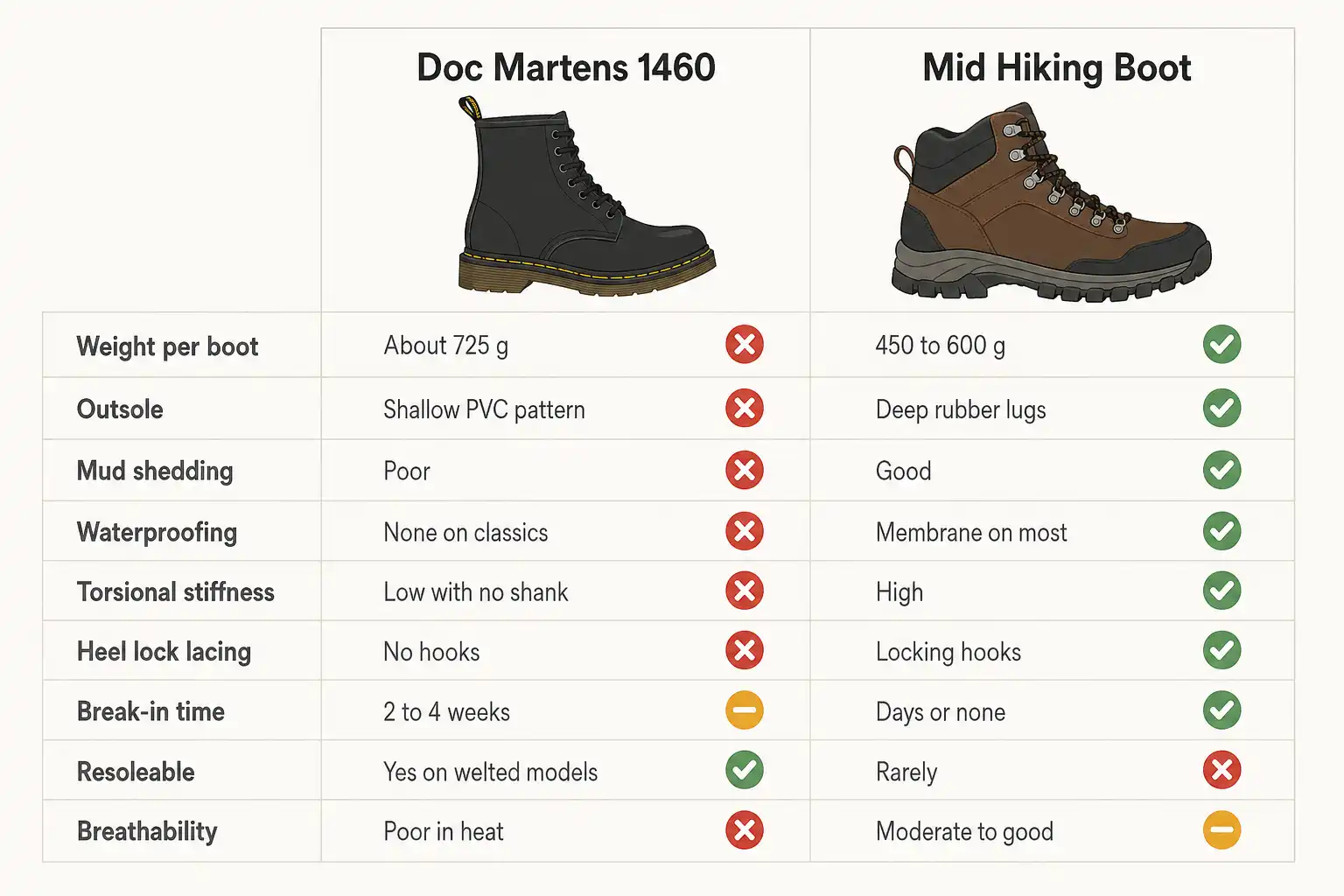
Doc Martens vs hiking boots: side by side
| Feature | Doc Martens 1460 | Mid hiking boot |
|---|---|---|
| Weight per boot | About 725 g | 450 to 600 g |
| Outsole | Shallow PVC pattern | Deep rubber lugs |
| Mud shedding | Poor | Good |
| Waterproofing | None on classics | Membrane on most |
| Torsional stiffness | Low, no shank | High |
| Heel lock lacing | No hooks | Locking hooks |
| Break-in | 2 to 4 weeks | Days, often none |
| Resoleable | Yes on welted models | Rarely |
| Breathability | Poor in heat | Moderate to good |
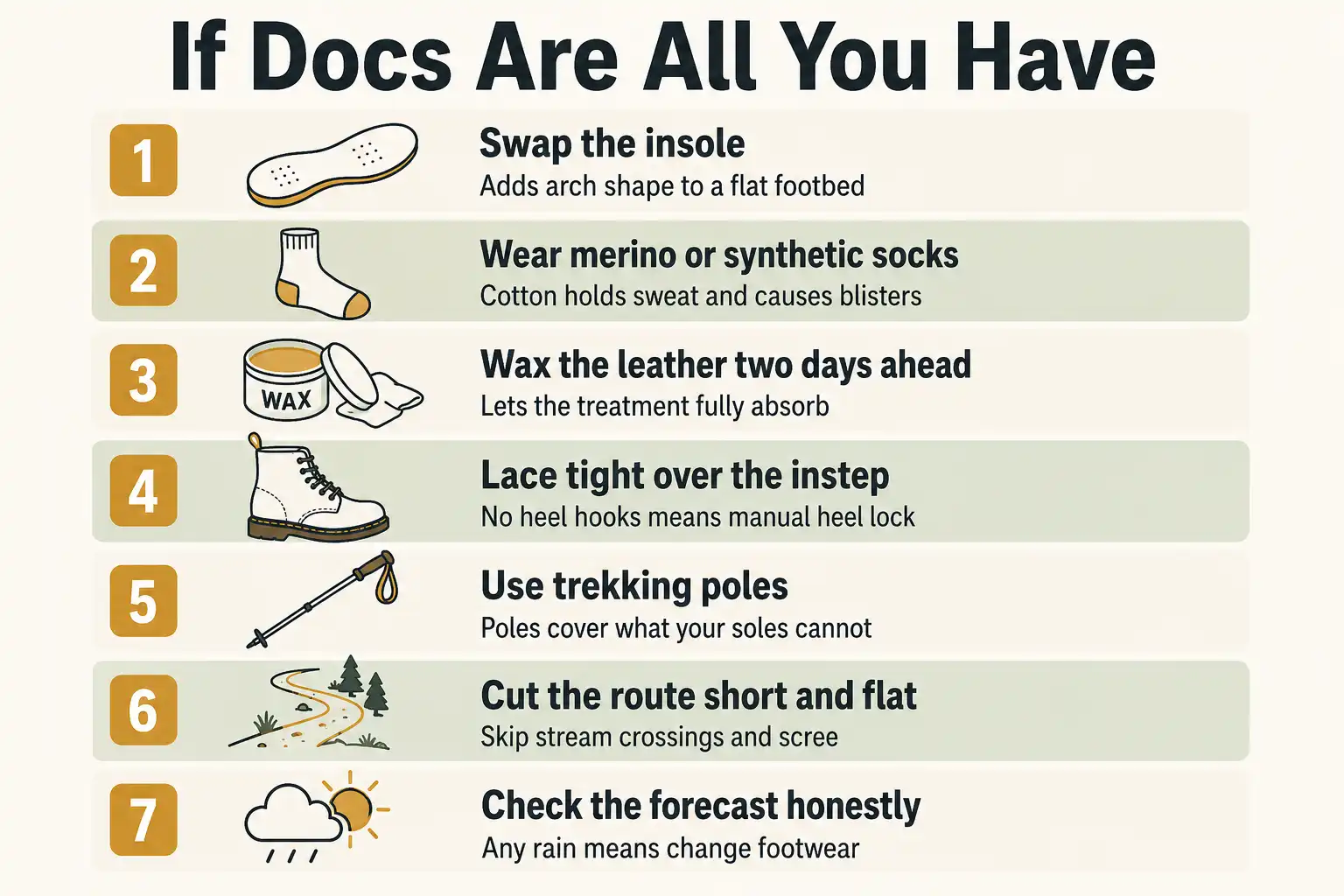
How to make Docs safer if they are all you have
Sometimes you travel light and Docs are what you packed. Then work with what you have and shrink the risk.
Swap the insole. A supportive aftermarket insole adds arch shape and cuts the flat platform feeling. This is the cheapest upgrade available.
Wear proper hiking socks. Merino or synthetic socks manage moisture and reduce friction. Cotton does the opposite.
Wax the leather before you go. Apply a leather conditioner or wax two days ahead so it absorbs fully.
Lace tight over the instep. Since Docs have no heel lock hooks, take up the slack across the middle eyelets and finish firm at the top.
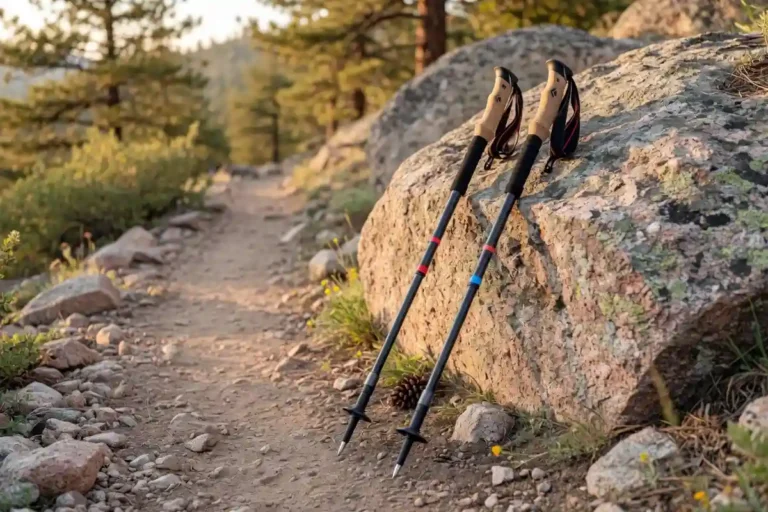
Use trekking poles. Poles compensate for weak traction better than anything else. On slick descents they carry the load your soles cannot.
Cut the route short. Pick a shorter, flatter trail. Skip stream crossings and steep scree.
Check the forecast honestly. Any rain in the window, and you should postpone or change footwear.
What I would buy instead
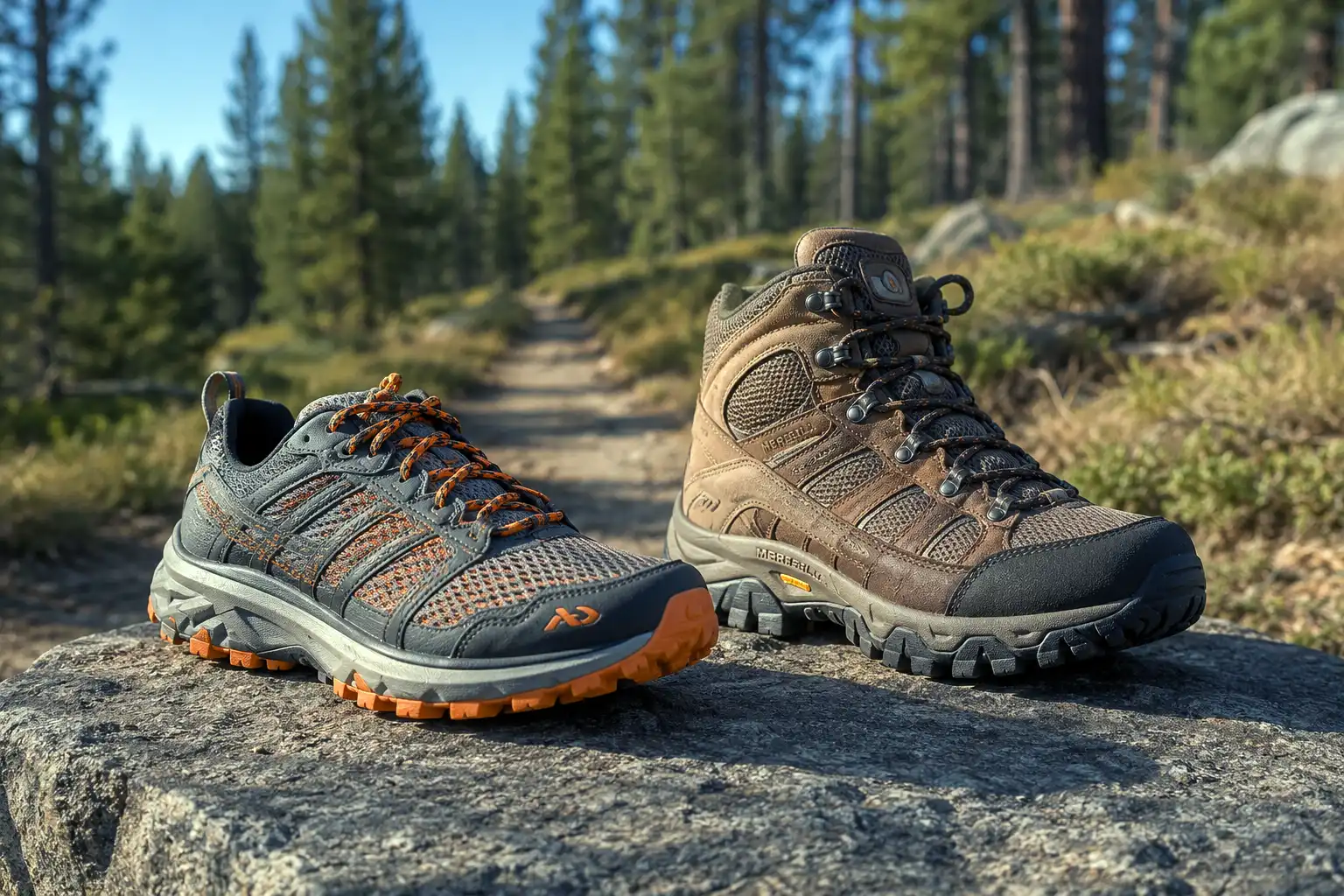
Buy a mid-cut hiking boot or a trail shoe, depending on your terrain and load. Both cost less than a pair of Docs in most markets, which surprises people.
For day hikes with a light pack, trail shoes win. They breathe, they dry fast, and they weigh half as much. For rocky ground, heavier packs, or ankle-deep mud, a mid-cut boot earns its keep. Working through the boots versus shoes for beginners will point you toward the right category quickly.
Whatever you choose, prioritize fit above brand. Your heel should stay locked while your toes keep a thumb width of room ahead. Getting hiking boot sizing right prevents more trail pain than any feature on a spec sheet.
Then break them in properly before a big day out. That step is not optional.
FAQs

Can you hike a mountain in Doc Martens?
Are Doc Martens good for walking long distances?
Do Doc Martens have good grip?
Are vegan Doc Martens better for hiking?
Should I waterproof my Doc Martens before a hike?
The bottom line
Doc Martens earn their reputation as durable, comfortable, city-tough boots. On a trail, that reputation does not transfer. Shallow tread, real weight, no shank, and water-hungry leather add up to one thing. They give you a boot that works against you once the ground turns soft or steep.
Keep them for gravel paths, campgrounds, and dry flat walks. Buy something purpose-built for anything harder. Your knees and your ankles will notice the difference within the first mile.