Can a Beginner Hike Volcano Villarrica? What You Need to Know

Villarrica is the smoking cone above Pucón in southern Chile, and thousands of first-timers reach its crater rim every season. Plenty of others turn back. This guide covers the fitness you actually need, the current CONAF rules, the alert-level system, real costs, gear, and a training plan that works.
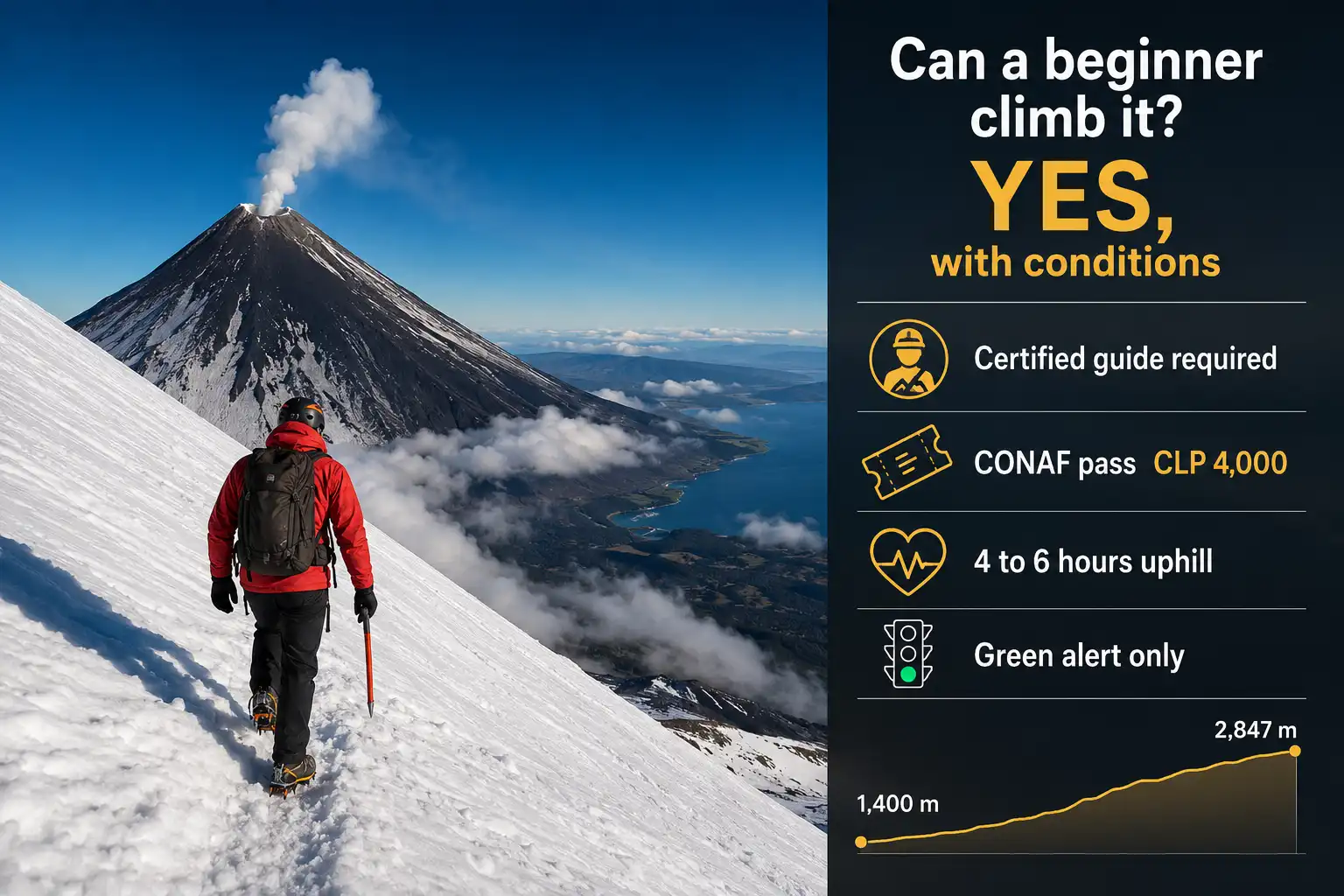
Yes, a beginner can hike Volcano Villarrica. However, you need a certified guide and solid cardio fitness. The standard route requires no climbing skill at all. Still, it gains roughly 1,400 meters in one continuous push, so you should be comfortable walking uphill for five hours straight.
How hard is the Villarrica volcano hike?
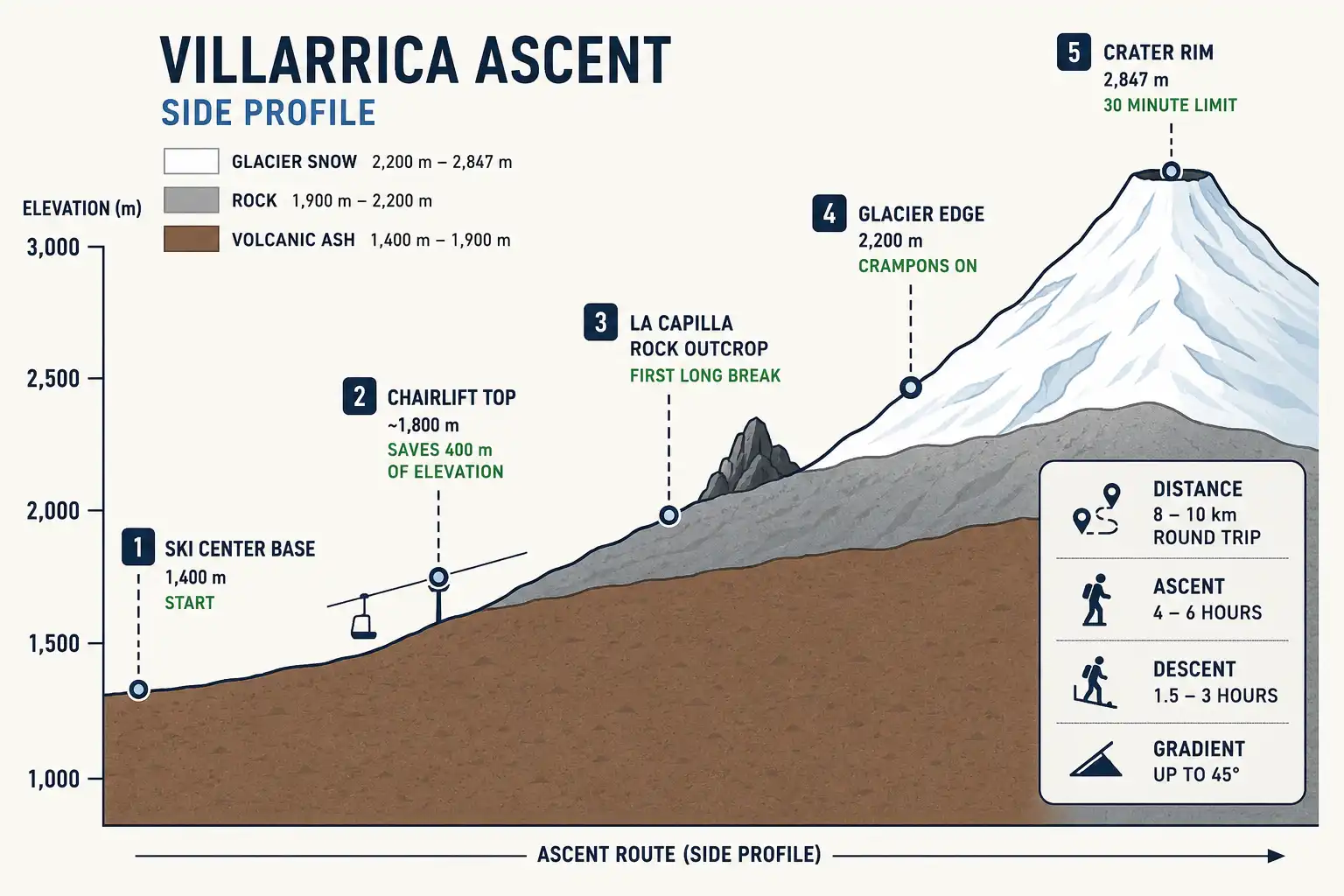
The Villarrica hike is physically demanding but technically simple. You start near the ski center at about 1,400 meters and finish at the 2,847 meter crater rim. That works out to roughly 1,400 to 1,500 meters of gain across 8 to 10 kilometers round trip.
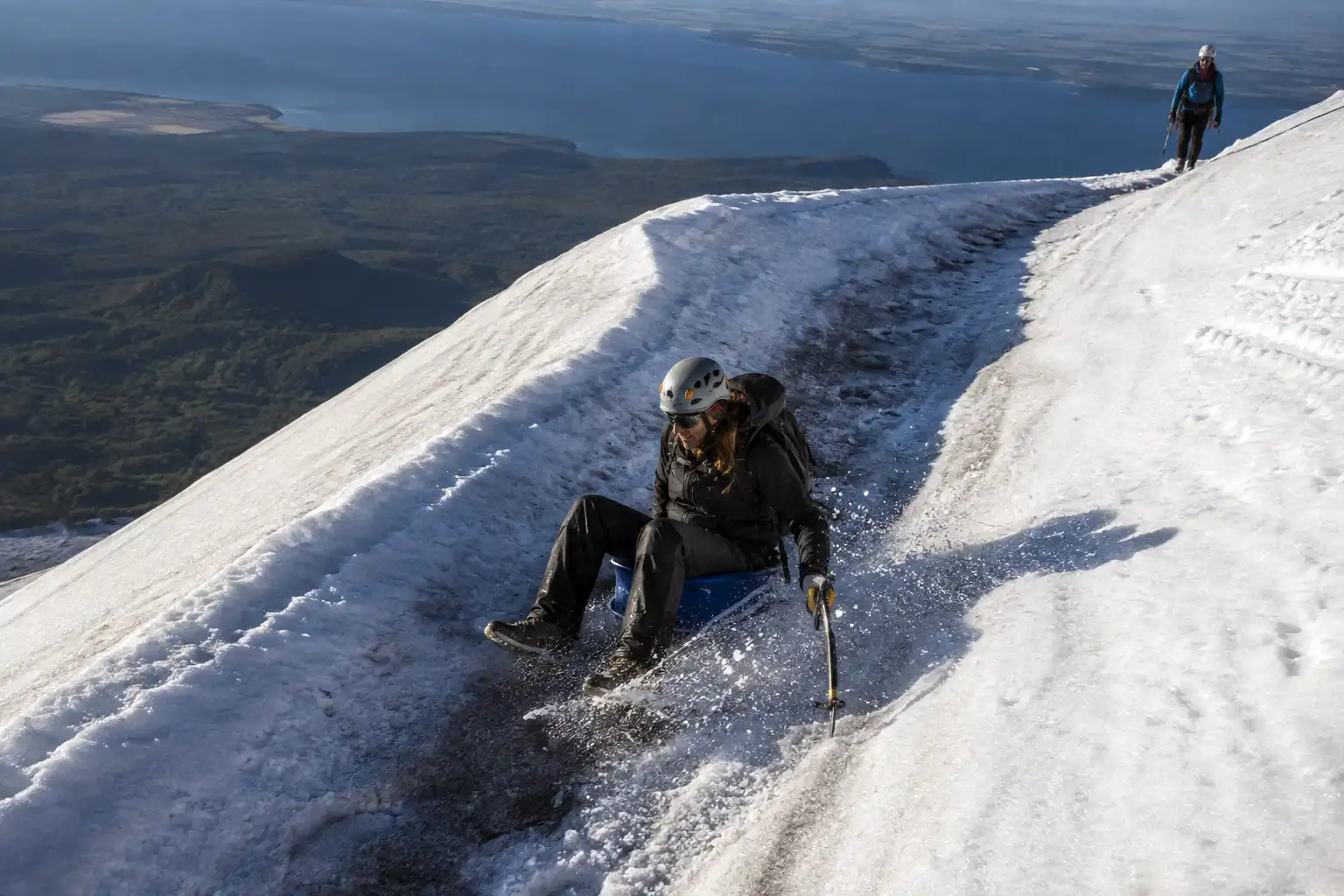
Most groups walk 4 to 6 hours up. Afterward, the descent takes 1.5 to 3 hours, mainly because you slide the snow sections on a plastic sled. Add transport from Pucón, and the day runs 8 to 11 hours door to door.
Gradient is the real problem. Above 2,000 meters the cone steepens to somewhere between 30 and 45 degrees, and almost no flat ground exists anywhere on the route. For perspective on that number, it helps to know what counts as a big climbing day on ordinary trails. Villarrica sits at the upper end of that range, compressed into a single morning.
Guides also set a hard cutoff. Reach the summit by roughly 13:30, or the group turns around. Therefore, guides send slow walkers down even when those hikers still feel fine.
Read next: Day Hiking Essentials
Do you need climbing experience to hike Villarrica?
No, the standard route demands no previous mountaineering experience. Guides hand out crampons and an ice axe at the base, then teach the basics during the walk. Ropes, exposed scrambling, and crevasse crossings do not feature on the normal line.
That said, the gear is genuine mountaineering equipment for a reason. Snow above 2,200 meters turns hard and fast in the cold morning hours. Consequently, a slip without crampons would carry you a long way down a smooth slope. Good guides watch foot placement closely and stop the group when snow gets too icy.
One honest note before we go further. I have not stood on the Villarrica crater rim myself. My hill experience comes from multi-day treks in Bandarban, including Keokradong and Saka Haphong, so I know exactly what a long unrelenting climb does to untrained legs. For the Villarrica specifics, I cross-checked the published CONAF and SERNAGEOMIN rules against what licensed Pucón operators currently advertise.
What are the rules for climbing Villarrica in 2026?
Chile’s park service controls this mountain tightly, and the rules are not suggestions. Every climber must buy an ascent pass in advance through pasesparques.cl, selecting the “Ascensiones Volcán Villarrica” event specifically. That pass costs CLP 4,000 per person.
Next comes registration. You sign in at the CONAF control booth in the Rucapillán sector between 07:00 and 09:00 on climb day. Your guide handles the group paperwork, though you personally sign a risk acceptance form.
Three further rules shape the day:
- Who may climb. CONAF authorizes summit access only for licensed tour operators, federated athletes holding a valid FEACH credential, and mountaineers who arrange documented experience with the park in advance by email.
- Time at the top. Groups may stay at the crater rim for a maximum of 30 minutes.
- Route discipline. Everyone must stay on the official authorized route during the ascent, the summit stop, and the descent.
So for nearly every visitor, hiring a licensed Pucón agency is the only legal way to the summit. Park staff turn back independent climbers without accreditation at the control booth.
How does the volcano alert level change your plans?
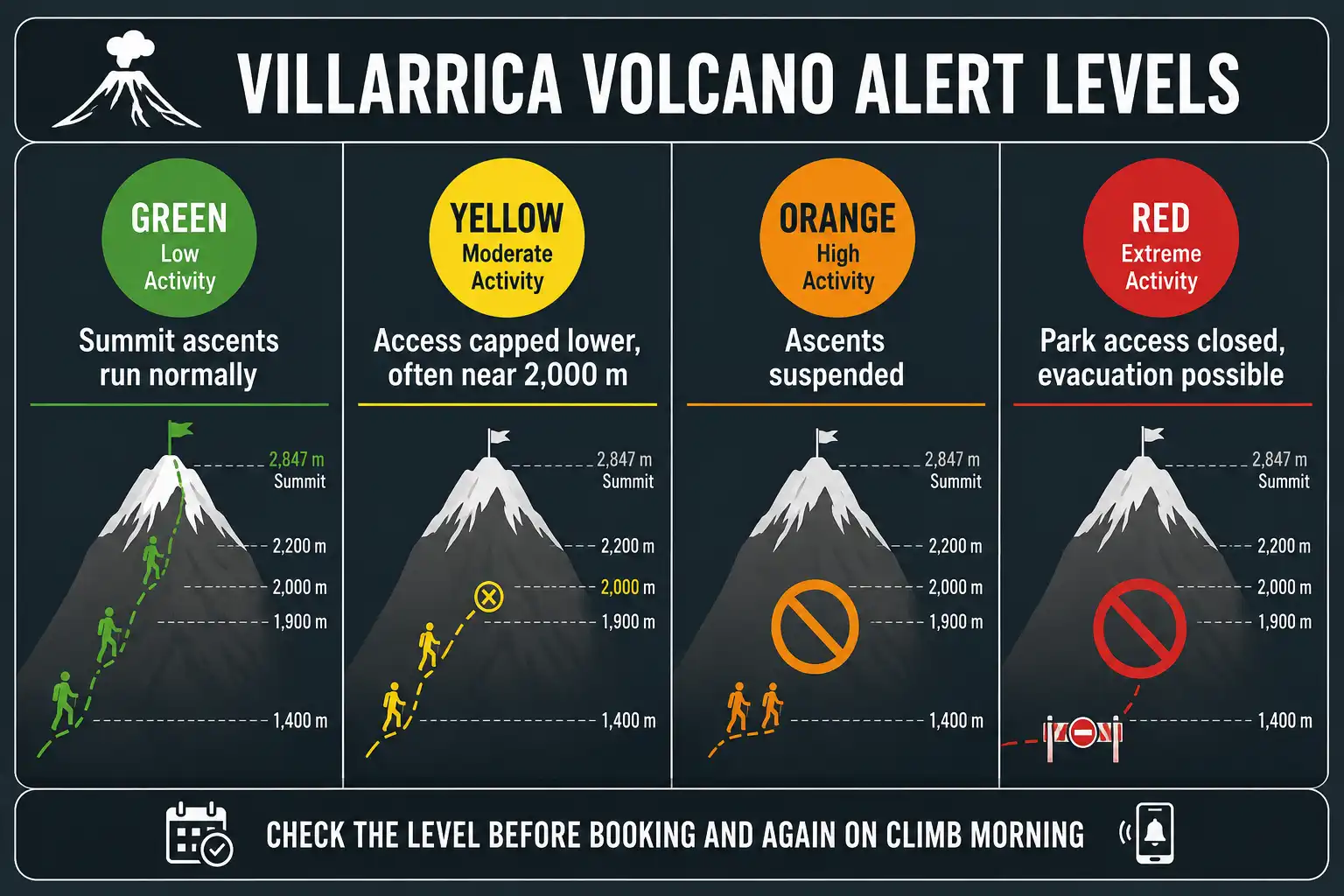
The alert level decides whether the crater rim opens at all. SERNAGEOMIN, Chile’s geological and mining service, runs a four-color scale: green, yellow, orange, and red.
Green means summit ascents normally proceed as scheduled. At yellow, rangers usually cap access lower on the mountain, often near the rock outcrop called La Capilla around 2,000 meters. Orange or red stops climbs entirely.
Villarrica held a green alert through August 2026. Even so, the mountain stays busy underneath. On 18 August 2026, SERNAGEOMIN reported persistent nighttime crater incandescence with a column roughly 40 meters above the crater floor, yet kept the technical alert at green.
Check the level twice. Look it up before you book, then ask again on the morning of the climb. A reputable agency answers that question instantly and without vagueness. If the answer feels evasive, book elsewhere.
What fitness level does a beginner need?
You need enough fitness to climb stairs steadily for four to five hours. That remains the single most useful benchmark for this hike, because the route simply never levels off.
Some practical markers to test yourself against:
- You can finish a 15 km day hike with 800 to 1,000 meters of gain, then feel normal the next morning.
- You can hold a conversation while walking uphill at a slow steady pace.
- Carrying a 5 kg daypack for six hours leaves your shoulders and lower back pain free.
Altitude matters less here than on Kilimanjaro or Everest Base Camp. At 2,847 meters, most people notice mild breathlessness and nothing more serious. Still, two easy walks around Pucón beforehand help your body settle, and getting ready for thinner air pays off if you arrive straight from sea level.
Honestly, cardiovascular endurance decides this climb. Leg strength helps, but lungs and pacing matter more.
A six-week training plan for Villarrica
Six focused weeks turn a nervous beginner into someone who finishes comfortably. Here is a simple structure that fits around normal life.
Weeks 1 and 2. Walk 45 to 60 minutes on hills or stairs, three times weekly. Then add two short sessions of squats, lunges, and calf raises.
Weeks 3 and 4. Increase to 90 minutes of hill walking twice a week. Afterward, add one longer weekend hike of 12 to 15 km carrying a loaded daypack.
Weeks 5 and 6. Complete one stair session totaling 500 to 700 vertical meters, plus a long hike with at least 800 meters of gain. Finally, taper during the last four days before you fly.
Focus on continuous uphill time rather than distance. Because Villarrica is one long climb without recovery sections, your legs need endurance under load instead of speed. Learning to climb steadily without burning energy too early will do more for your summit chances than any gym program.
What gear does the tour provide, and what should you bring?
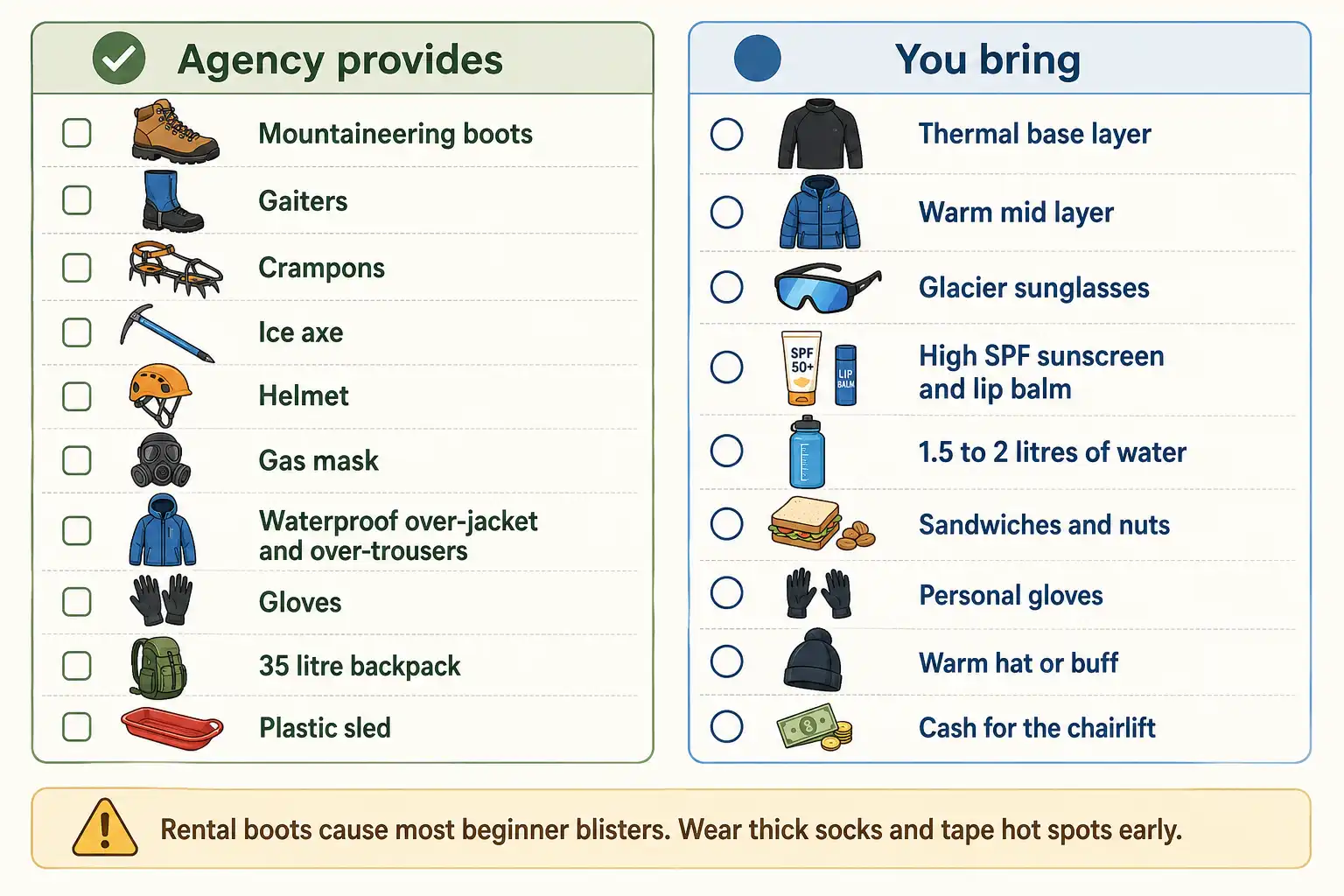
Operators supply all the technical mountaineering equipment, which is precisely why beginners can attempt this climb.
Typically included in the tour price:
- Mountaineering boots, gaiters, and crampons
- Ice axe and helmet
- Gas mask or acid gas filter for the crater rim
- Waterproof over-jacket and over-trousers
- Gloves, a 35 liter backpack, and a plastic sled for the descent
Bring yourself:
- Thermal base layer plus a warm mid layer
- Sunglasses with strong glare protection, since snow and glacier ice reflect brutally at this altitude. Picking sunglasses built for glacier travel genuinely matters on an all-day snow route.
- High SPF sunscreen and lip balm
- 1.5 to 2 liters of water, sandwiches, nuts, and chocolate
- Personal gloves, a warm hat or buff, and cash for the chairlift
One beginner mistake stands out above the rest: rental boots. They run stiff, and they rarely match your foot shape perfectly. So wear thick hiking socks, tape any hot spots before the walk begins, and learn how to stop blisters before they start forming.
How much does climbing Villarrica cost?
Guided ascents from Pucón generally run between CLP 80,000 and CLP 155,000 per person during 2026. International booking platforms often list identical climbs higher, roughly USD 175 to 295, because of their commission.
Budget separately for these items:
- CONAF ascent pass: CLP 4,000 per person, bought online beforehand
- Chairlift (optional): roughly CLP 10,000 to 20,000, saving about 400 meters of climbing and around an hour of walking
- Extras: tips, food, and accommodation in Pucón
Prices shift by season and operator, so treat these figures as ballpark numbers and confirm directly before paying. Also, the cheapest quote rarely turns out to be the right one. Instead, compare the guide-to-client ratio, because small groups of three to six clients per guide move more safely and get far more coaching.
For a first-timer, that chairlift ticket is money well spent. It removes the least interesting hour of the day and leaves more energy for the steep upper cone.
When should a beginner climb Villarrica?
Agencies run ascents year round, but October through March gives beginners much better odds. Weather settles down, days stretch longer, and cancellations drop sharply.
December through February forms the peak season. Consequently, good agencies fill early and advance booking becomes essential. Snow cover usually stays deep enough for the sled descent through early summer, which most climbers rate as the best part of the whole day.
Winter ascents do happen, though they are considerably harder. Deeper snow, colder wind, and shorter daylight all raise the difficulty, so I would not recommend June through August for a first attempt.
One planning tip saves many trips. Schedule your climb for the first or second day of your Pucón stay. Then, if weather cancels it, you still have spare days to try again.
What does summit day actually look like?
Most tours follow a similar rhythm. You collect and fit your gear at the agency office the evening before, then meet the group at 6:00 the next morning.
- 6:00 to 6:45. Gear check, safety briefing, and the 30 to 40 minute drive to the base
- 7:00 to 7:30. Walking begins on volcanic ash and loose rock
- 8:30 to 9:30. Pass La Capilla, the rock outcrop used for the first long break
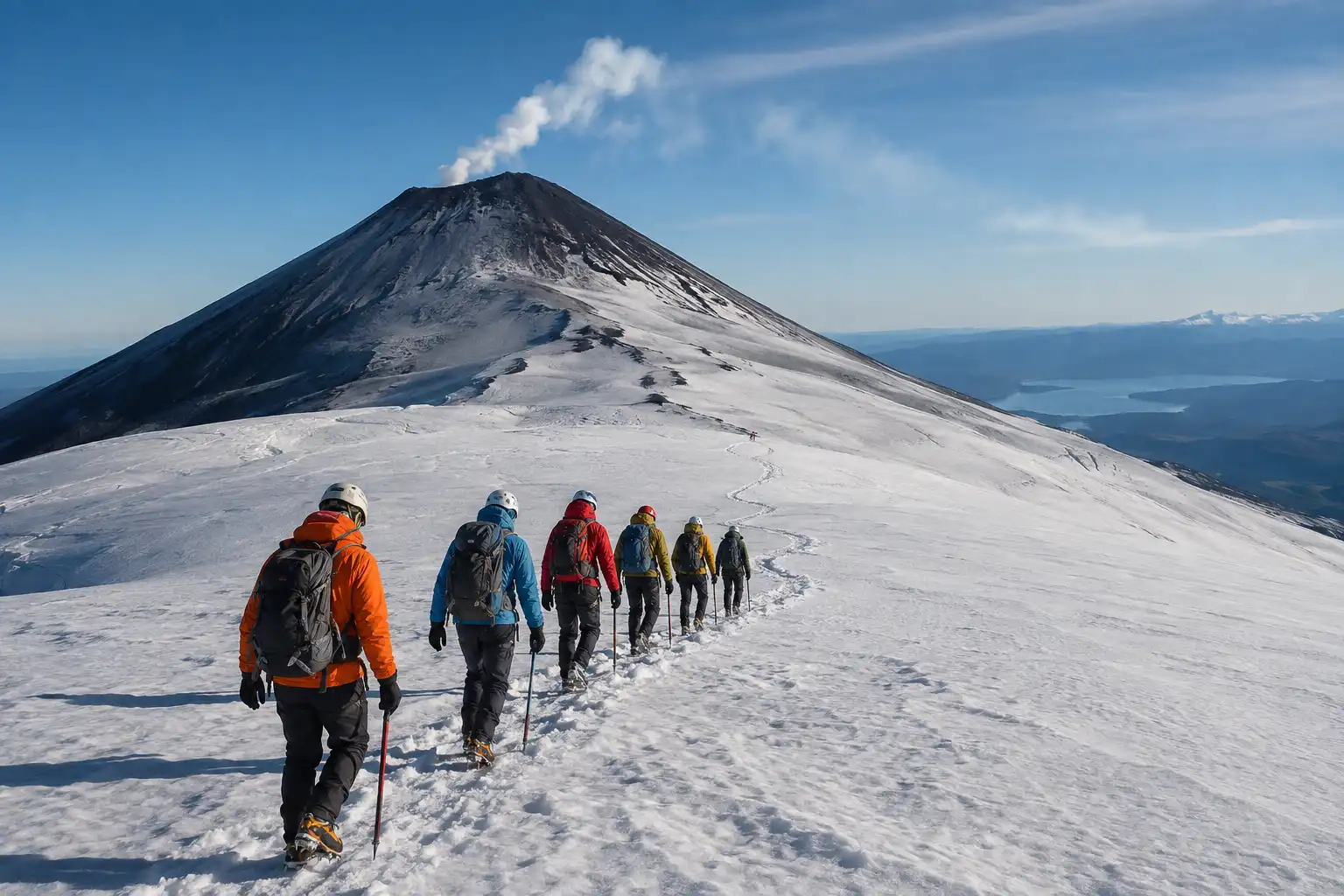
- 10:00 onward. Reach the glacier near 2,200 meters, fit crampons, take out the ice axe
- 12:00 to 14:00. Zigzag up the cone, pass the false summit, arrive at the crater rim
- At the top. Thirty minutes maximum, staying well back from the rim edge
- Afternoon. Descend, sliding the snow sections, returning to Pucón by early evening
Pace yourself from the first twenty minutes onward. Beginners who push hard on the easy lower slopes almost always struggle above the glacier line.
What are the real risks on Villarrica?
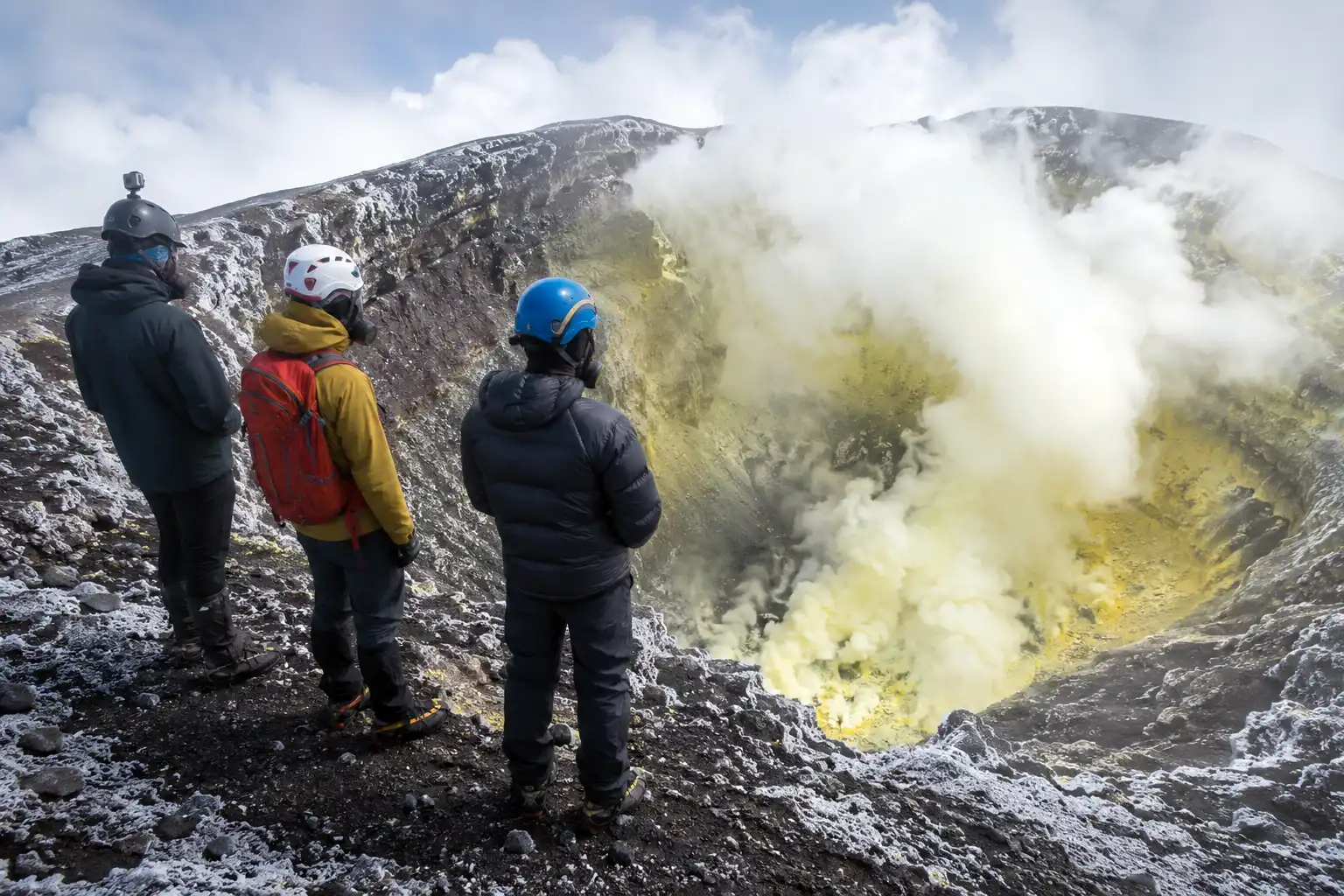
Villarrica is an active volcano with an open crater, so its hazards differ from an ordinary mountain.
Volcanic gas comes first. Sulfur dioxide and hydrogen sulfide collect near the rim, and wind direction decides how bad the exposure gets. Your guide calls for gas masks once the smell turns sharp.
Falls come second. Hard morning snow on a 30 to 45 degree slope punishes any slip, which is exactly why crampons and an ice axe are mandatory rather than decorative.
Weather changes fast at 2,847 meters. Wind and cloud can shut the summit within an hour, so guides sometimes turn groups around within sight of the top. Accept that decision without arguing.
Finally, serious accidents have happened here over the years. Therefore, confirm that your policy covers guided mountaineering above 2,500 meters, since standard travel plans often exclude it. Read up on what adventure policies actually cover well before you fly.
Who should skip this climb?
Some travelers genuinely should not attempt Villarrica, and responsible operators screen for exactly this.
Agencies commonly decline bookings from pregnant travelers, people with poor cardiovascular health, and anyone with a spinal injury. Age minimums vary widely between companies too. Some accept climbers aged 12 and up, while others set the floor at 18. Always ask before paying a deposit.
Also skip it if you have never completed a full day hike. Villarrica is a poor place to discover how your body handles six hours of continuous climbing. Instead, build up on gentler trails at home first, then come back properly prepared.
FAQs on Villarrica Volcano for Beginners

Can you climb Villarrica without a guide?
How long does the Villarrica hike take?
Will you see lava from the summit?
What happens if the climb gets cancelled?
Is Villarrica harder than Kilimanjaro?
The bottom lines
A beginner can absolutely reach the Villarrica crater rim. You need cardio fitness, a licensed Pucón guide, the CONAF ascent pass bought in advance, and a green alert level on the day. Train for six weeks on stairs and hills, book your climb early in your Pucón stay, and hold a slow steady pace from the very first step. Then Villarrica becomes a long, hard, genuinely memorable day rather than a turnaround story. Check that alert level before you pay for anything.