Can You Camp on the Beach? Rules, Permits, and Tide Tips

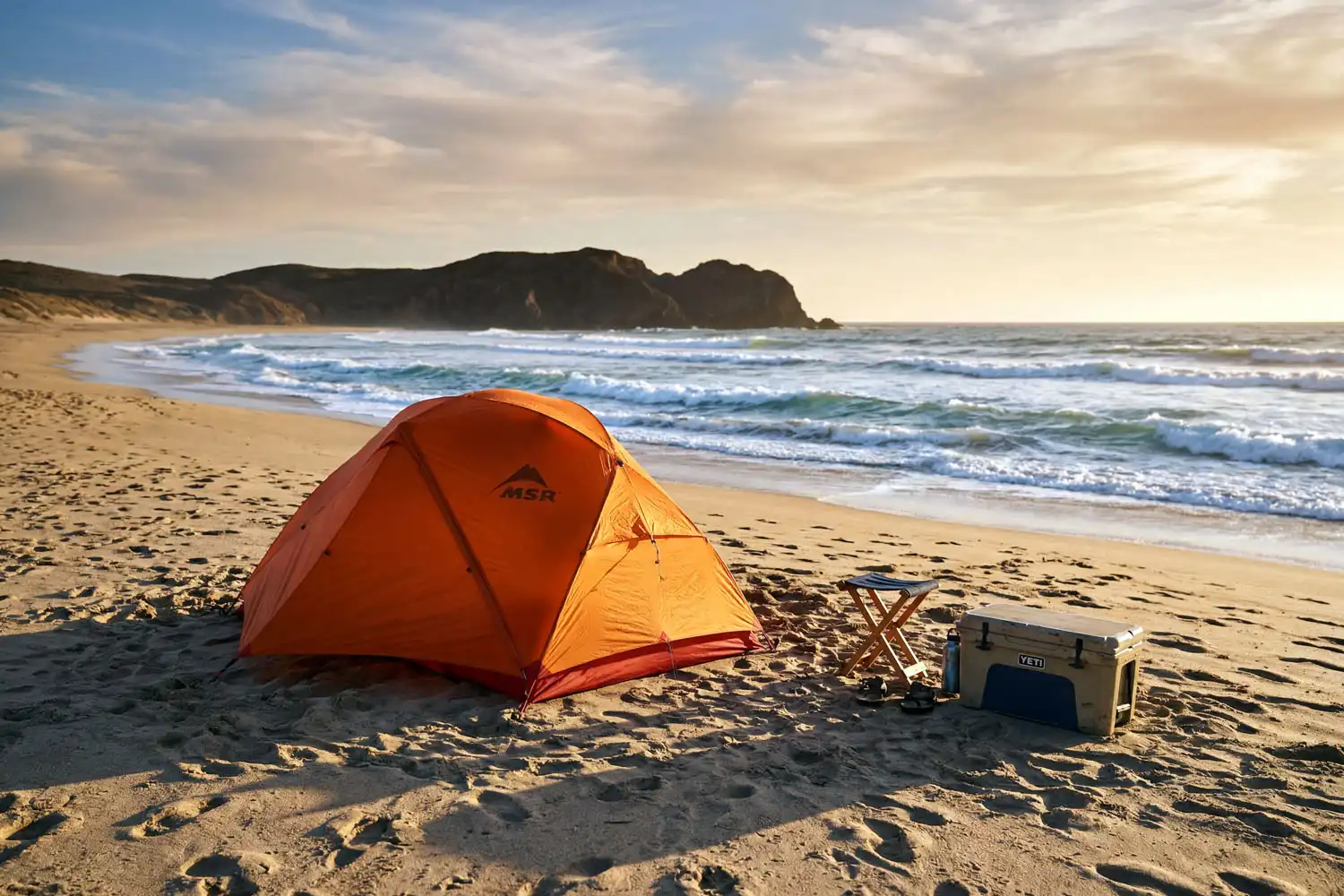
Yes, you can camp on the beach in many places, but only where it is legal and safe. Rules vary by country, state, and even by individual stretch of shoreline. Some beaches welcome overnight tents. Others ban camping outright or require a paid permit. Before you load up the car, you need to know the local laws, the tide schedule, and how to set up gear that holds in sand and wind. I have camped beside lakes and rivers in the Bandarban hills back home, and most of the prep rules carry straight over when sand replaces soil.
Is beach camping legal?
Beach camping is legal in many designated areas like national seashores, certain state parks, and some public coastal lands, but it is banned on most city beaches and almost all private shorelines. Always check the managing agency before you go. A quick call to the park office or a look at the National Park Service site usually settles the question for any beach you have in mind.
What permits do you need to camp on the beach?
Most legal beach camping spots require a permit booked ahead of time. National seashores like Cape Hatteras and Padre Island sell permits online or at the ranger station. Some beaches use first-come reservations, while others run a lottery during busy seasons. Permits also cap how many nights you can stay, usually between one and fourteen.
I always print the permit and keep a phone copy. Rangers do check, and a missing permit can mean a fine or being asked to pack up at sunrise.
Where can you legally camp on the beach in the US?
Some of the most popular legal beach camping spots in the US include:
- Cape Hatteras National Seashore (North Carolina)
- Assateague Island National Seashore (Maryland and Virginia)
- Padre Island National Seashore (Texas)
- Olympic National Park coast (Washington)
- Point Reyes National Seashore (California)
- Many Florida and Oregon state park beaches
Each one has its own permit system, fire rules, and vehicle access policies. Internationally, overnight beach camping is common in parts of Australia, Mexico, Greece, and Portugal, but local laws shift fast. Always confirm with the local tourism board before booking flights.
How do you pitch a tent on sand?
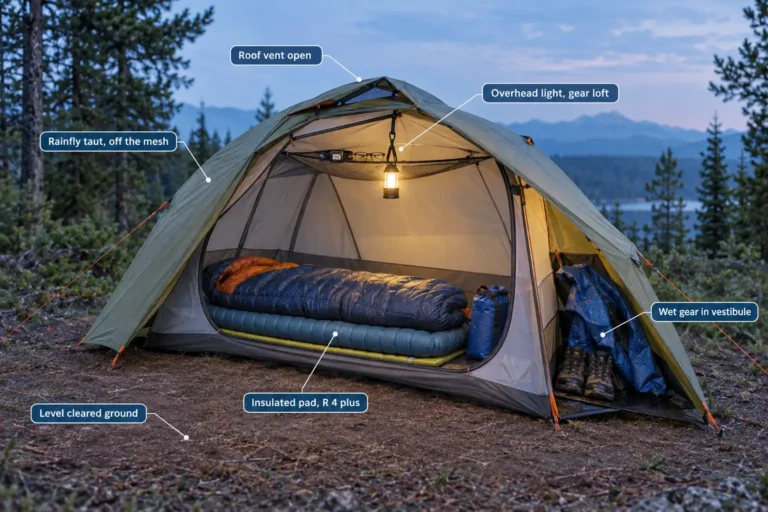
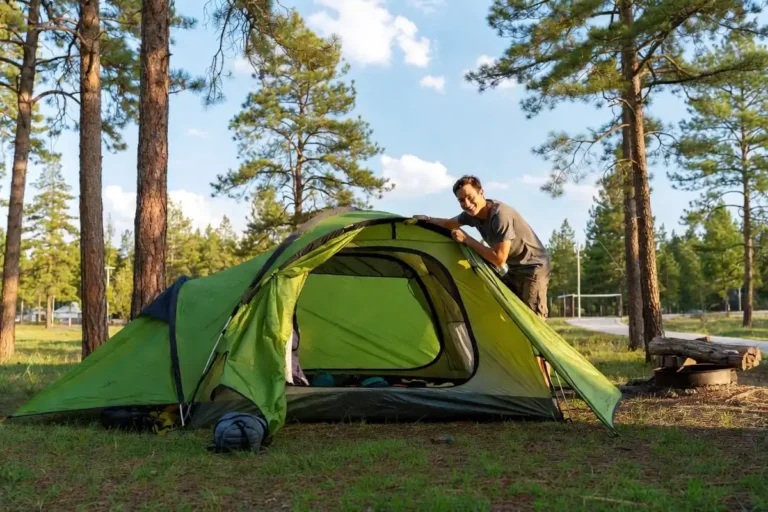
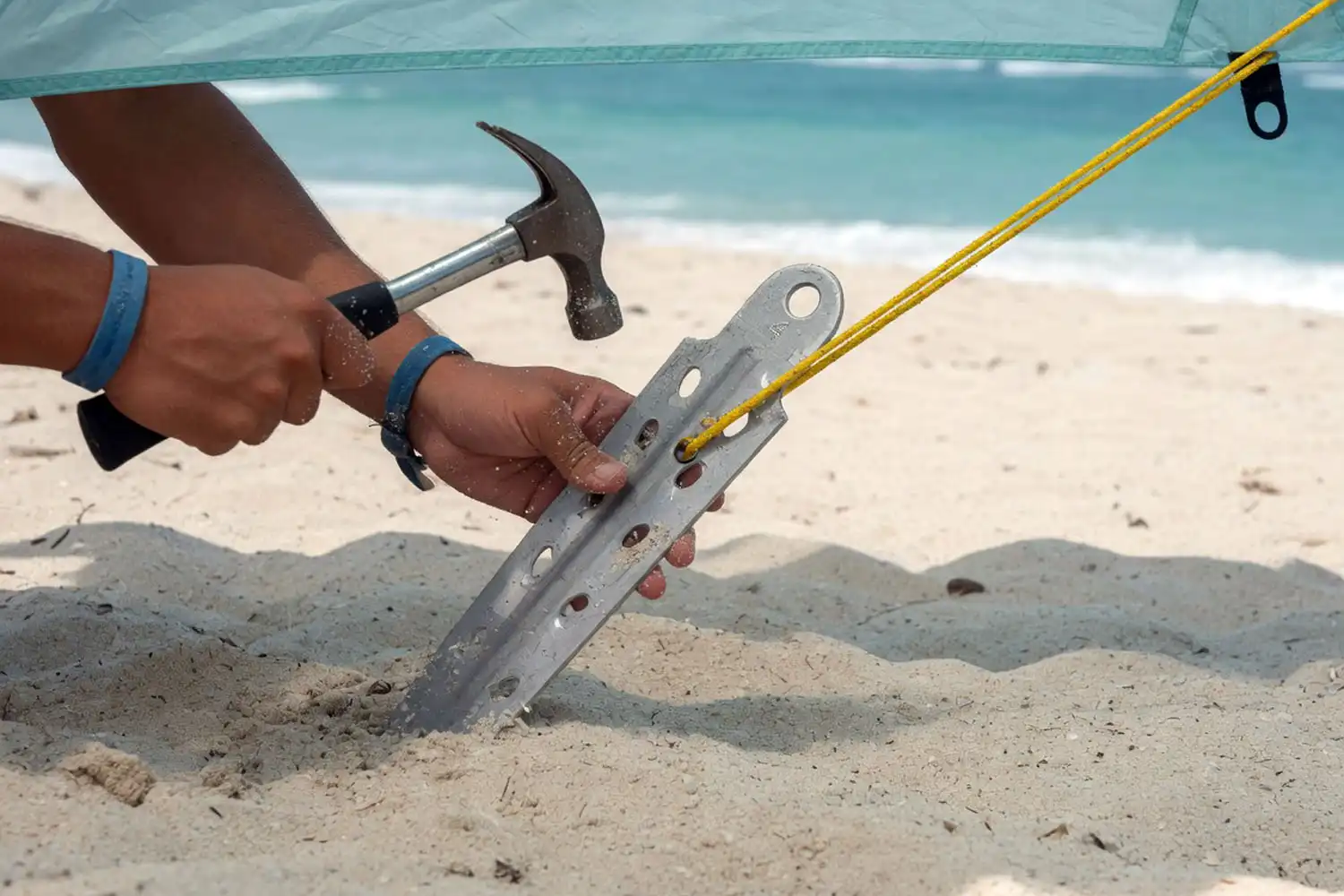
Pitching a tent on sand needs sand-specific stakes and a low-profile setup that resists wind. Regular tent pegs slide right out of loose sand. You need wide aluminum or plastic sand stakes, or you can bury deadman anchors made from sticks or stuff sacks filled with wet sand. The same technique works on rocky shorelines, and I covered the full method in my guide to pitching a tent on uneven or sandy ground.
Set the tent door away from the prevailing wind. Use a footprint to block moisture and sand creep. Then stake every guy line, not just the corners. Sea breezes pick up fast after sunset, and a half-staked tent will collapse before midnight.
What gear do you need for beach camping?
You need slightly different gear than forest camping because of sand, salt air, sun, and steady wind. Here is what I recommend:
- Freestanding tent with sand stakes
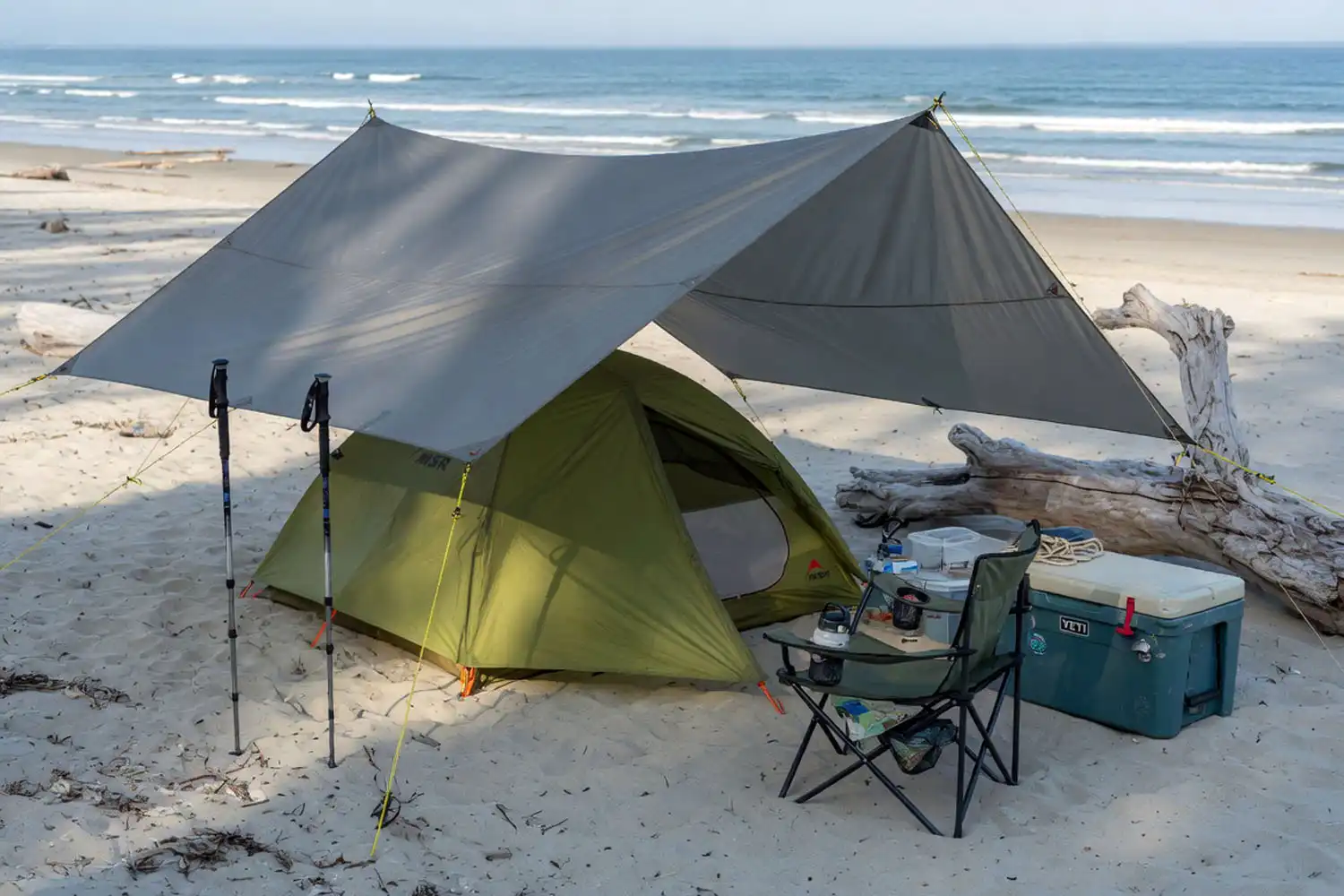
- Tarp or sun shade with extra guy line
- Sleeping pad (sand looks soft but turns cold and firm fast)
- Wide-brim hat and high-SPF sunscreen
- Reef-safe mineral sunscreen if you plan to swim
- Hard cooler with extra ice
- Bug net or screen room for sand fleas and mosquitoes
- Headlamp and a small lantern
- Biodegradable soap and wipes
- Trash bags so you can pack out every scrap
A larger tarp also pulls double duty as a shade roof and a rain shelter. If you are buying one for the first time, my notes on choosing the right tarp size for a tent will save you a wasted purchase.
How do tides affect beach camping?
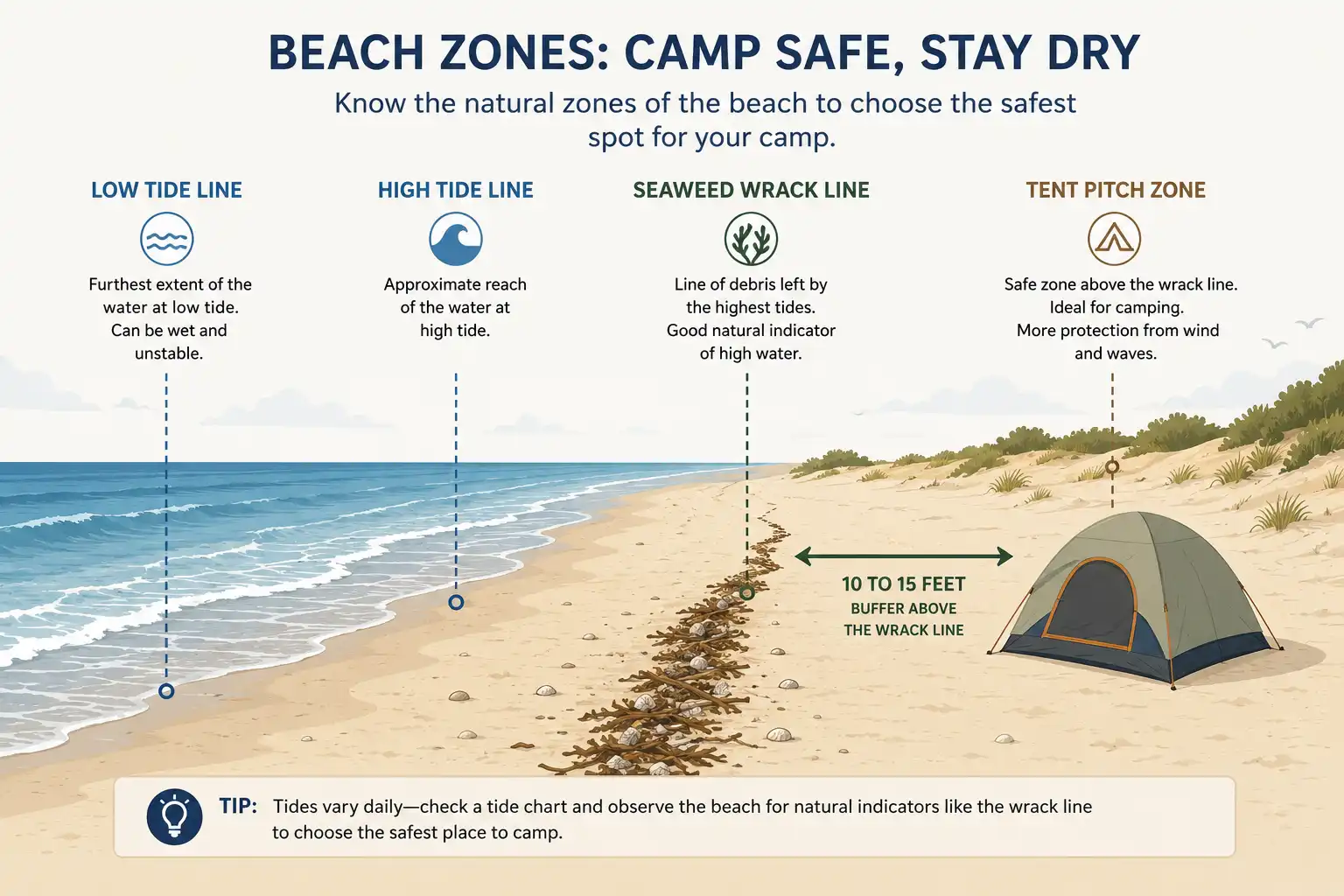
Tides decide where you can safely pitch your tent. Set up too close to the water and you will wake up with waves lapping at your stakes. Always pitch above the high tide line, which you can spot from the seaweed wrack and wet sand boundary. Then check the daily tide chart for that exact beach. NOAA publishes free tide predictions for every US coast.
Spring tides during the new and full moon push higher than usual. Add a buffer of ten to fifteen feet above the wrack line if your trip lands on those phases.
How do you protect food from wildlife on the beach?
Beach wildlife like raccoons, crabs, gulls, and foxes will tear into any unsecured food in minutes. Use a hard cooler with a lockable strap, or store food in a vehicle when one is allowed at the site. Never leave food inside the tent. Wash dishes at least a hundred feet from your sleeping area. Some coastal parks even require bear canisters, which surprises plenty of first-time beach campers.
Is it safe to camp alone on the beach?
Solo beach camping can be safe if you pick a legal, populated site and tell someone your plan. Avoid isolated stretches without cell service. Beach campgrounds with hosts feel much safer than remote dispersed sites. If you are new to camping alone, the solo camping safety habits I follow on every trip translate well to coastal sites too.
How do you stay cool and protected from the sun?
Pitch your tent in natural shade when you can, or angle a tarp against the sun’s path through the day. Drink water constantly, because coastal heat and breeze hide how much you sweat. I usually plan for at least one gallon per person per day, and my breakdown of daily water needs for camping gives you a clean baseline.
Sunburn from reflected sand and water is brutal. Reapply sunscreen every two hours. Also wear UPF-rated clothing instead of relying on lotion alone.
What about campfires on the beach?
Most beaches restrict or ban open fires. Where fires are allowed, they must usually sit inside a designated ring or below the high tide line so the next tide clears the ash. Bring a small camp stove instead. Driftwood fires sound charming, but burning treated wood or washed-up trash is dangerous and often illegal.
How do you keep sand out of your tent?
Sand finds its way into everything, but a few habits cut it down to almost nothing. Brush feet off before stepping inside. Then place a small mat or towel just inside the door. Shake out sleeping bags and pads outside in the morning. Keep zippers fully closed when you are not entering or leaving.
Bug pressure also runs heavy at dawn and dusk on the coast. The same routine I use for keeping insects out of a tent at night works just as well by the ocean.
What is the best season for beach camping?
The best beach camping season runs from late spring through early fall in most US coastal regions, with shoulder months offering the calmest crowds and best campsite prices. Southern beaches like Padre Island stay warm right through winter and can be ideal then. Northern beaches like the Olympic coast need full insulation gear outside of summer.
Hurricane season on the Atlantic and Gulf coasts runs from June through November. Track storm forecasts daily and never camp on open sand if a system is moving toward shore.
Final thoughts on camping at the beach
Beach camping rewards careful planning more than almost any other style. Confirm legality first. Then book your permit, watch the tides, and bring gear that handles sand and salt. Pick a sheltered pitch above the wrack line, secure your food, and respect the shoreline by packing out every scrap you brought in. The first time I slept beside open water, I learned that waves are the easiest lullaby in the world, but only if your tent is pitched right.