Easy Camping Meals for Kids: A Family-Tested Menu by Age

Feeding kids at camp is a different problem from feeding adults. Energy crashes hit faster, attention spans are short, and one refused dinner can spiral into a full meltdown three miles from the car. I’ve cooked for younger cousins on hill trips around Rangamati and watched friends struggle with their kids at lakeside camps near Kaptai. The patterns repeat. This guide gives you actual quantities, age-based meal ideas, a clear prep timeline, and backup plans for when things go sideways.
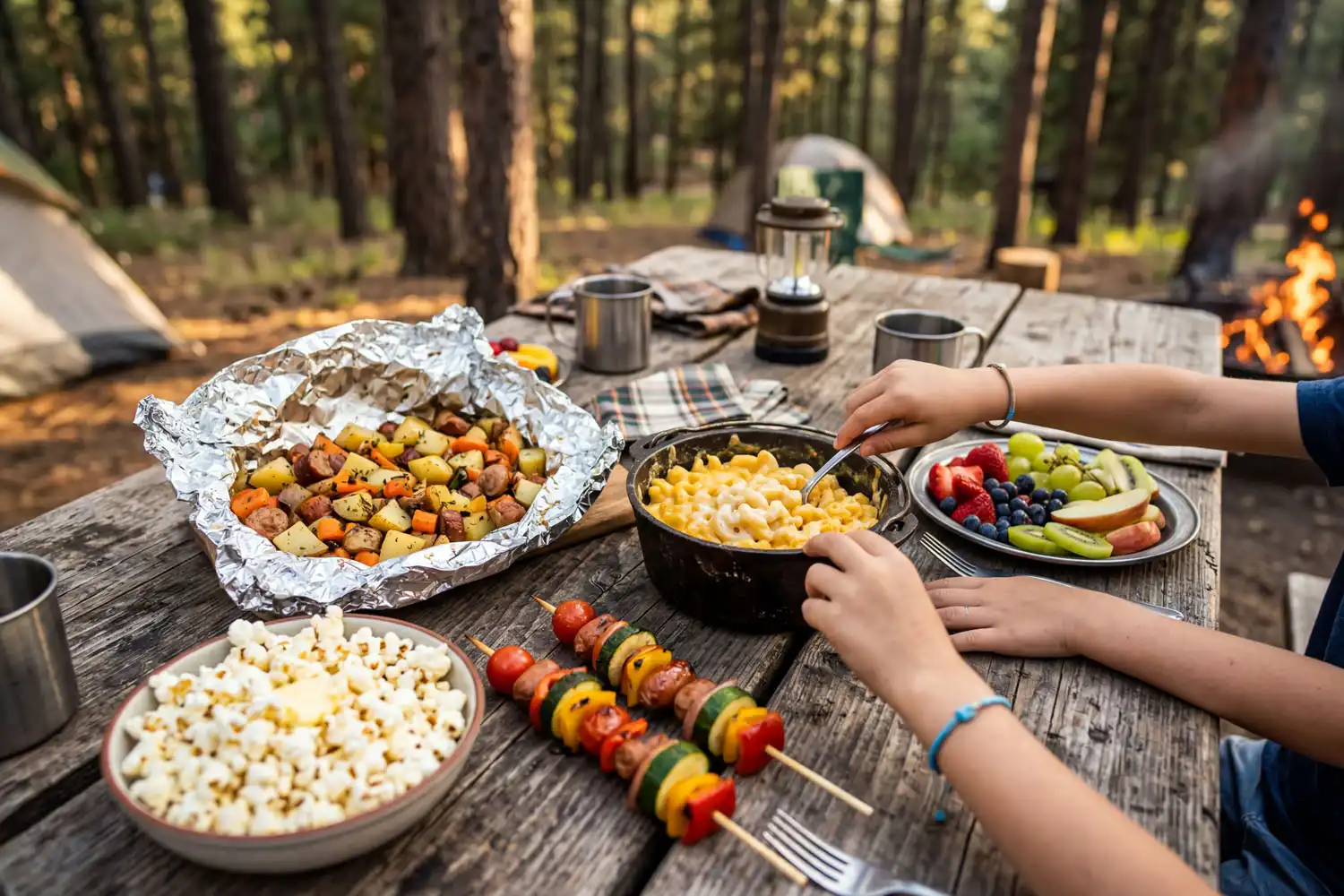
The easiest camping meals for kids are foil packet dinners, one-pot pasta, breakfast burritos, hot dog or veggie skewers, and trail mix lunches. Plan for 1,200 to 1,800 calories per child per day, lean on familiar flavors, and pre-prep as much as you can at home. Also, keep at least two no-cook backup meals in your bin for rainy days or campfire failures.
Learn more: 3-Day Camping Meals for Family
How Kid Camp Meals Change With Age
Kid meals at camp aren’t one category. They shift based on age, appetite, and how much help the child can offer. Here’s how I split them.
Toddlers (Ages 2 to 4)
Stick to soft, low-mess foods. Cut everything to under half an inch. Skewers, whole nuts, and hard candies are choking risks at this age. Bring familiar items: cheese cubes, banana slices, plain pasta, cooked oatmeal, scrambled eggs, soft cooked carrots. Also pack one extra “comfort food” they always eat at home, because new flavors fail fast outdoors.
Kids (Ages 5 to 9)
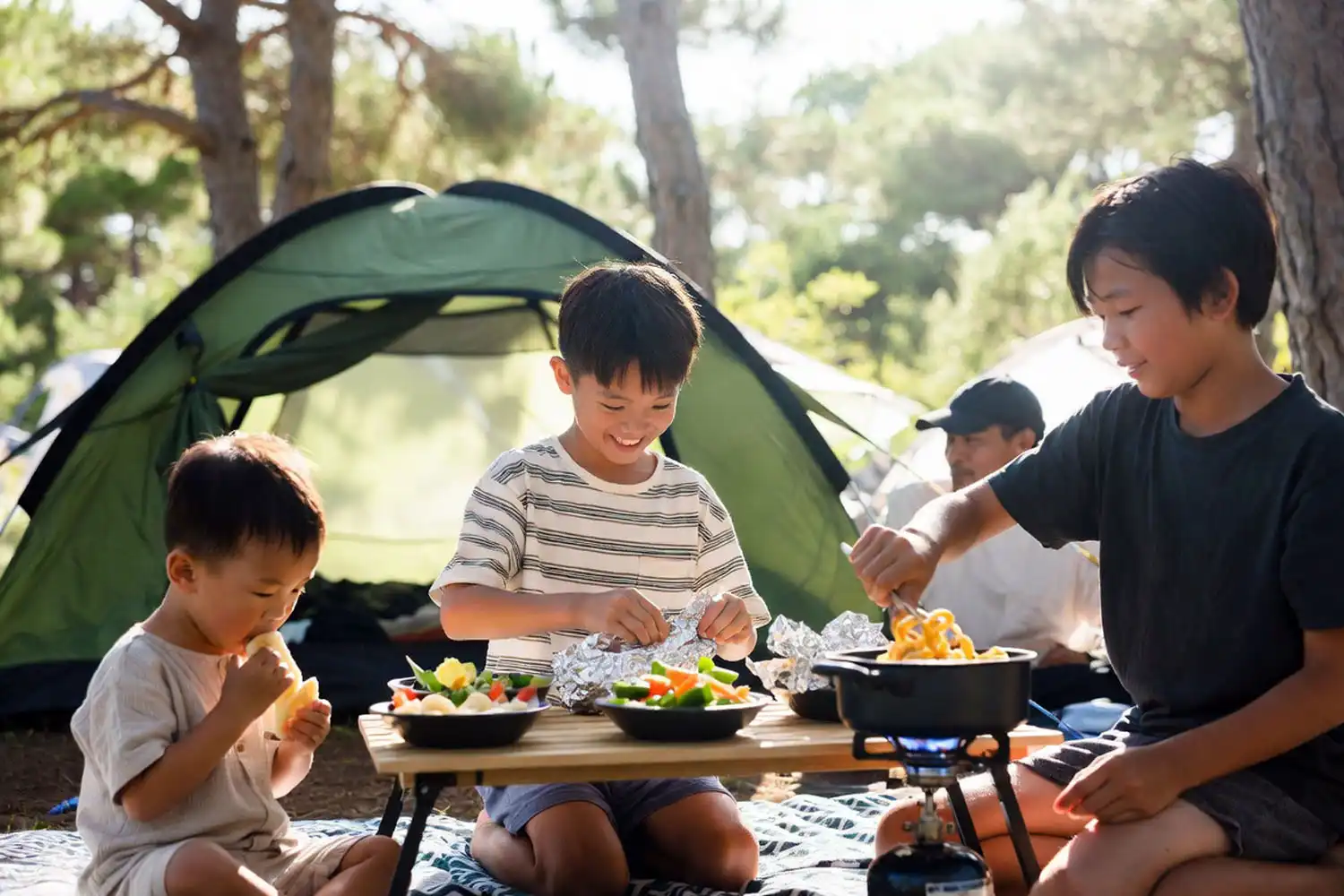
This is the prime camping age. Kids can hold skewers, wrap their own foil packets, and stir a pot. Also, they’re hungrier than parents expect, often eating two breakfasts. Plan for it. Hot dogs, mac and cheese, pancakes, quesadillas, and skewered chicken all work well.
Tweens and Teens (Ages 10+)
Older kids can cook with supervision and need adult-sized portions. They handle bolder flavors, spicy seasonings, and longer cook times. Give them a meal to fully own. The pride of cooking dinner for the family beats any video game on the first try.
The Prep Timeline That Saves Your Trip
A successful camping meal starts at home, not at camp. Here’s the timeline I use for a 3-day weekend with kids.
Two Days Before
- Make a meal-by-meal plan on paper. Breakfast, lunch, dinner, two snacks, dessert per day.
- Shop with the list. Buy 20% more snacks than you think you need.
- Pre-mix dry pancake batter into labeled ziplock bags. Add water at camp.
- Hard-boil eggs for breakfasts and trail snacks.
The Day Before
- Pre-chop vegetables for foil packets. Store in labeled bags.
- Pre-cook proteins where possible: brown ground beef, grill chicken strips, slice sausages.
- Marinate any meats overnight in ziplock bags. They double as the cooking container.
- Freeze water bottles to use as cooler ice. They thaw into drinking water.
Morning of Departure
- Pack the cooler last. Heaviest cold items on the bottom, frozen bottles around the sides.
- Keep a separate snack bin within easy reach in the car. Hungry kids on the drive are no fun.
- Bring a small notebook with your meal plan so you remember the order.
Easy Breakfast Ideas With Quantities
Breakfast should hit the table within 20 minutes of waking. Kids burn through morning energy fast, so pack 350 to 500 calories per child for this meal.
Pre-Mixed Pancakes (Serves 4 kids)
- 2 cups dry mix in a ziplock at home (flour, baking powder, sugar, salt)
- Add 1.5 cups water at camp, shake the bag, snip a corner, squeeze onto a hot pan
- Cook 2 minutes per side over medium coals
Breakfast Burritos (Serves 4)
- 4 large flour tortillas
- 6 scrambled eggs (pre-cracked into a water bottle at home)
- 1 cup pre-cooked sausage crumbles
- 1 cup shredded cheese
- Warm tortillas on the pan, fill, fold, eat. Done in 10 minutes.
Overnight Oats (Serves 4, zero cook)
- 2 cups rolled oats
- 2 cups milk or non-dairy milk
- Honey, cinnamon, dried fruit to taste
- Mix in jars the night before. Pull from cooler at breakfast.
For a deeper walkthrough on stove-free breakfast options, my guide on cooking a full camp breakfast with minimal gear covers the techniques.
Easy Lunch Ideas That Travel Well
Lunch at camp should be no-cook if possible. Kids want to get back to play, and parents want to nap.
Build-Your-Own Wraps
Set out tortillas, sliced turkey, cheese, lettuce, tomato, and hummus. Each kid builds their own. Hands-on prep keeps them invested, and they almost always eat what they build.
Trail Mix Lunchboxes
For hiking days, pack each kid a divided container with:
- 1/4 cup mixed nuts (skip with younger kids)
- 1/4 cup dried fruit (raisins, apricots, mango)
- 6 to 8 whole-grain crackers
- 4 cheese cubes
- 1 hard-boiled egg or 2 turkey roll-ups
- 1 small chocolate piece as the “prize”
Tuna or Chicken Pita Pockets
Pre-mix tuna or chicken salad at home. Spoon into pita pockets at camp. Add lettuce. Lunch ready in 3 minutes.
Easy Dinners Around the Campfire
Dinner is where camp cooking gets fun. Here are the dishes my cousins request every trip.
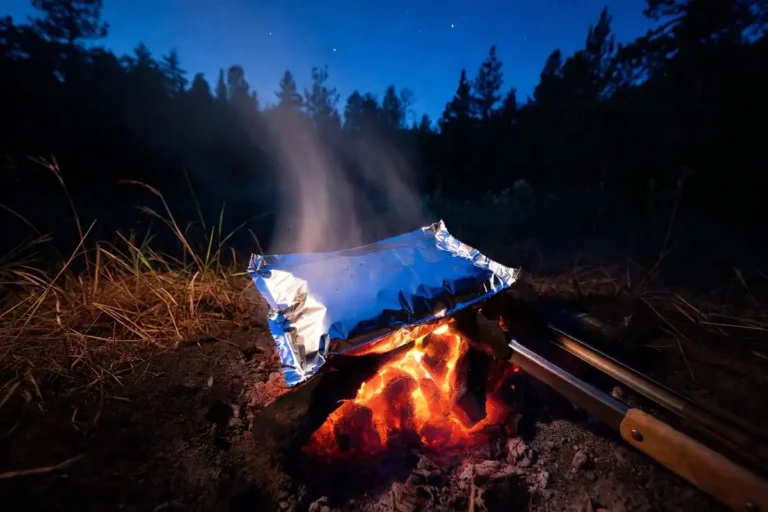
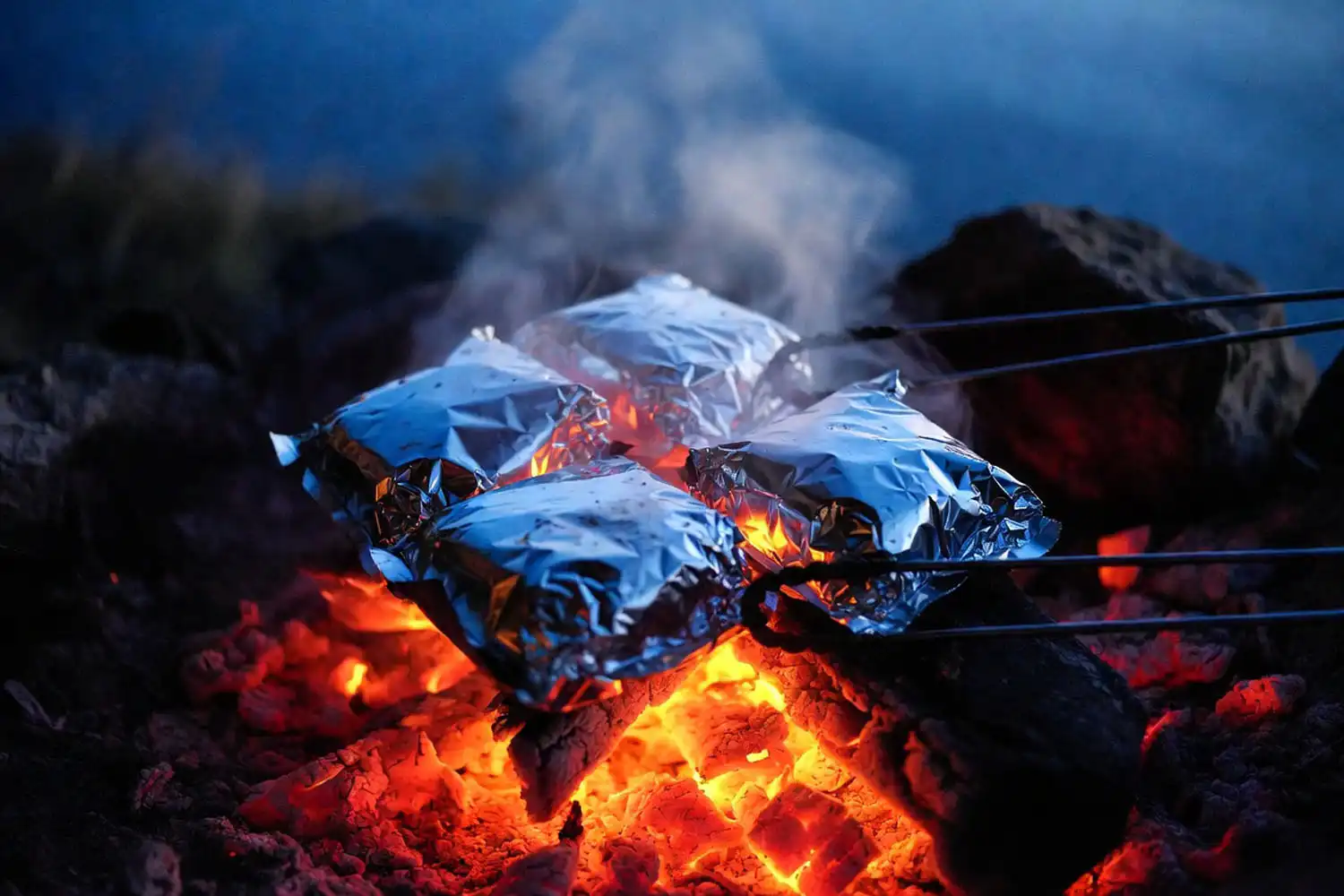
Foil Packet Dinners (Per Kid)
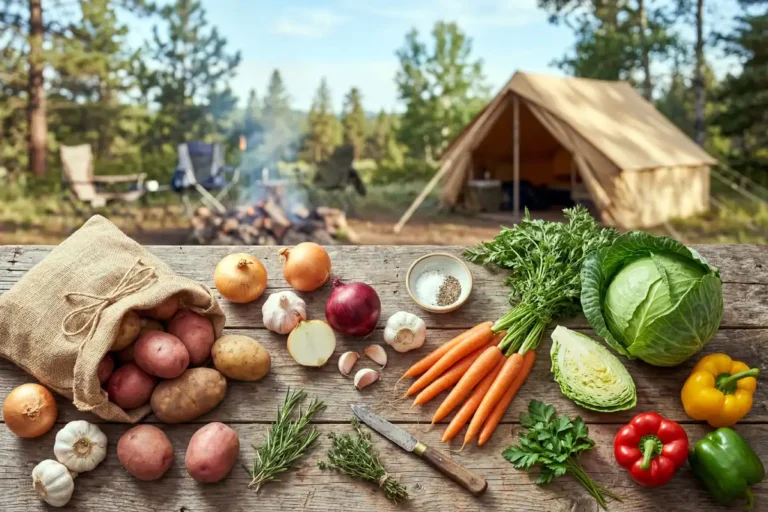
- 1 cup chopped potatoes (small dice)
- 1/2 cup chopped carrots
- 1/2 cup sliced sausage or chicken
- 1 tablespoon butter
- Salt, pepper, garlic powder
Wrap in heavy-duty foil. Cook on medium coals 20 to 25 minutes, flip halfway. For deeper technique, my walkthrough on foil packet meals over campfire coals covers seal patterns and heat control.
One-Pot Mac and Cheese With Hot Dogs (Serves 4)
- 2 cups elbow pasta
- 4 cups water
- 1 teaspoon salt
- 4 sliced hot dogs
- 2 cups shredded cheddar
- 1/2 cup milk
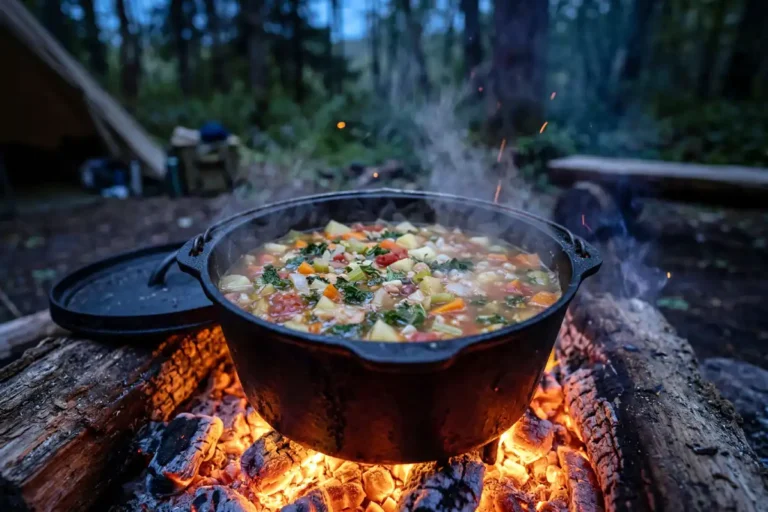
Boil pasta in water until soft, drain most water, stir in hot dogs and cheese, splash of milk. Done in 15 minutes. My guide on one-pot camp meals that feed a family of four has more variations.
Skewer Night
Thread bell peppers, mushrooms, zucchini, and chicken or sausage onto long metal or wooden skewers. Brush with oil and seasoning. Roast over coals 10 to 12 minutes, turning every 3 minutes.
My Family Recipe: Bamboo Tube Rice
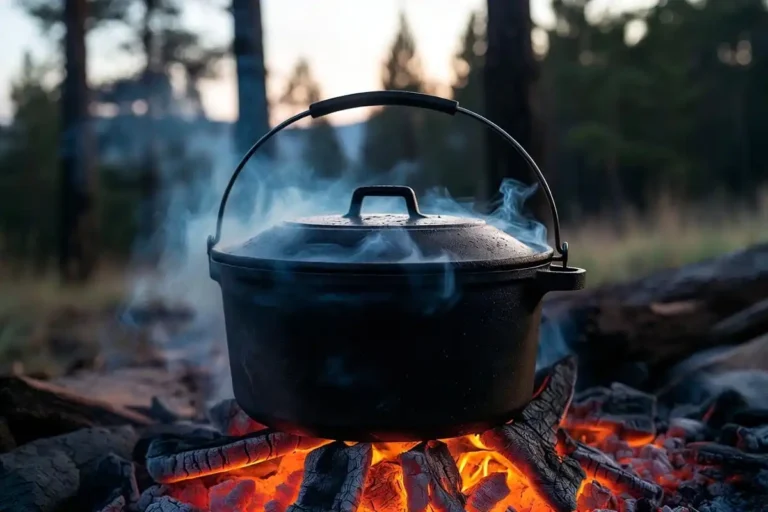
This one isn’t in most camp cookbooks. Stuff a clean section of bamboo (about 8 inches, capped at one end) with washed rice and water in a 1:1.5 ratio, add a pinch of salt, seal the open end with a folded banana leaf or foil, then roast upright in coals for 25 minutes. The rice steams inside the bamboo and picks up a smoky flavor kids love. We make this on every Bandarban trip.
Snacks That Prevent Meltdowns
Snacks aren’t extras. They’re the glue that holds a kid camp trip together. Plan for 3 to 4 snacks per child per day.
Reliable Camp Snacks
- Ants on a log (celery, peanut butter, raisins)
- Apple slices with peanut butter packets
- String cheese
- Goldfish or pretzels
- Fruit kabobs (grapes, strawberries, pineapple)
- Granola bars
- Banana with chocolate spread
Campfire Popcorn
Place 1/4 cup popcorn kernels and 1 tablespoon oil in a heavy foil pouch, leave room for popping, fold the top loosely, then shake over coals for 3 to 4 minutes. My full method is in popping popcorn over a campfire without a microwave.
Sweet Treats Worth the Effort
Dessert at camp should feel like an event.
Campfire Cones
Stuff a sugar cone with mini marshmallows, chocolate chips, banana slices, and a few strawberries. Wrap in foil. Warm on coals 5 minutes. Tastes like a warm sundae.
Banana Boats
Slice a banana along the inside curve, peel still on. Stuff with chocolate chips and mini marshmallows. Wrap in foil, heat 5 to 7 minutes. Eat with a spoon straight from the peel.
Skip Plain S’mores Once
Try a Nutella twist: graham cracker, Nutella, toasted marshmallow, banana slice, top graham. Even kids who don’t like classic s’mores eat these.
How Do I Handle Food Allergies at Camp?
Pack every allergy-safe meal in clearly labeled containers, store them separately from other foods, and bring duplicates of any emergency meds. Cross-contamination is the biggest risk because camp kitchens are small. Use a dedicated cutting board, knife, and pan for the allergic child. Also, brief the whole group on what to watch for. My guide on managing allergies on camping trips covers the planning steps in more detail.
For nut allergies, sunflower seed butter swaps cleanly for peanut butter in most recipes. For dairy, oat or almond milk works in mac and cheese with vegan cheese shreds.
What To Do When Kids Refuse the Meal
First, stay calm. A refused meal isn’t a crisis if you planned for it. Always pack one “safety meal” the child will eat no matter what: usually plain pasta with butter, a peanut butter sandwich, or a quesadilla with just cheese. Offer the planned meal first, but don’t force it. Hunger usually wins by the next snack break.
Also, involve them in the cooking next time. Kids who chop vegetables (with a kid-safe knife) or stir the pot rarely refuse the food they helped make.
Rainy Day and No-Fire Backups
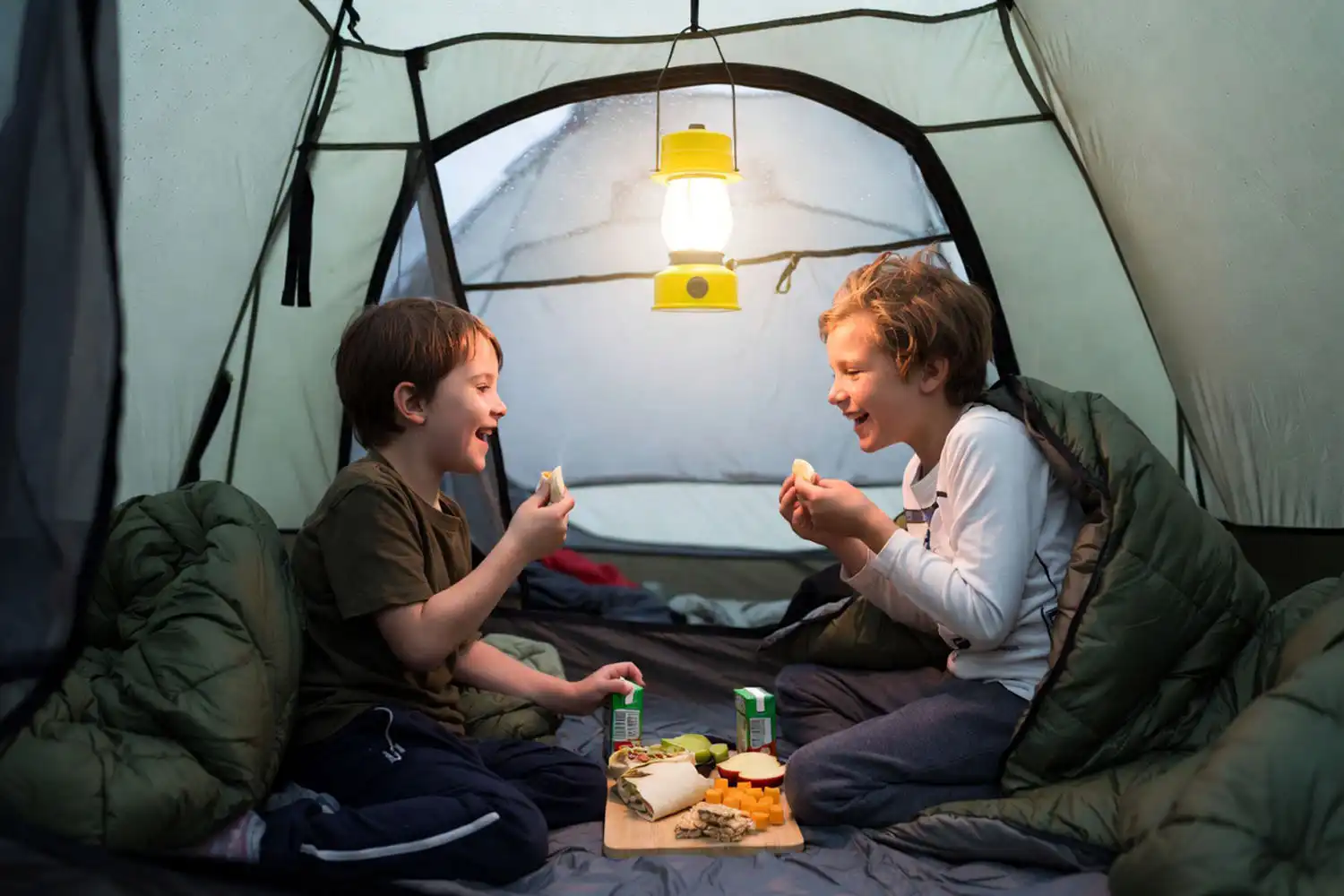
Sometimes the fire won’t light or the rain won’t stop. Plan two no-cook meals per trip:
- No-cook dinner: Hummus, pita, sliced veggies, deli meat, cheese, fruit
- No-cook breakfast: Overnight oats, fruit, granola bars, yogurt cups
- Cold sandwich lunch: Peanut butter and jelly, turkey wraps, cheese crackers
Also, keep a small camping stove and one canister of fuel as backup. Even if the fire fails, you can still boil water for oatmeal or instant mac.
Keeping Food Safe From Animals
Animals come for kid food first because crumbs spread everywhere. Set up a “kitchen zone” at least 100 feet from your sleeping tents. Store all food, trash, and even toothpaste in sealed containers inside your car (in bear country, use a bear canister). Wipe kids’ hands and faces after every meal. Sticky fingers attract everything from raccoons to ants. For full storage logic, see my guide on safe food storage at the campsite.
How Do I Keep Camp Food Safe From Spoiling?
Keep cold food under 40°F, cook meats to safe temperatures (chicken 165°F, ground beef 160°F, fish 145°F), and pack a cheap meat thermometer. According to foodsafety.gov, perishable foods left in the 40°F to 140°F range for more than two hours are no longer safe to eat. In hot weather over 90°F, that window shrinks to one hour.
Kid Camp Food Packing Checklist
Before you leave, confirm you have:
- Cooler with frozen bottles (cold items)
- Dry bin (snacks, bread, pantry)
- Cooking gear (pan, pot, skewers, foil, tongs)
- Eating gear (kid-friendly plates, cups, sporks)
- Cleanup kit (biodegradable soap, sponge, water jug, trash bags)
- Two backup meals
- Comfort food per child
- Meat thermometer
- First aid and allergy meds
FAQs on Camping Meals for Kids

What is the easiest meal to cook with kids at camp?
How much food should I pack per kid per day?
Can toddlers eat regular camp food?
What if there's no campfire?
Final Takeaway
Easy camping meals for kids come down to four things: plan by age, prep at home, involve the kids in cooking, and pack backups. Stick to familiar flavors, use foil packets and one-pot dishes as your base, and always keep a “safety meal” the child will eat no matter what. Camp food doesn’t need to be fancy. It needs to be ready when hungry kids show up.