Are Cots Good for Winter Camping? What You Need on Top

A cot lifts you off frozen ground, so it should sleep warmer. In practice it often sleeps colder. I have spent plenty of chilly nights on a cot in the Rangamati hills, and the fix never changes. Here is what a cot does well in winter, and what it needs on top.
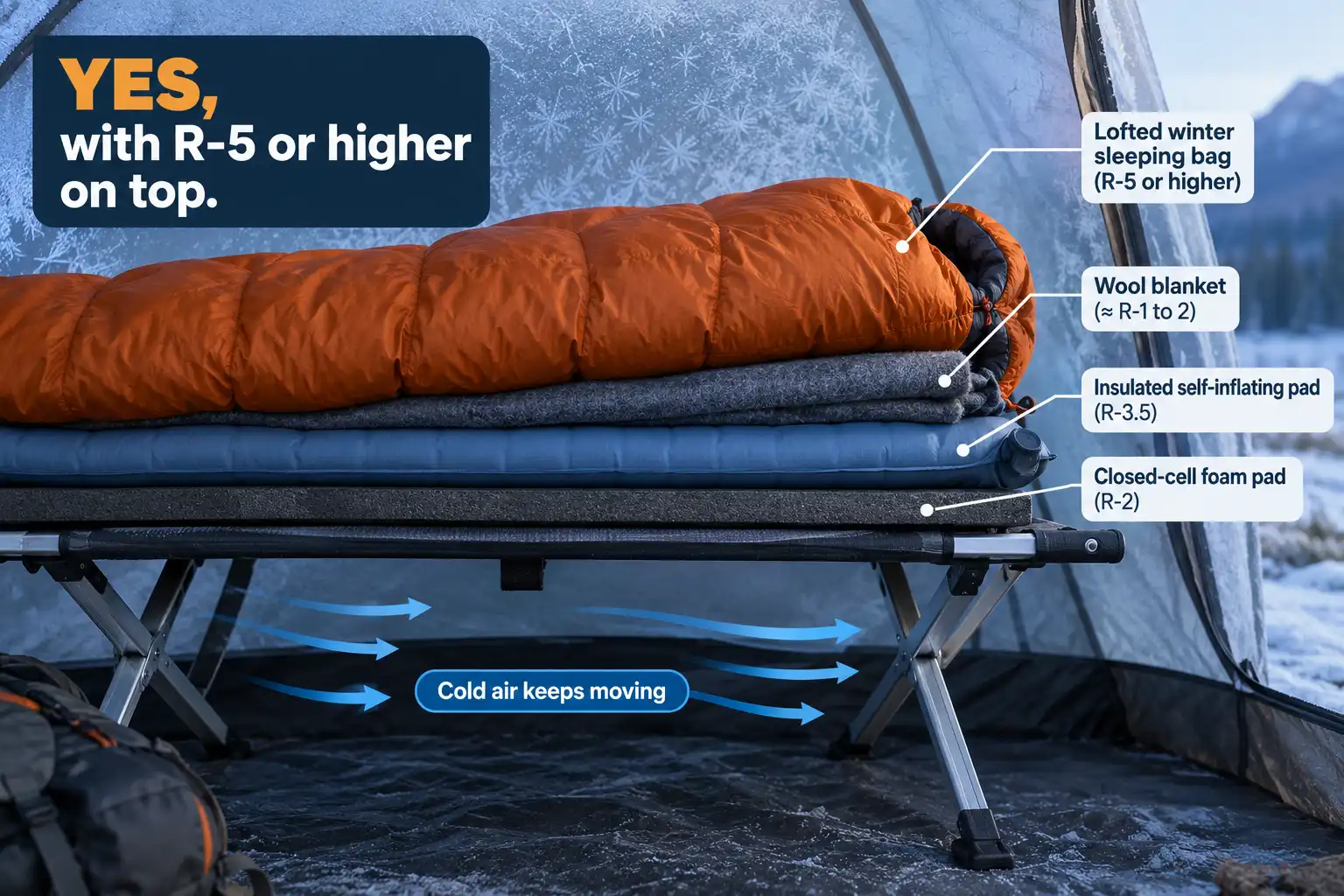
Yes, cots work well for winter camping, but only with an insulated pad on top. The cot fabric carries almost no insulation value on its own. Cold air also moves freely underneath the frame all night. Add a pad rated R-5 or higher, and a cot turns into one of the driest, most comfortable ways to sleep through a freezing night.
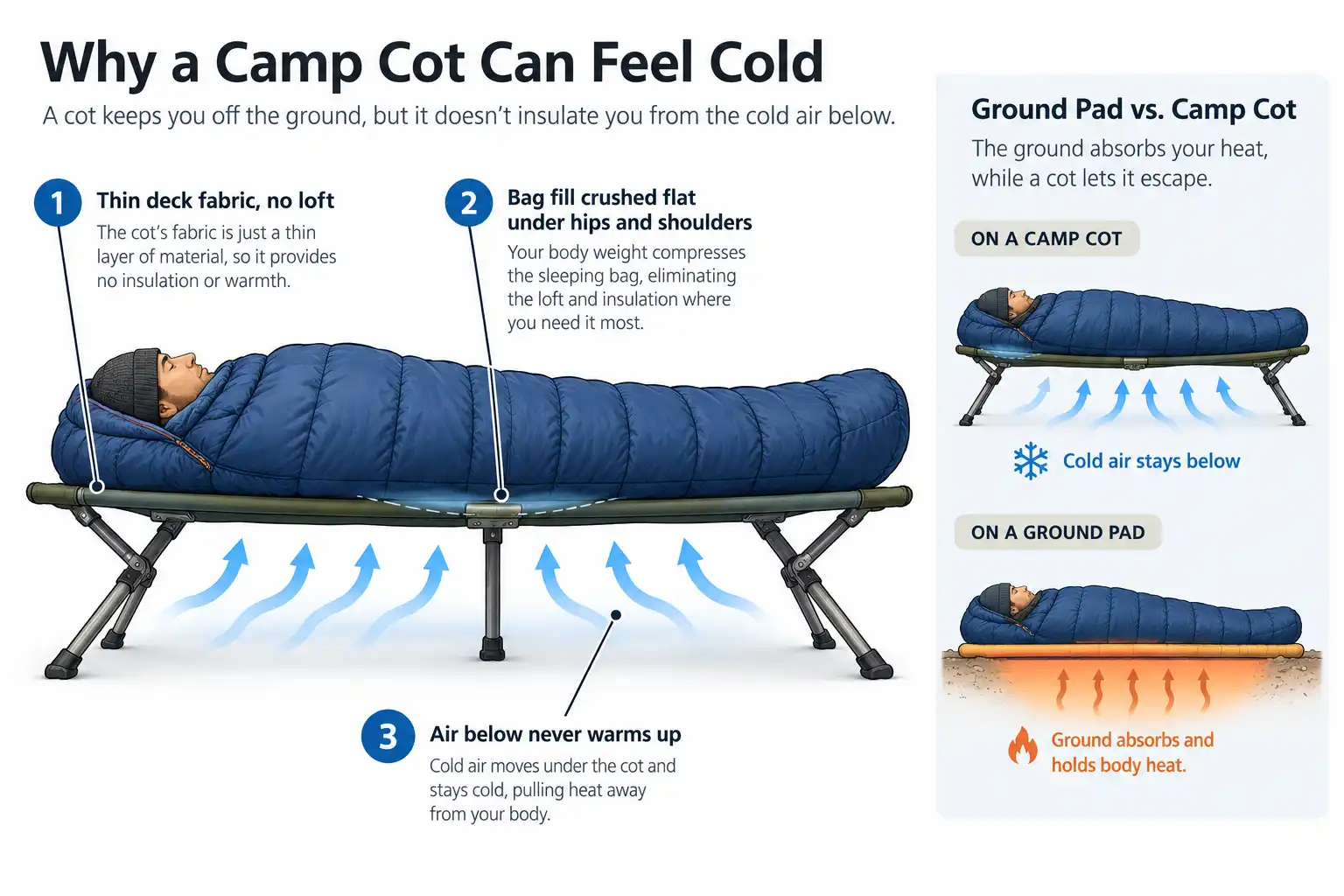
Why does a cot feel colder than the ground in winter?
A cot feels colder because moving air pulls heat away faster than still ground does. Road crews put up signs warning that bridges freeze before roads, and the reason is the same. Air flows under a bridge deck, so it chills from both sides.
Three things work against you on a cot:
- The fabric has no loft. A cot deck is one thin layer of polyester or canvas stretched tight. It stops wind poorly and stores no warmth.
- Your body crushes the bag flat. Down and synthetic fill only work when they stay lofted. Under your hips and shoulders, that fill compresses to nothing.
- Air under the cot never warms up. This part matters most, and most articles skip it.
Here is the piece people miss. Ground under a sleeping pad slowly absorbs your body heat, so the surface right below you warms a little through the night. Air does not behave that way. It keeps drifting, and it keeps carrying heat off. Soil also starts warmer than people assume. Farm sensor readings from Illinois and Kansas showed shallow soil holding a couple of degrees above air temperature right through January cold snaps.
What a cot actually fixes in winter
A cot solves moisture and comfort problems, not temperature problems.
Winter tent floors get wet. Frost builds on the inner wall overnight, then melts and runs down. Snow rides in on boots and turns to slush. A cot keeps your sleeping bag well clear of all that, which matters because a damp bag loses loft fast.
Frozen ground also turns hard and lumpy. You cannot smooth out a frozen root or a rock ridge. A cot gives you a flat surface anywhere, so a rough site stops mattering. That advantage grows on gravel bars and old snow, where finding a soft spot takes forever.
Then there is the practical side. Getting up at 2 a.m. from knee height beats rolling off the floor in a stiff back and cold legs. Campers who already look for cots that suit a sore back usually feel that difference most in winter, since cold stiffens joints further.
Storage helps too. Boots, stuff sacks, and spare layers tuck under the frame instead of soaking on a wet floor.
How much R-value do you need on a cot?
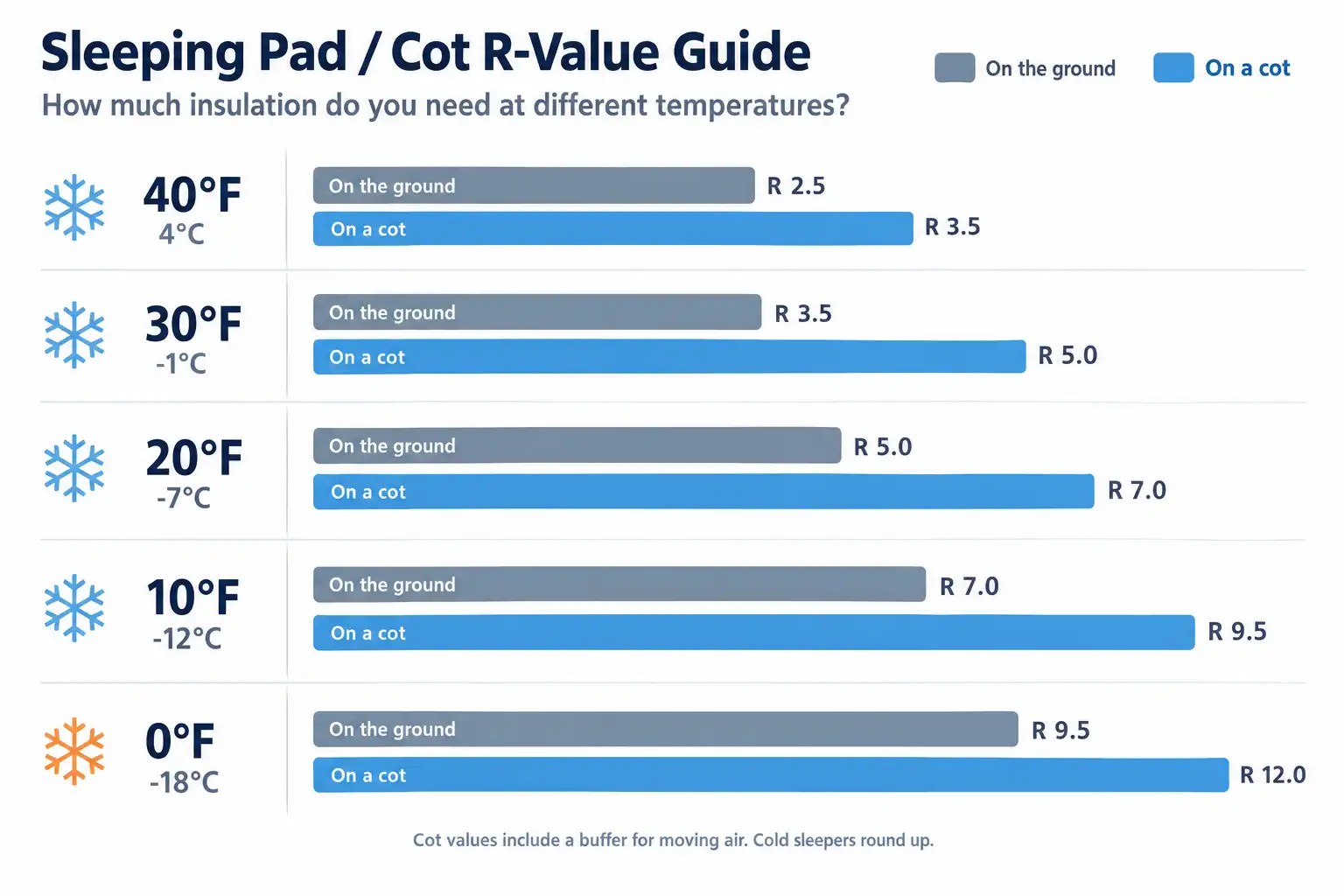
Plan on R-5 or higher for nights near 20°F (-7°C), and R-6 to R-7 once temperatures fall below 10°F (-12°C). R-value measures how well a pad resists heat loss, so a bigger number means a warmer sleep.
Since 2020, most major brands test to the ASTM F3340 standard, which means R-values now compare directly across brands. Those numbers also add up. Stack an R-2 foam pad under an R-3.5 air pad, and you get roughly R-5.5.
| Coldest night you expect | R-value on the ground | R-value on a cot |
|---|---|---|
| 40°F / 4°C | 2 to 3 | 3 to 4 |
| 30°F / -1°C | 3 to 4 | 4 to 5 |
| 20°F / -7°C | 4 to 5 | 5 to 6 |
| 10°F / -12°C | 5 to 6 | 6 to 7 |
| 0°F / -18°C or lower | 6 to 7 | 7 plus blocked airflow |
Notice the cot column runs about one point higher. No lab tests pads on cots, so treat that margin as a working buffer rather than a certified figure. Cold sleepers should round up again. If you are still working out how cold is too cold for a tent, start warmer than you think you need.
How to insulate a cot for winter camping
Follow these six steps in order. Each one adds warmth on top of the last.
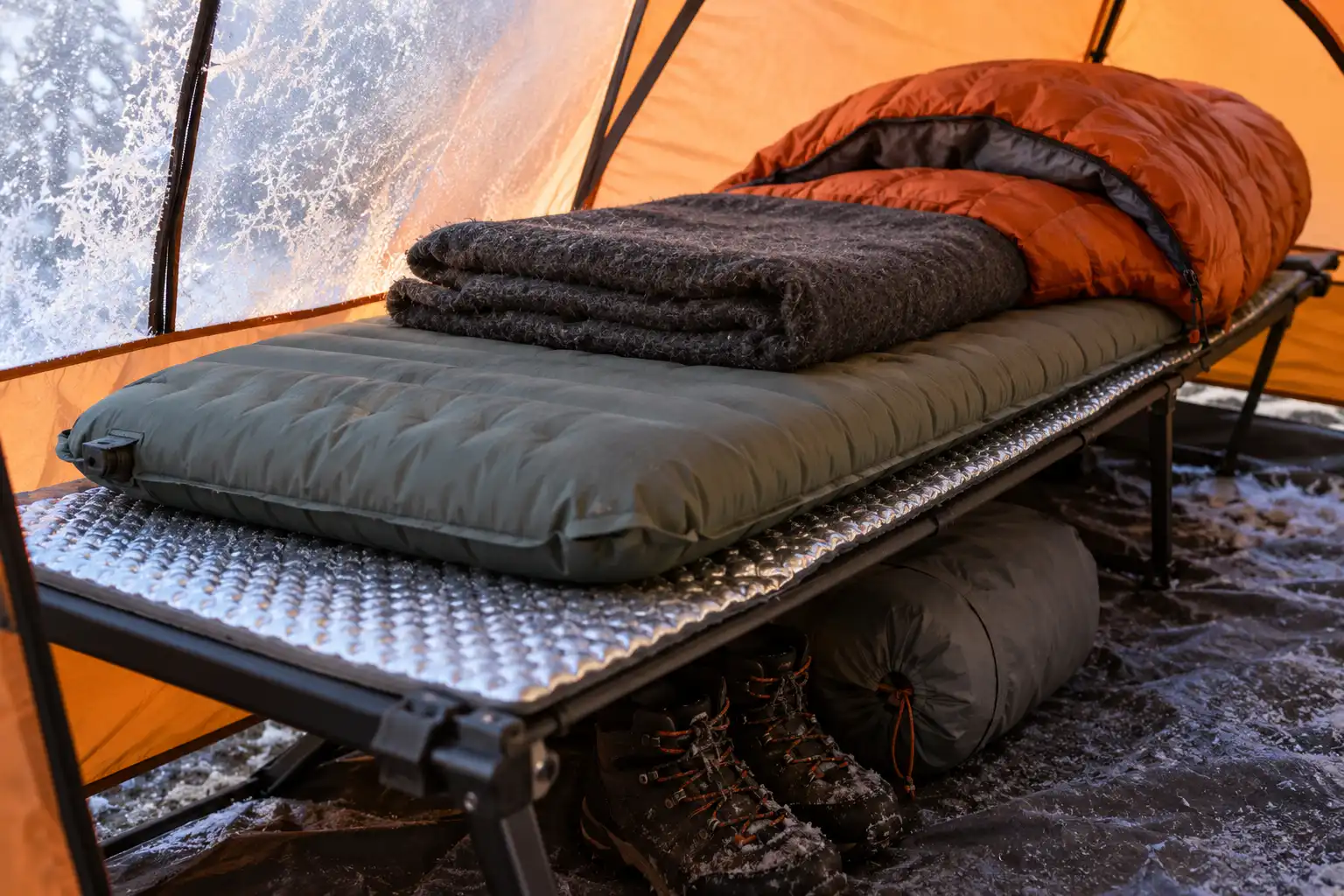
- Put an insulated pad on the deck. Aim for R-4 or better. Self-inflating models suit cots well, because self-inflating pads recover their loft without a pump and resist sliding. Some brands now sell cot-specific pads rated around R-5.
- Stack a closed-cell foam pad underneath it. A basic foam mat adds roughly R-2. It also shields the air pad from the frame and keeps working if the air pad springs a leak.
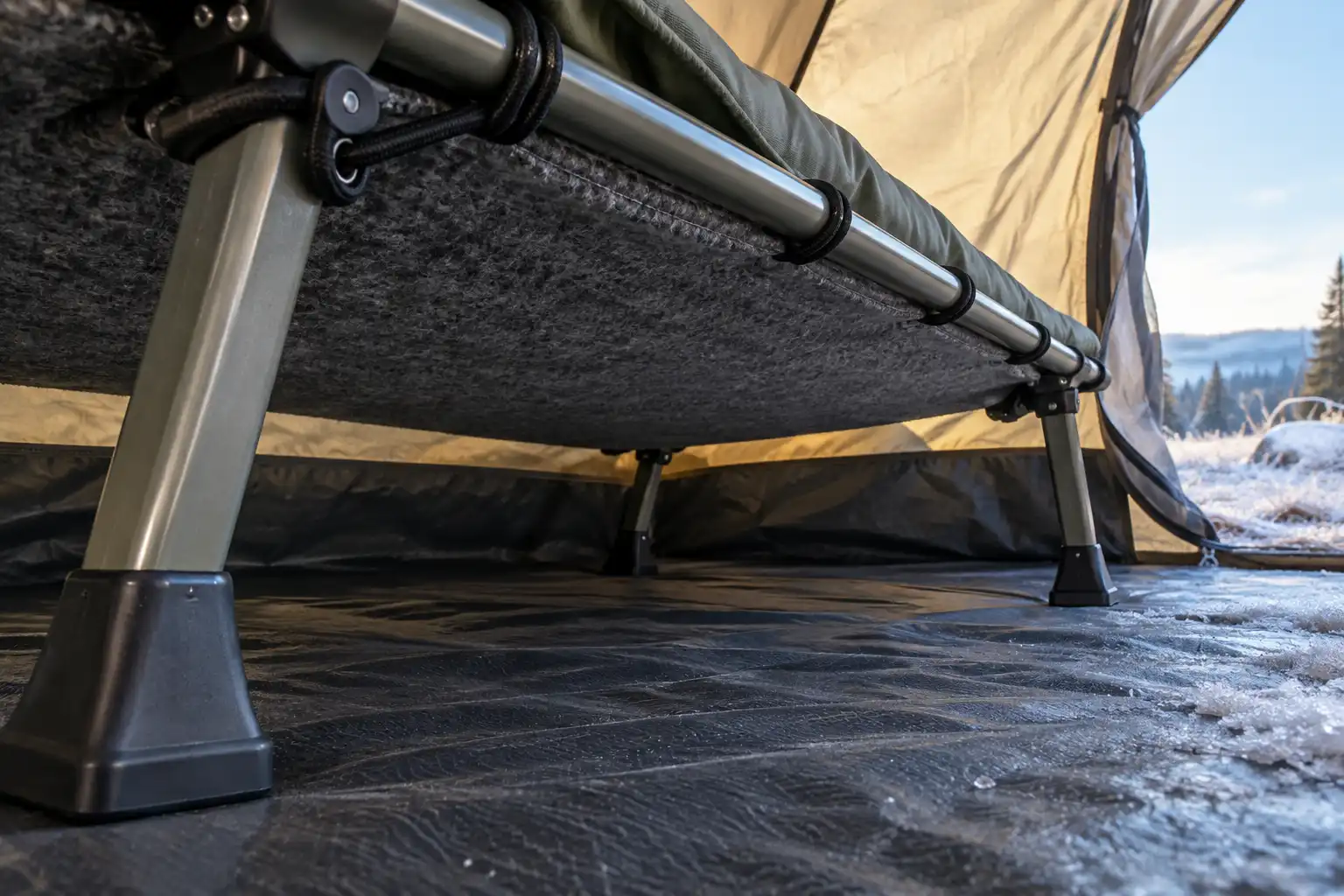
- Block the air moving under the cot. Drape a wool blanket or foam mat across the underside, pulled snug against the frame with shock cord. Gaps ruin the effect, so keep it tight. Packed duffels shoved underneath do a rough version of the same job.
- Add wool between the pad and your bag. One wool blanket resists compression better than extra bag fill. It also soaks up condensation instead of trapping it against you.
- Match the bag to the forecast, then go lower. Rated comfort numbers assume good ground insulation. For guidance on choosing a sleeping bag for freezing nights, aim at least 10°F below the expected low.
- Keep the cot off the tent wall. Contact transfers condensation straight into your bag, and frost forms first along that seam.
Cot vs sleeping pad on the ground
| Factor | Cot plus pad | Pad on the ground |
|---|---|---|
| Warmth for the same R-value | Slightly colder, because of airflow | Slightly warmer |
| Wet or slushy floors | Keeps you clear | Direct contact |
| Rough, frozen ground | Flat every time | Depends on the site |
| Weight | 3 to 20 pounds | 1 to 2 pounds |
| Tent floor space | Needs a full footprint | Rolls up small |
| Getting in and out | Easy on knees | Harder in the cold |
Cots win on comfort and dryness. Pads win on warmth per ounce and on packability. Compare a cot and a sleeping pad side by side and the same trade-offs show up in every season. Winter just sharpens them.
When you should leave the cot at home
Skip the cot when weight, space, or extreme cold rules it out.
Backpacking comes first on that list. The lightest camp cots still weigh around 3 pounds, and common steel-framed models run 15 pounds or more. Meanwhile a winter pad weighs 1 to 2 pounds and packs into a small stuff sack.
Small tents pose the second problem. A cot needs its full footprint of floor, plus clearance for legs and elbows. In a two-person tent, one cot eats most of the space. Cot feet also press hard on a cold floor, and chilled fabric tears more easily than warm fabric.
Drafty camps make a third case. Wind sliding across the floor of a single-wall tent blows straight under a cot. On exposed ridges, I would rather sleep low and block that draft entirely. A few cheap tricks for warming a tent without pricey gear work better once you are down at floor level.
What makes a cot winter ready?
Four details separate a cot you can use in the cold from one you cannot.
Deck width. Measure it before buying. Most decks run 25 to 30 inches, and your pad needs to sit flat without curling up at the edges.
Foot design. Wide plastic caps spread the load and protect a frozen tent floor. Bare metal tube ends do the opposite.
Height. Low cots leave less room for air to circulate, so they sleep a little warmer. Taller cots give you storage space and an easier stand-up.
Capacity. Check the rating against your weight plus winter clothing, two pads, and a heavy bag. That total climbs faster than people expect.
Frame material matters less than sellers suggest. Aluminum saves weight, steel carries more load, and neither one weakens meaningfully in the cold.
My own setup, and what I have not tested
Winter in my corner of Bangladesh brings no snow. Around Boga Lake and Keokradong, nights drop into the single digits Celsius, roughly the 40s in Fahrenheit. At those temperatures an R-3 pad on a cot keeps me comfortable, and a wool blanket handles the rest.
Sub-freezing cot camping falls outside my direct experience, so I will not pretend otherwise. The R-value figures above come from ASTM F3340 tested ratings, REI’s cold-weather pad guidance, and campers who sleep on snow regularly. Where my hills stop teaching me something, I go to sources that know better.
FAQs about Cots for winter camping

Is a cot warmer than sleeping on the ground?
Can you use an air mattress on a cot in winter?
Do you really need a pad on a cot?
Does a blanket under the cot actually help?
The bottom line
Cots are good for winter camping as long as you treat them as furniture, not insulation. The frame buys you a dry, flat, comfortable bed on ground that offers none of those things. Warmth still comes from what you stack on top. Get to R-5 or higher, then block the airflow underneath. Add wool between the pad and your bag. Finally, pick a sleeping bag rated below the forecast low.