Can You Use a Space Heater in a Tent? Safe Types and Setup Rules

A space heater looks like the easy fix for a freezing tent. Some heaters do work in a tent. The wrong one, though, can start a fire or fill your shelter with carbon monoxide while you sleep. Here’s which heaters are safe, how to set one up, and what I use when there’s no power.
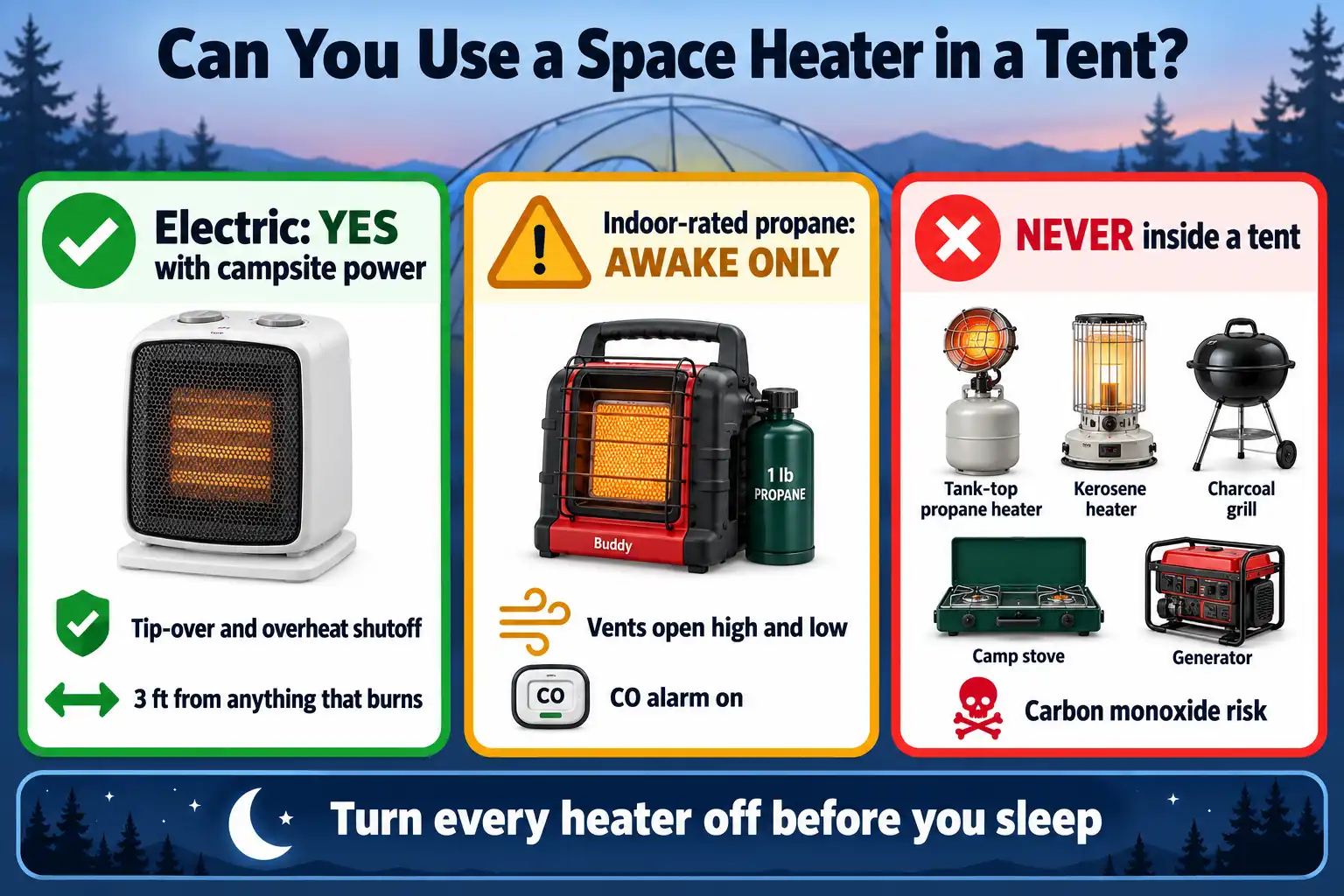
Yes, you can use a space heater in a tent, but only two types belong inside. An electric heater with tip-over and overheat shutoff is the safest pick at a campsite with power. A propane heater certified for indoor use can work while you’re awake and the vents are open. Switch either one off before you sleep.
Which space heaters are safe to use in a tent?
Only two kinds are safe inside a tent: electric heaters with automatic shutoffs, and indoor-rated propane heaters with a low-oxygen sensor. Every other fuel-burning heater, stove, or grill stays outside. The table below shows where each common option stands.
| Heater type | Safe in a tent? | Biggest risk | Main rule |
|---|---|---|---|
| Electric (ceramic or oil-filled) | Yes, at a powered site | Fire, hot cords | 3 feet of clearance, off at bedtime |
| Indoor-rated propane with a low-oxygen sensor | Yes, while you’re awake | Carbon monoxide, burns | Vents open high and low, CO alarm on |
| Propane, kerosene, or catalytic heaters without an indoor rating | No | Carbon monoxide | Keep them outside |
| Camp stoves, lanterns, charcoal, generators | No | Carbon monoxide | Never run them inside |
| Wood stove | Only in a canvas hot tent with a stove jack | Fire, carbon monoxide | Never in a nylon tent |
Electric space heaters
Electric heaters burn nothing, so they make no carbon monoxide and use none of your oxygen. That’s why they’re my first choice whenever a campsite has power. I’d pick a ceramic or oil-filled model, since neither has bare glowing coils near your gear.
Before you buy, look for a tip-over switch, overheat protection, and a thermostat. The NFPA also recommends a heater listed by a testing lab, so check for a UL or ETL mark.
Power is the catch. A typical 1,500-watt heater draws 12.5 amps at 120 volts, so you need a site with an electric hookup. On my treks in the Bandarban hills, there’s rarely an outlet anywhere close.
Indoor-rated propane heaters
These heaters run on small 1-pound propane cylinders, so they need no outlet. The best-known model is the Mr. Heater Portable Buddy. Its owner’s manual lists tents among the small spaces where it’s safe indoors, as long as it gets fresh air.
Two parts make that possible. A low-oxygen sensor (ODS) shuts the heater off if oxygen in the tent starts to drop. Meanwhile, a tip-over switch kills the flame if the heater falls.
Still, it burns propane in the air you breathe, and it can give off carbon monoxide without enough fresh air. The CPSC calls ODS heaters safer for camping. A CDC report on camping deaths, however, advises against running any fuel-burning camping heater inside a tent. So treat propane as the backup for nights without power, not your first pick.
Heaters that never belong inside a tent
Outdoor-only propane heaters, like the kind that screws onto a tank, need open air to burn safely. Kerosene heaters, charcoal grills, camp stoves, lanterns, and generators fall in the same group. That same CDC report warns that opening tent flaps or windows won’t stop carbon monoxide from building up with these.
Flameless catalytic heaters can mislead you. They show no flame, but they still burn fuel and use oxygen. So unless the label says indoor use, keep one outside.
What makes a heater in a tent dangerous?
The two big dangers are carbon monoxide from fuel-burning heaters and fire from heat too close to fabric or bedding. A tent packs you, your gear, and the heater into a tiny space. So both risks build faster than they would in a room.
Carbon monoxide
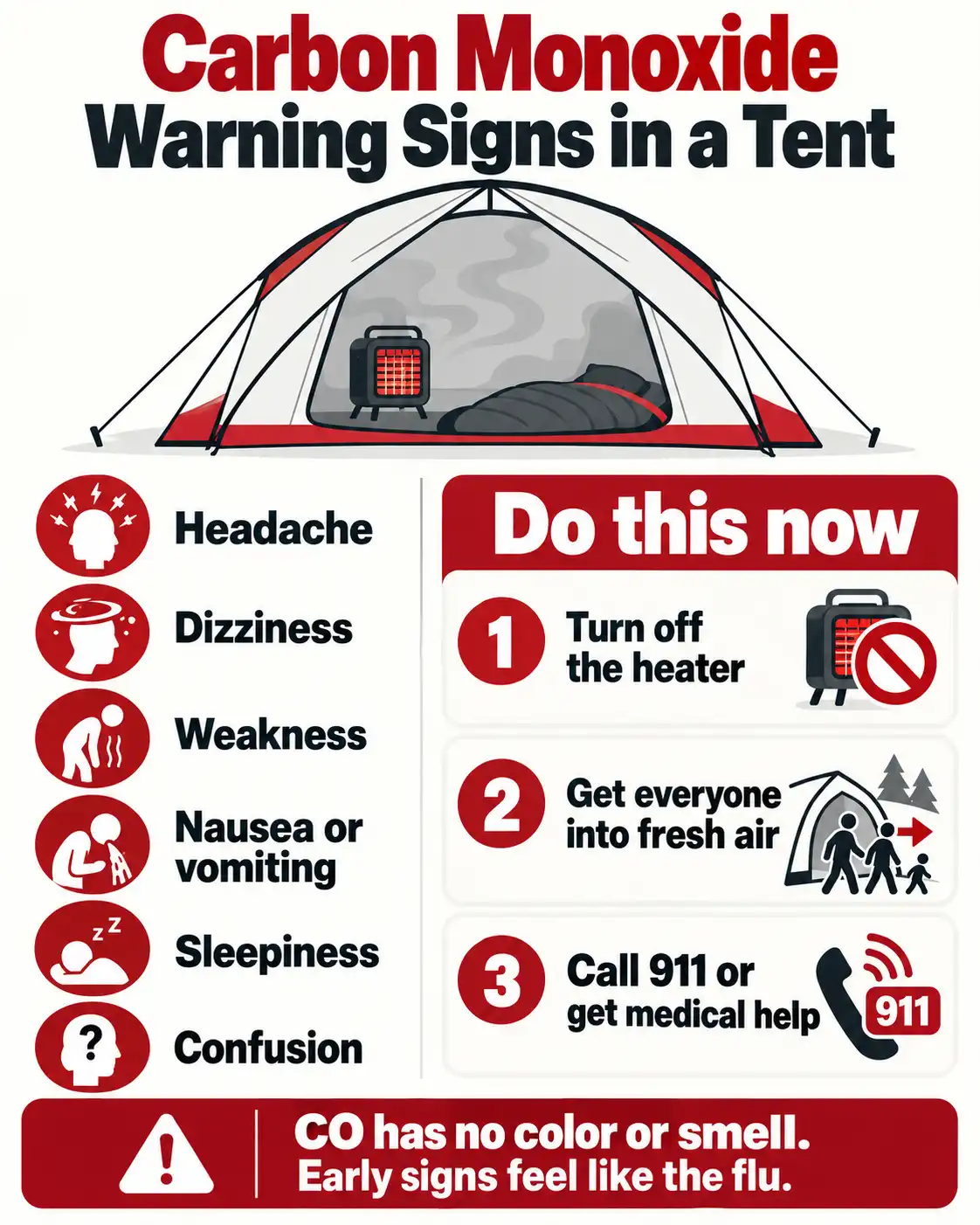
Carbon monoxide (CO) has no color and no smell. Its early signs feel like the flu: headache, dizziness, weakness, nausea, vomiting, sleepiness, and confusion. Once you fall asleep, you won’t notice any of them. Plus, a few drinks around the campfire make those signs even easier to miss.
These deaths do happen. The CPSC knew of at least 26 people who died from CO linked to camping equipment between 2006 and 2010. It also warns that the risk climbs at high altitude.
Fire
Most tents use thin nylon or polyester that melts and burns fast. Some carry a CPAI-84 flame-resistance label. Even those tents warn you to keep all flame and heat sources away from the fabric. That label only means the fabric resists a brief flame. Steady heat can still melt or ignite it.
Electric heaters aren’t fireproof either. An NFPA safety sheet notes that two in five deaths in space heater fires involve portable electric heaters.
Condensation
Propane heaters add one more problem: water. Burning one pound of propane releases about 1.6 pounds of water vapor, which is roughly three cups. On a cold night, much of it condenses on your tent walls and drips onto your sleeping bag.
Can you sleep with a space heater on in a tent?
No. Turn any heater off before you fall asleep, whether it burns propane or runs on electricity. Mr. Heater’s manual says never to run the Buddy while sleeping. The CPSC gives the same advice for all camping heaters. Fire experts at the NFPA also say to switch portable heaters off at bedtime.
While you sleep, nobody is watching the heater. A sliding sleeping bag, a hot plug, or slowly rising CO can go unnoticed for hours.
So run the heater while you change into dry clothes and settle in. Then switch it off and let your sleeping bag hold the heat. In the morning, turn it back on and give the tent a few minutes before you crawl out. My own rule: the heater goes off before the sleeping bag zipper goes up.
If you can’t stay warm once the heater is off, the fix is a warmer bag or pad. Your bag’s temperature rating and your pad’s R-value decide how cold is too cold for your setup.
How to use an electric heater in a tent safely
I’d follow these steps at any campsite with power.
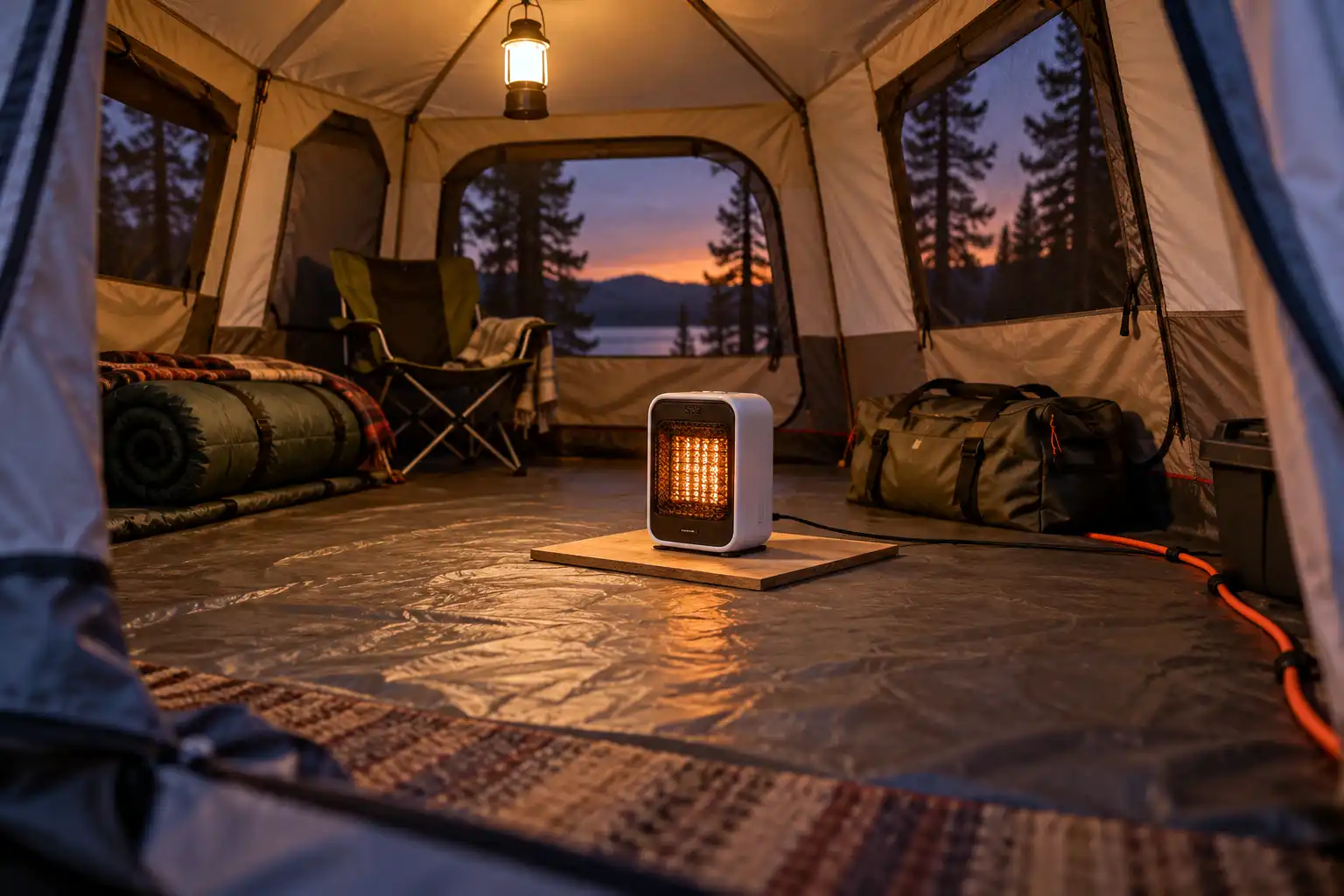
- Book a site with power. Electric hookups come with developed campgrounds, not a backcountry campsite. A typical pedestal has a standard 20-amp household outlet next to the RV plugs. Call ahead, because some tent-only loops have no hookups at all.
- Test the heater at home first. Run it for an hour on the cord you plan to bring. Then tilt it to check the tip-over switch, and feel the plug for heat.
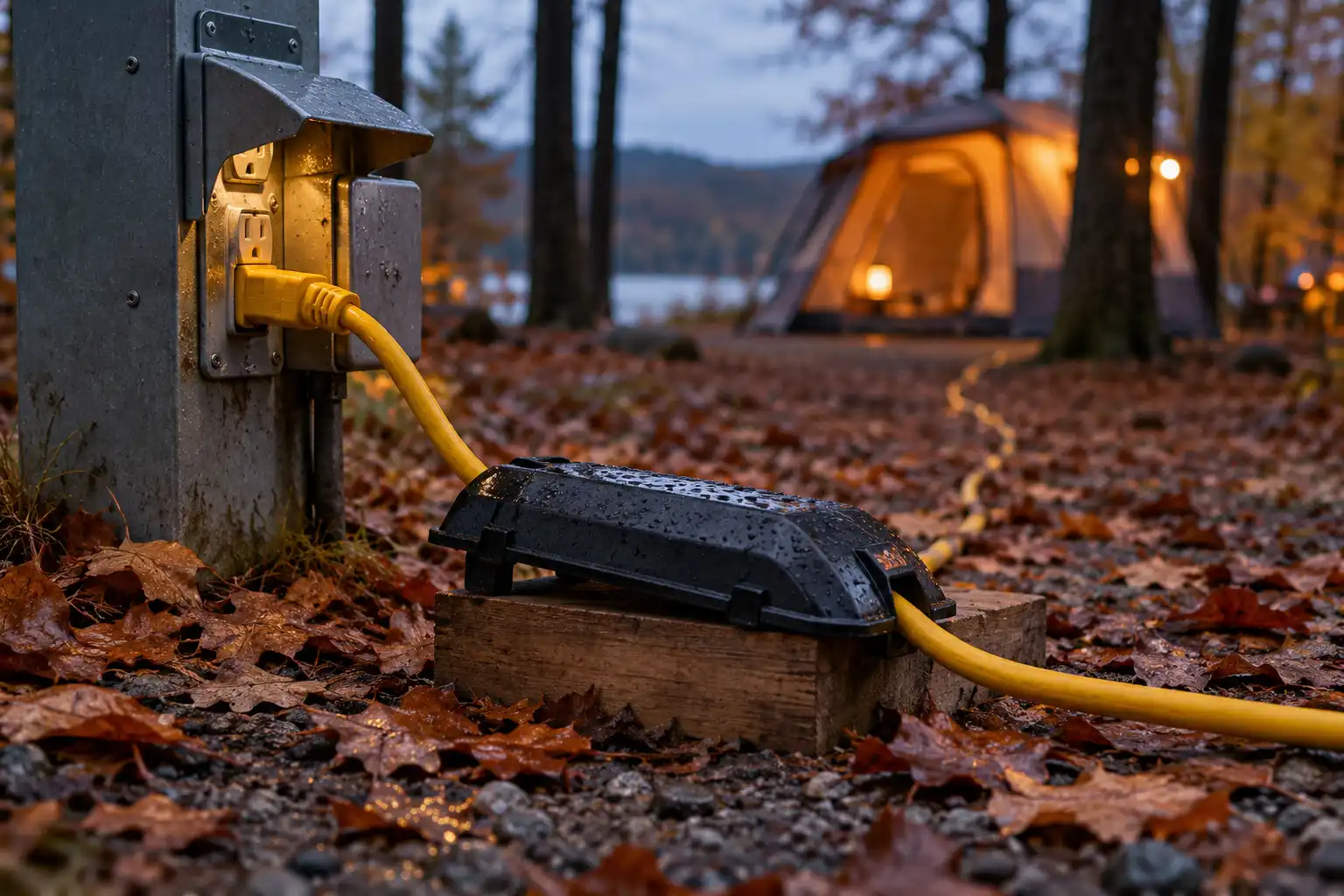
- Use one heavy cord, with nothing else on it. The NFPA says to skip extension cords, but at a campsite you need one. Many heater manuals call for at least a 14-gauge cord rated for 1,875 watts or more. I’d go heavier with a 12-gauge outdoor cord, fully unrolled.
- Keep the connection dry. Rest the plug joint on a block or in a weatherproof cord cover, away from dew. If the plug or cord ever feels hot, unplug it and stop.
- Set the heater on a hard, flat base. A small board or metal tray keeps it from tipping on a soft tent floor.
- Give it 3 feet of space. Keep tent walls, bedding, clothes, and people that far away.
- Unplug it whenever you step out. Even a quick walk to the restroom is long enough for something to go wrong.
How to use a propane heater in a tent safely
These steps follow the Mr. Heater Buddy manual, but always check the one that came with your heater.
- Confirm the indoor rating. The manual should say indoor use and mention tents. Some versions of the same heater carry an outdoor-only label, so check yours.
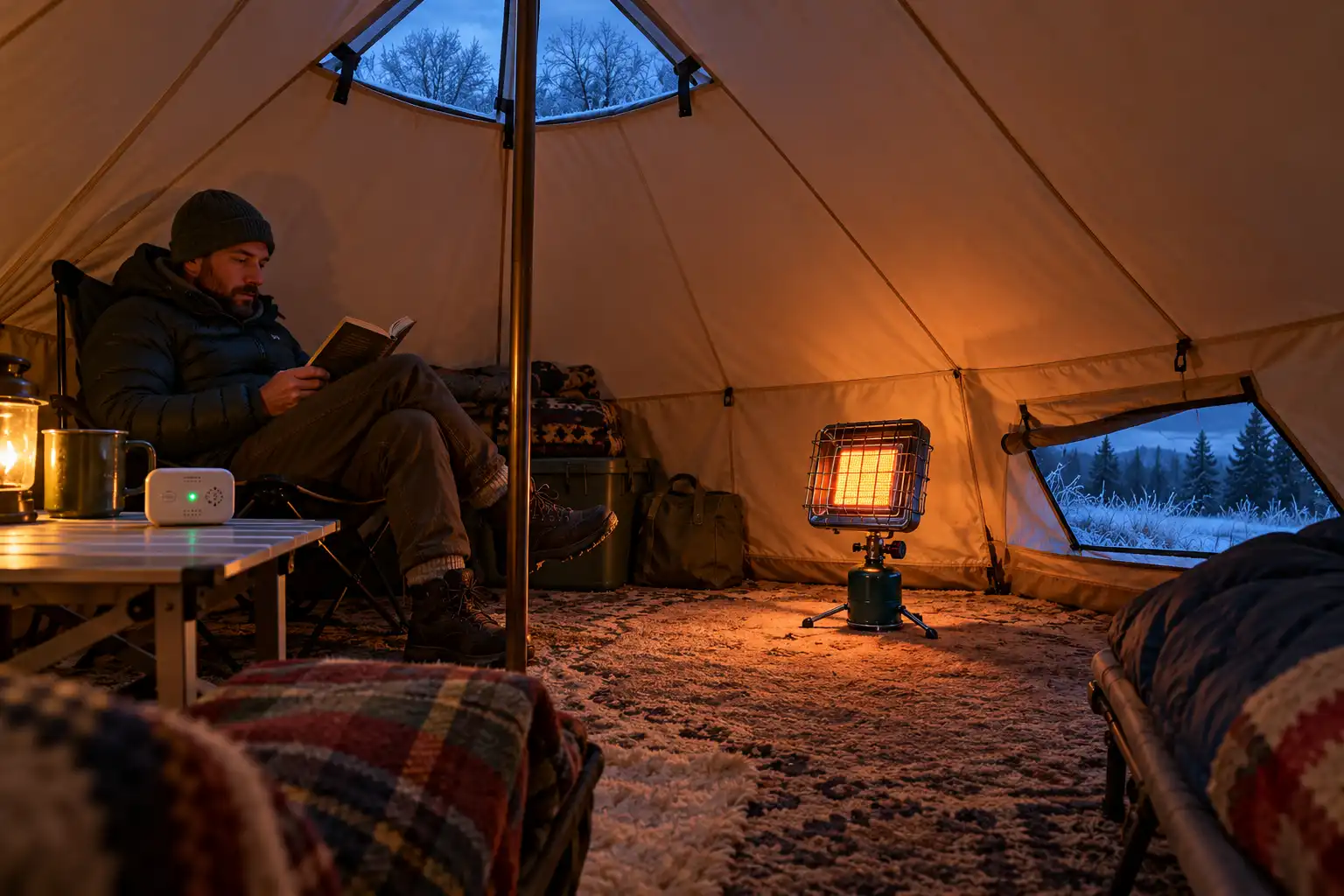
- Pick a tent with headroom. The Buddy needs 30 inches of clearance above it, 24 inches in front, and 6 inches at the sides. That rules out most low backpacking tents.
- Open vents high and low. Mr. Heater asks for at least 9 square inches of opening near the ceiling and at floor level. That’s about a 3-by-3-inch gap at each spot. No window or roof vent means no heater inside.
- Bring a CO alarm. Pack a battery-powered alarm listed to UL 2034, test it before the trip, and keep it near where you sit.
- Handle fuel outdoors. Attach and remove cylinders outside, and only when the heater is cool. A refillable 20-pound tank never comes inside. It stays outdoors on an approved hose.
- Keep other fuel burners outside. The manual says not to run other fuel-burning appliances inside, so cook and light lanterns outdoors.
- Know when to shut it down. At the first headache, dizziness, or nausea, turn it off and get everyone outside. Above 7,000 feet, the heater may also shut itself off. Air out the tent and wait 5 minutes before you relight it.
Can you run a space heater off a portable power station?
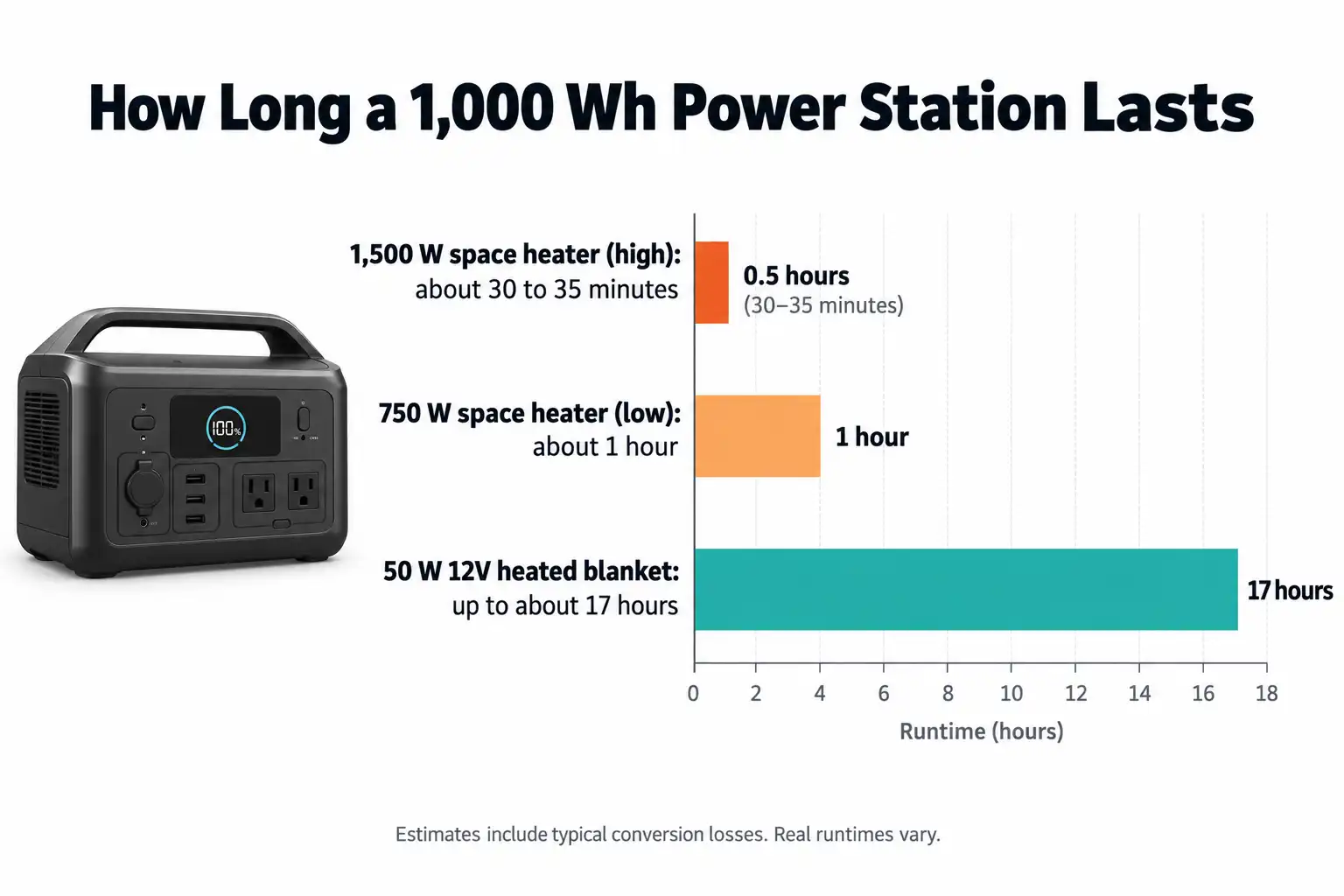
Only for a short time. Once you count inverter losses, a 1,500-watt heater drains a 1,000 Wh power station in roughly 30 to 35 minutes. Even the 750-watt low setting only stretches that to about an hour.
Some power stations can’t even deliver 1,500 watts continuously, so check the inverter rating before you try.
A 12-volt heated blanket makes far more sense on battery power. Most draw around 40 to 60 watts, so even 8 hours of nonstop use takes only 320 to 480 Wh. That fits on a 1,000 Wh station with room to spare. Better still, the heat goes straight into your bed instead of leaking out through thin tent walls.
A gas generator can power a heater for hours, but it makes its own carbon monoxide. Park it far from every tent, never in a vestibule, and check the campground’s generator rules first.
How I stay warm in a tent without a heater
On my Bandarban treks, carrying fuel just for heat isn’t worth the weight. Instead, I stay warm in my tent at night with insulation and a few simple habits.
Insulate from below. Cold ground pulls heat from your body all night. So a pad with a solid R-value matters more than warm air. On an air mattress, the air inside cools to ground temperature. A foam pad or blanket on top is the easiest way to keep your air mattress warm.
Bring a hot water bottle. Pour hot water into a hard-sided bottle rated for it, close it tight, and slide it into a sock. Tucked near your feet or stomach, it gives off heat for hours.
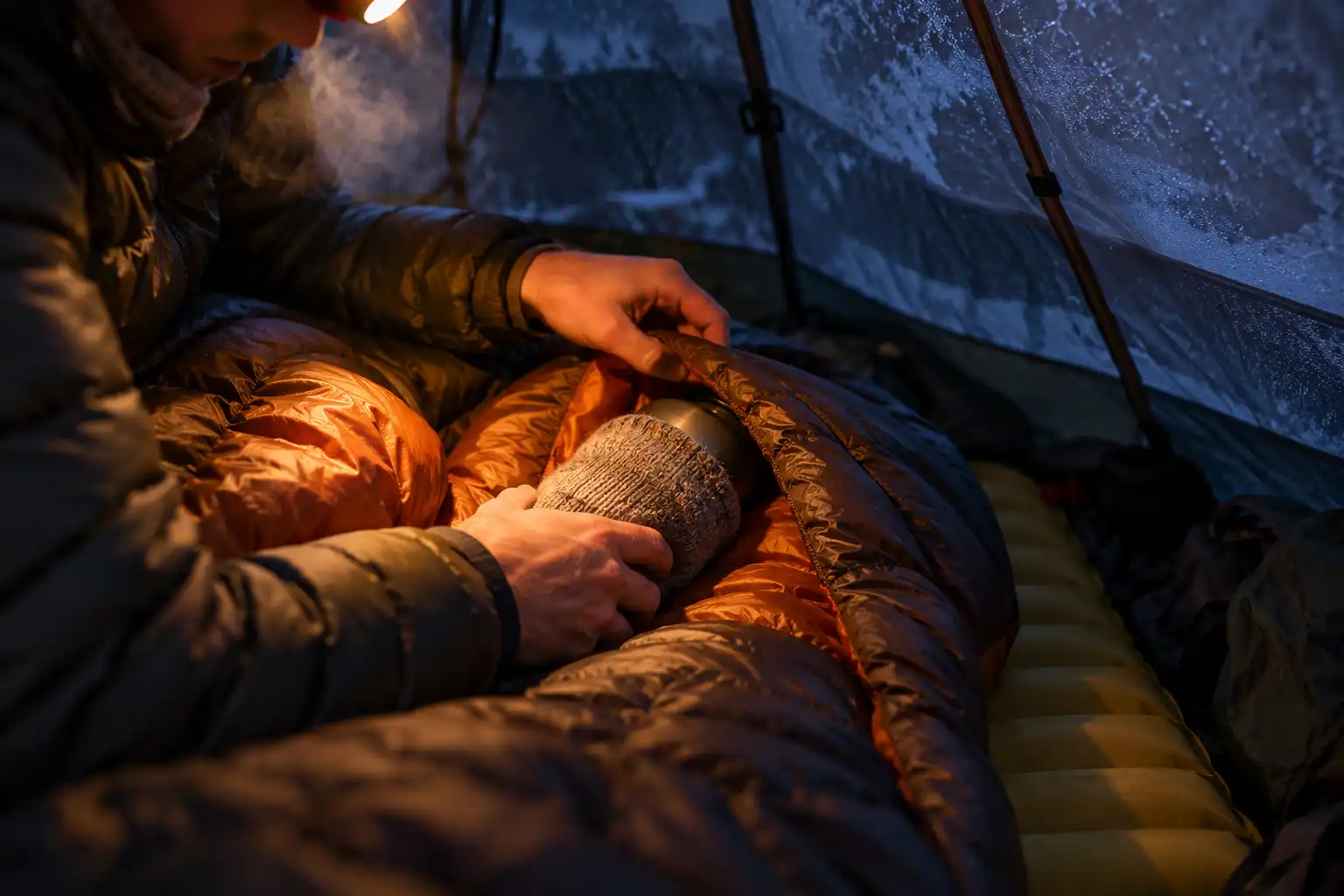
Sleep in dry layers. Change out of the day’s damp clothes and pull on a beanie before you zip up.
Warm the tent itself. A ground tarp, a blanket on the floor, and a tight rainfly all trap heat. You can insulate a tent on a small budget with gear you probably own already.
Frequently asked questions
Is a Mr. Heater Buddy safe to use in a tent?
Yes, if you follow its manual. The standard US model carries an indoor rating for ventilated tents. It runs about 3 to 6 hours on a 1-pound cylinder, depending on the setting. Just keep it to waking hours.
Do electric heaters need ventilation in a tent?
Not for the heater itself, since it burns no fuel. You still want some airflow, though. Your breath adds moisture all night, and venting a tent on cold nights keeps that moisture off your sleeping bag.
Do you need a carbon monoxide alarm with an electric heater?
The heater itself makes no carbon monoxide, so strictly speaking, no. I’d still pack a small battery alarm, though. A generator at the next site or a stove in your vestibule can push CO into your tent.
Can you use a space heater in a tent with kids or a dog?
Yes, but stick with an electric model and stay in the tent while it runs. The NFPA recommends a 3-foot kid-free zone around space heaters. Dogs tend to bump into things, so the tip-over switch matters even more.
Before you pack a heater
A space heater can make a cold tent comfortable, as long as it’s the right type. Go electric when your site has power. Without power, bring only an indoor-rated propane heater, and run it with the vents open and a CO alarm on. Keep anything that can burn well away from it, and switch it off before you sleep. After that, let a warm bag, a good pad, and a hot water bottle carry you to morning.