Can You Use a Sleeping Pad in a Hammock? Yes, Here Is How

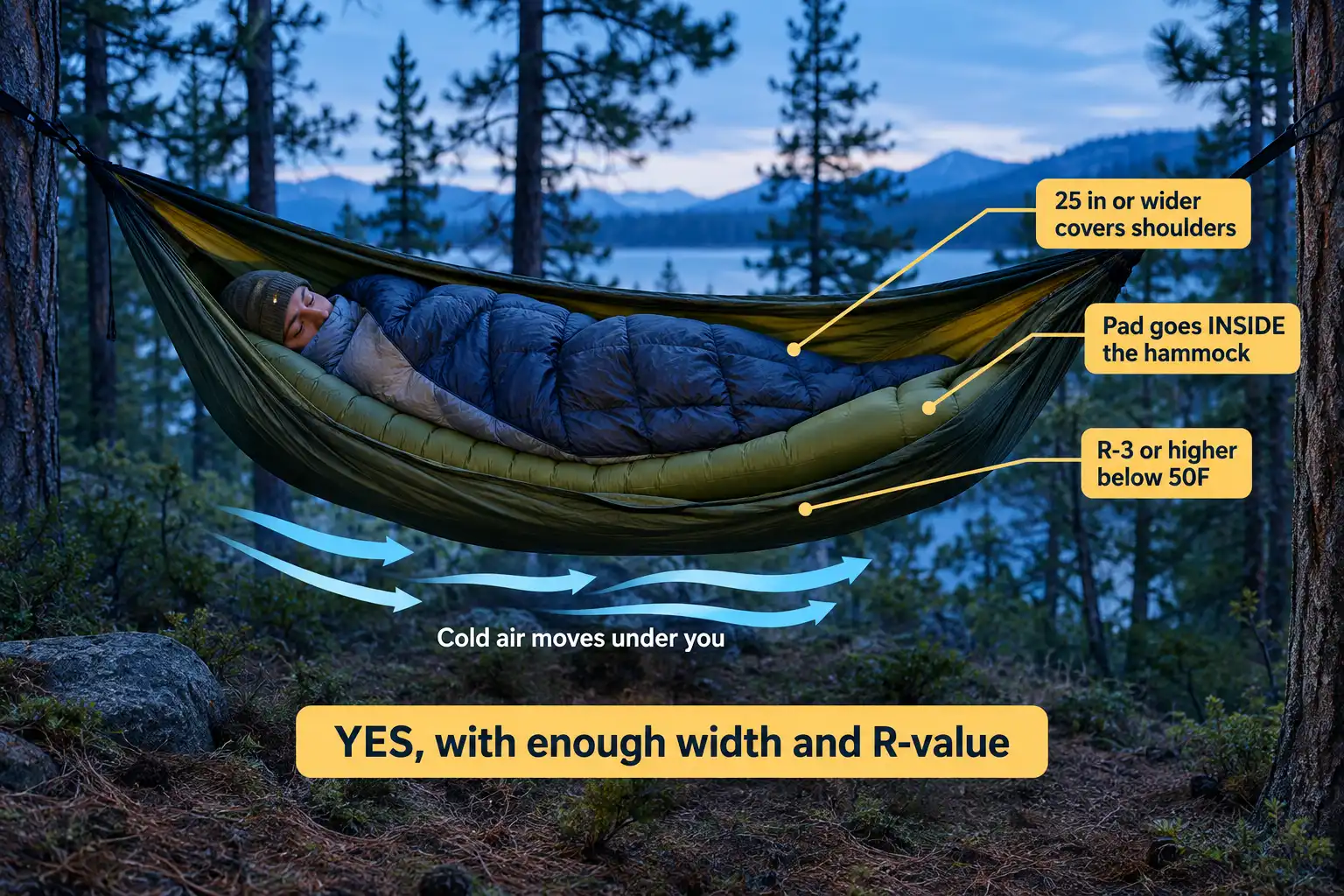
A sleeping pad is the cheapest way to stay warm in a hammock. It also causes the most complaints. I have used pads in my hammock around Kaptai and up in the Bandarban hills. Here is what works, what slides around, and when a pad beats an underquilt.
A sleeping pad works well in a hammock, and it is usually the smartest first step for new hangers. However, the pad has to be wide enough, warm enough, and held in place. Otherwise it slips sideways and your shoulders go cold.
A pad also does double duty. When the trees sit too far apart, you can drop the same pad on the ground and sleep there instead.
Why does a hammock need bottom insulation?
A hammock needs bottom insulation because your body weight flattens everything underneath you. Down and synthetic fill only trap heat while they stay lofted. Once you settle in, the bottom of your sleeping bag squashes against thin nylon and stops working.
Then the air takes over. Cold air moves freely under a hammock and pulls heat straight out of your back and hips. Hammock campers call this cold butt syndrome, or CBS. It usually arrives around 3 or 4 a.m., long after you fell asleep feeling fine.
On the ground you solve this without thinking, because your pad handles the bottom insulating. In a hammock, nothing handles that job by default. Loft is the reason a sleeping bag keeps you warm, and flattened loft insulates almost nothing.
The first cool night I hung near Kaptai Lake, my chest stayed warm while my back felt chilled. That gap sums up the whole problem.
Which sleeping pads work best in a hammock?
Wide pads work best in a hammock. Foam, insulated air pads, and hammock-specific pads with side wings all handle the job.
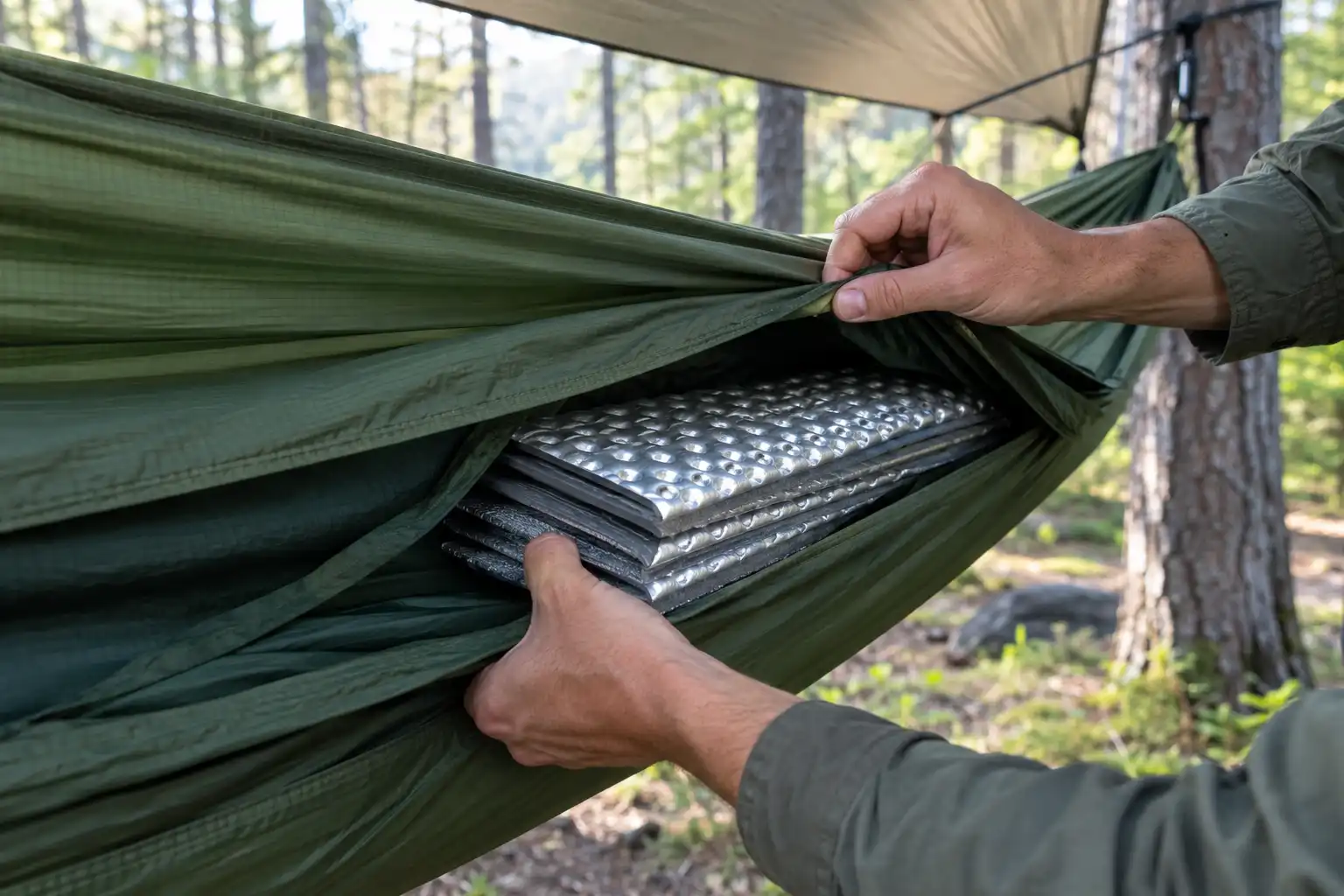
Closed-cell foam. Foam cannot pop, costs the least, and grips hammock fabric better than slick nylon does. Therm-a-Rest lists the Z Lite SOL at a 2.0 R-value, 72 by 20 inches, and 14 ounces in the regular size. Foam stays bulky, though, so it rides outside your pack.
Insulated inflatables. These pack small and feel softer under your hips. Because the surface is slippery, they need help staying put. Also, high pressure makes them stiff, which fights the curve of the hammock.
Hammock-specific pads. Klymit’s Insulated Hammock V measures 78 by 47 inches inflated and carries a listed 4.4 R-value, with fold-up side wings and non-slip zones. It weighs around 32 ounces, so you trade weight for coverage.
Width matters more than most buying guides admit. A standard 20-inch pad leaves your shoulders hanging past the edge. Therefore, look for 25 inches or wider if you sleep in a single-layer hammock. Self-inflating models sit between foam and air, and the way self-inflating pads work explains why they add warmth without much fuss.
What R-value do you need for a hammock?
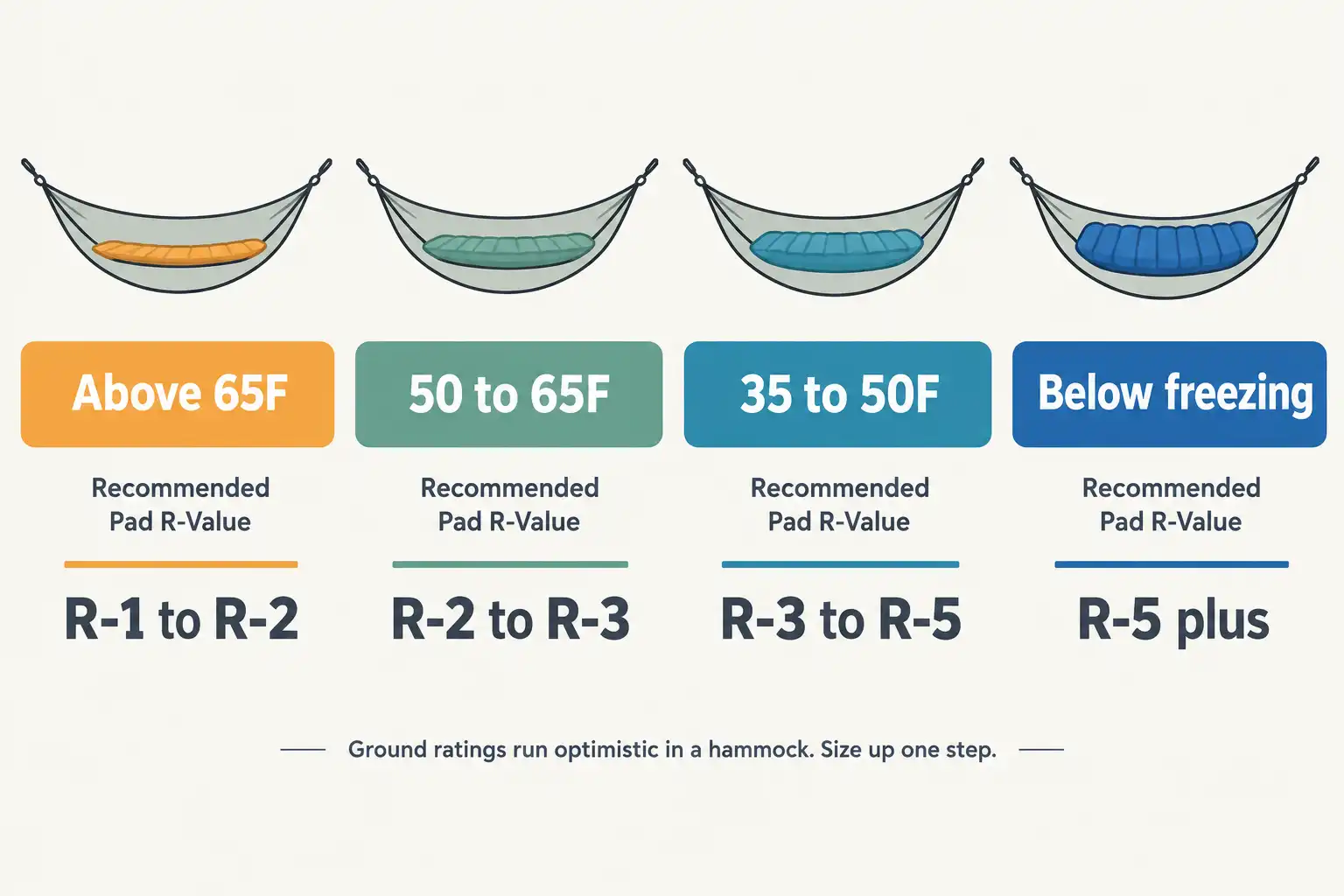
Aim higher than you would on the ground. As a rough guide, pad makers suggest R-1 to R-2 for summer, R-2 to R-4 for three seasons, and R-4 to R-6 for winter. In a hammock, I treat those numbers as one step optimistic and size up.
R-values now follow one test standard, ASTM F3340. Therm-a-Rest, NEMO, Sea to Summit, Exped, and Big Agnes all rate pads this way. So the numbers finally compare across brands.
Still, remember what that test measures. The pad sits flat between a warm plate and a cold plate, which simulates cold ground. A hammock has no ground, and moving air touches you from every side. Therefore the same pad performs worse in the air than its rating suggests.
Stacking helps, since R-values add together. A foam pad under an air pad gives you both numbers plus puncture protection.
How do you keep a sleeping pad from sliding in a hammock?
Capture the pad instead of fighting it. A double-layer hammock, a sewn sleeve, or a grippy surface will hold a pad far better than any adjustment you make at 2 a.m.
Five fixes that actually hold:
- Double-layer hammock. The pad goes between two fabric layers, so it cannot drift at all. This is the cleanest fix when you already own a pad you like.
- Pad sleeve or pocket. Some hammocks zip the pad in. Others give you room to sew a simple pocket yourself.
- Let out a little air. A rock-hard pad turns slick and rigid. Softer pressure lets it follow the hammock shape and grip.
- Add friction. Fabric-topped pads hold better than bare nylon. Silicone dots or a thin fleece layer also cut the sliding.
- Block the low end. Wedge a stuff sack or a jacket under your knees so the pad cannot creep toward your feet.
Hang angle matters too. Straps at roughly 30 degrees give a deeper, flatter lay, which keeps you and the pad centered together. Setting the foot end an inch or two higher stops the slow slide downhill. Dialing in how you set up the hammock fixes more pad problems than any accessory.
How do you stop cold shoulders and the pad taco?
Widen the coverage under your shoulders. Cold shoulders happen because a 20-inch pad is narrower than the diagonal position you actually sleep in.
In a gathered-end hammock you rest across the fabric at an angle, not straight down the middle. That diagonal lay flattens your back and takes the pressure off your knees. A narrow rectangular pad fights it, so your shoulders end up off the edge and pressed into cold nylon.
Three fixes work:
- Use a wider pad, 25 inches or more, or one with fold-up wings.
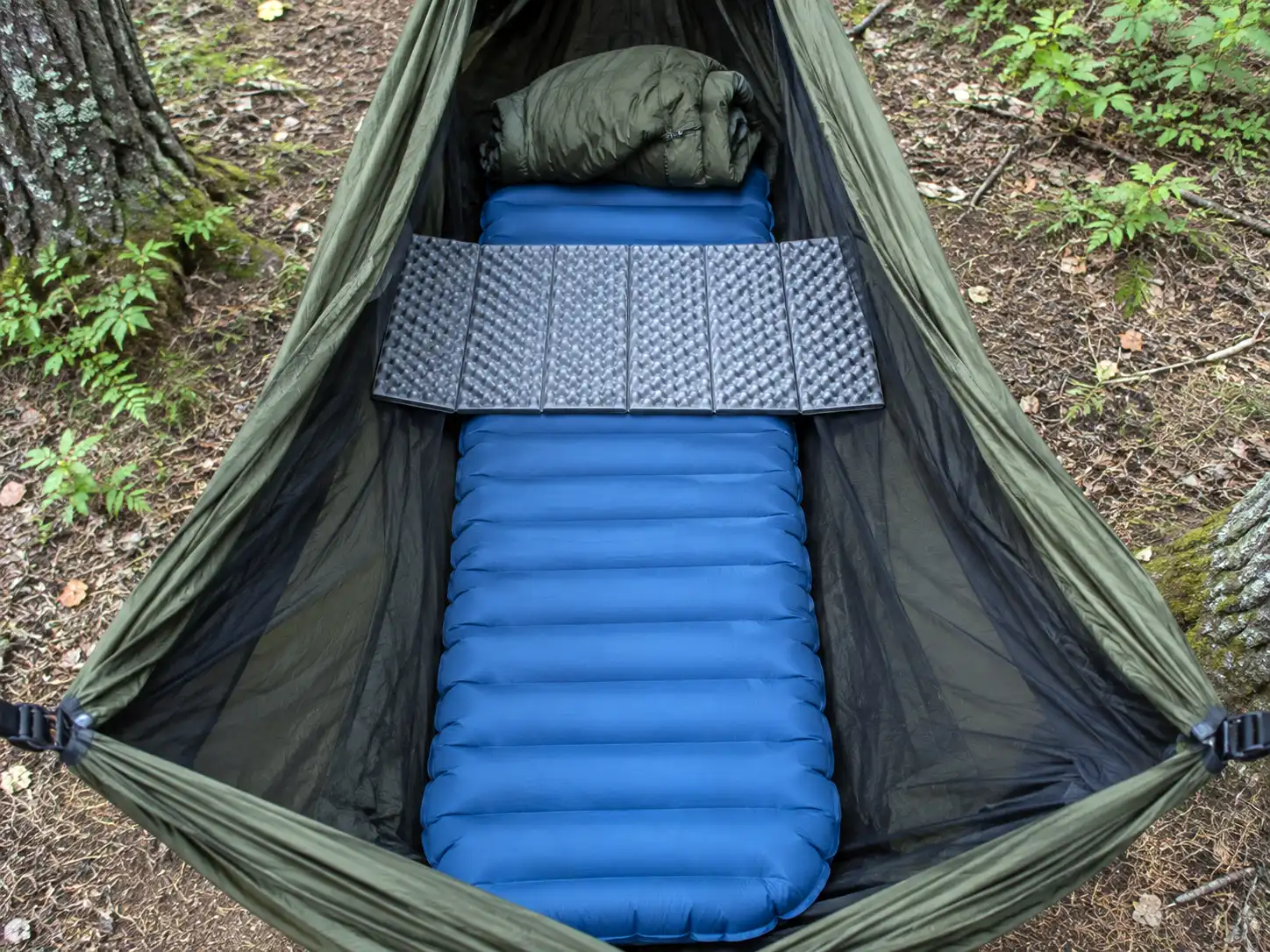
- Slide a folded sit pad or a torso-length foam pad crosswise under your shoulders.
- Cut small foam wings and tape them to the sides of your main pad.
The pad taco is the other common complaint. A stiff, narrow pad curls up at the edges and squeezes your shoulders inward. Wider pads with vertical baffles resist that curl. Foam pads bend more easily once you score the underside crosswise every few inches.
Sleeping pad or underquilt: which should you use?
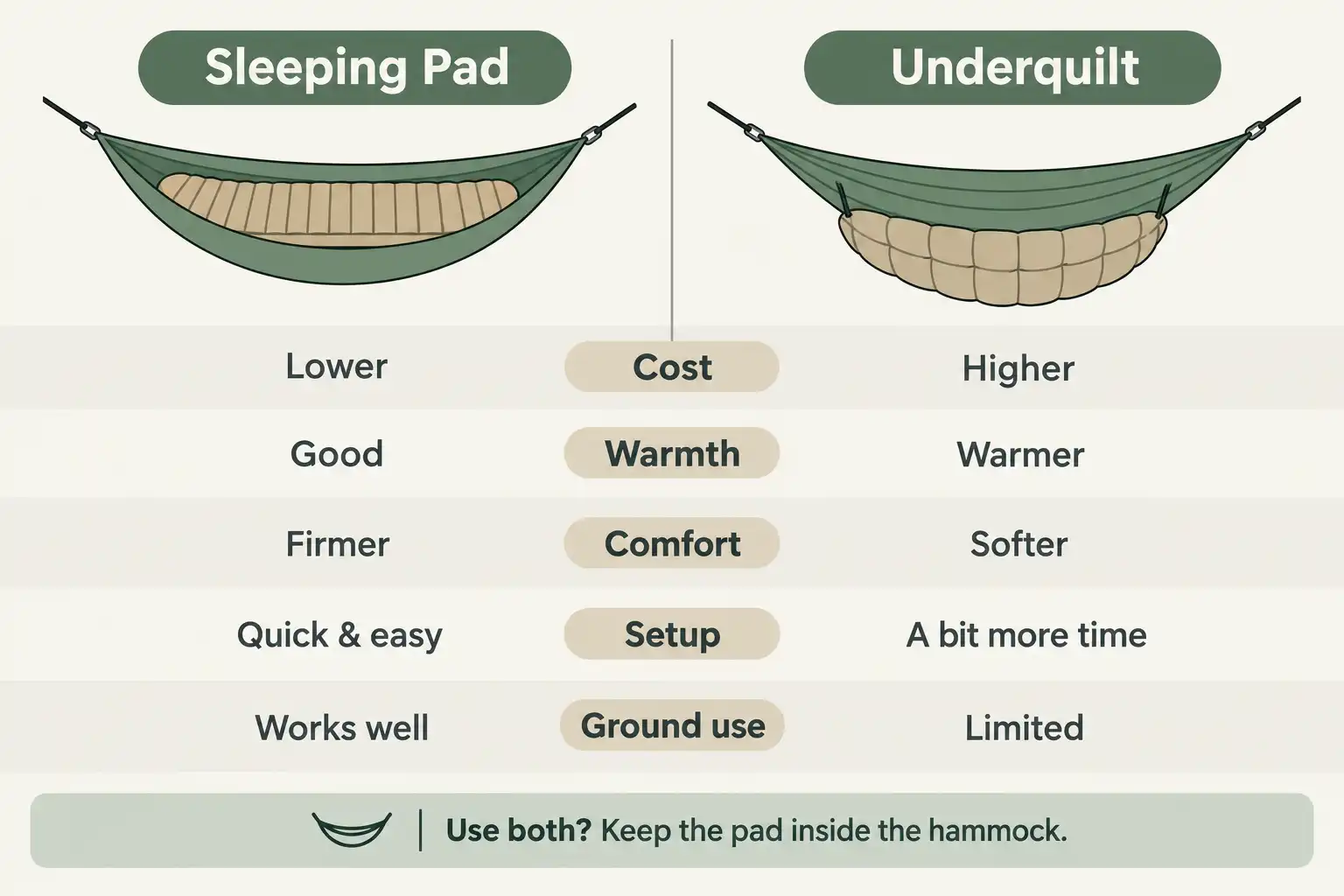
An underquilt stays warmer and more comfortable. A sleeping pad costs less, packs more uses into one item, and handles mild nights fine.
| Factor | Sleeping pad | Underquilt |
|---|---|---|
| Cost | Lower | Higher |
| Warmth | Good with enough width and R-value | Better, since nothing compresses |
| Comfort | Firmer, and it can shift | Nothing sits under you at all |
| Setup | Drop it in and go | Needs suspension tuning each night |
| Ground use | Yes | No |
| Packed size | Foam is bulky, air pads compact | Compresses well |
Pick a pad when you switch between ground and hammock, when money is tight, or when your nights stay mild. Go with an underquilt when you hang often and camp below about 50°F. Plenty of campers run both, with a quilt over a sleeping bag on top and an underquilt below.
One rule matters if you combine them. Keep the pad inside the hammock. A pad wedged between the hammock and the underquilt pushes the quilt away and opens cold gaps.
How to set up a sleeping pad in a hammock
- Hang first. Set your straps near a 30-degree angle, then leave the foot end slightly higher than the head end.
- Put the pad in before your bag. Feeding a pad through a bug net later gets awkward fast.
- Set it diagonally. Match the pad to the line you will actually sleep along.
- Take out some air. Leave the pad soft enough to curve with the fabric.
- Cover the shoulders. Add a folded foam piece whenever your main pad runs narrow.
- Test before dark. Lie down, roll once, then fix anything that shifts.
When trees are scarce, setting up a hammock without trees takes posts, a stand, or solid anchors. Afterward, the pad steps stay exactly the same.
FAQs about Using a sleeping pad in a hammock

Can you use a regular sleeping pad in a hammock?
Do you need a sleeping pad in a hammock in summer?
Can you use a sleeping pad and an underquilt together?
Will an air pad pop inside a hammock?
Final take
A sleeping pad in a hammock works, as long as you plan for width, warmth, and slippage. Start with the pad you already own. Then add a folded foam piece under your shoulders, soften the pressure, and keep the foot end high. If you hang through cold seasons every year, save for an underquilt later. For now, a wide pad and a warm top layer will carry you through most nights. The same habits that keep you warm inside a sleeping bag apply up in the trees.