How to Keep an Air Mattress Warm When Camping (Full Guide)

An air mattress feels like the best bed in camp until the temperature drops. Then it turns into a cold slab under your back. I have fixed this problem on plenty of trips, and the answer is always insulation, not a warmer sleeping bag. Here is exactly what works.
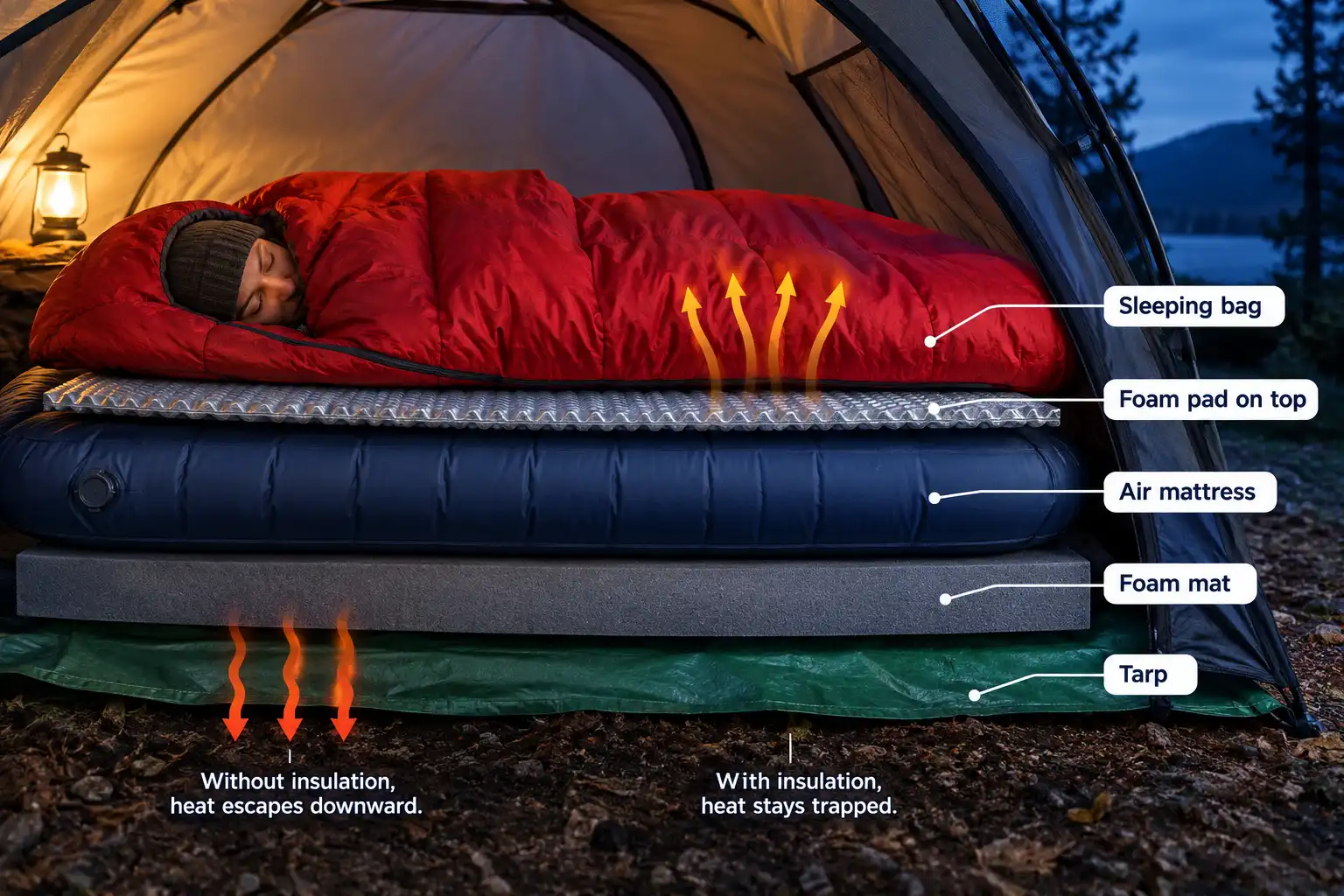
To keep an air mattress warm when camping, add insulation directly on top of the air mattress and directly under it. A closed cell foam pad above, plus a foam mat or rug below, stops most of the heat loss. Then top off the air right before bed, because cold air loses pressure overnight.
Why does an air mattress get so cold at night?
An air mattress gets cold because the air inside it never stops moving. Warm air near your body sinks toward the cold floor, chills, then circulates back up. That convection loop drains heat from you all night. Meanwhile the vinyl shell touches the ground and conducts even more heat away.
Your sleeping bag cannot fix this on its own. Body weight flattens the fill underneath you, so the down or synthetic layer under your hips stops trapping air. Bag temperature ratings also assume you are lying on an insulated pad. Without one, a bag rated to 20°F feels far colder than the label suggests.
Height makes the problem worse. A tall double height air bed holds a huge volume of air, and your body has to warm all of it. Therefore a plush air bed often feels colder than a thin foam mat.
How much insulation does an air mattress need?
R-value tells you how well a layer resists heat loss, and higher numbers block more. Since 2020, most camping brands test pads to the ASTM F3340 standard, so you can compare numbers across brands fairly. A plain household air mattress sits near R-1 or lower, which counts as almost nothing.
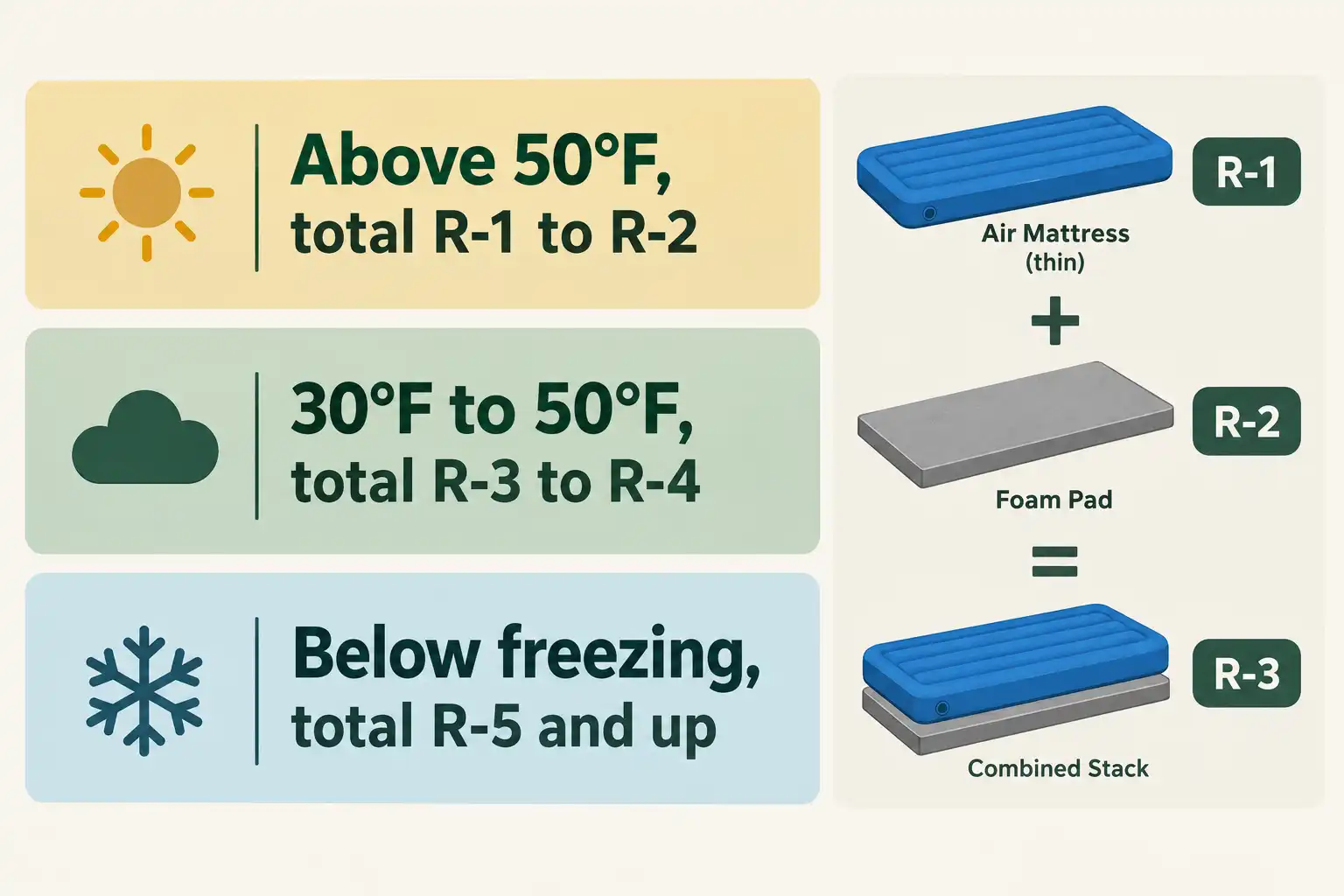
R-values also stack. Add an R-2 foam pad under an R-1 air mattress, and you get roughly R-3 of ground insulation.
Here are the totals I aim for:
- Above 50°F: R-1 to R-2
- 30°F to 50°F: R-3 to R-4
- Below freezing: R-5 or more
Cold sleepers should add about one full point to each range. Remember, those numbers describe your whole stack, not a single piece of gear. Before a trip with hard frost, also check how cold is too cold for tent sleeping so you know when to stay home.
What should you put on top of an air mattress?
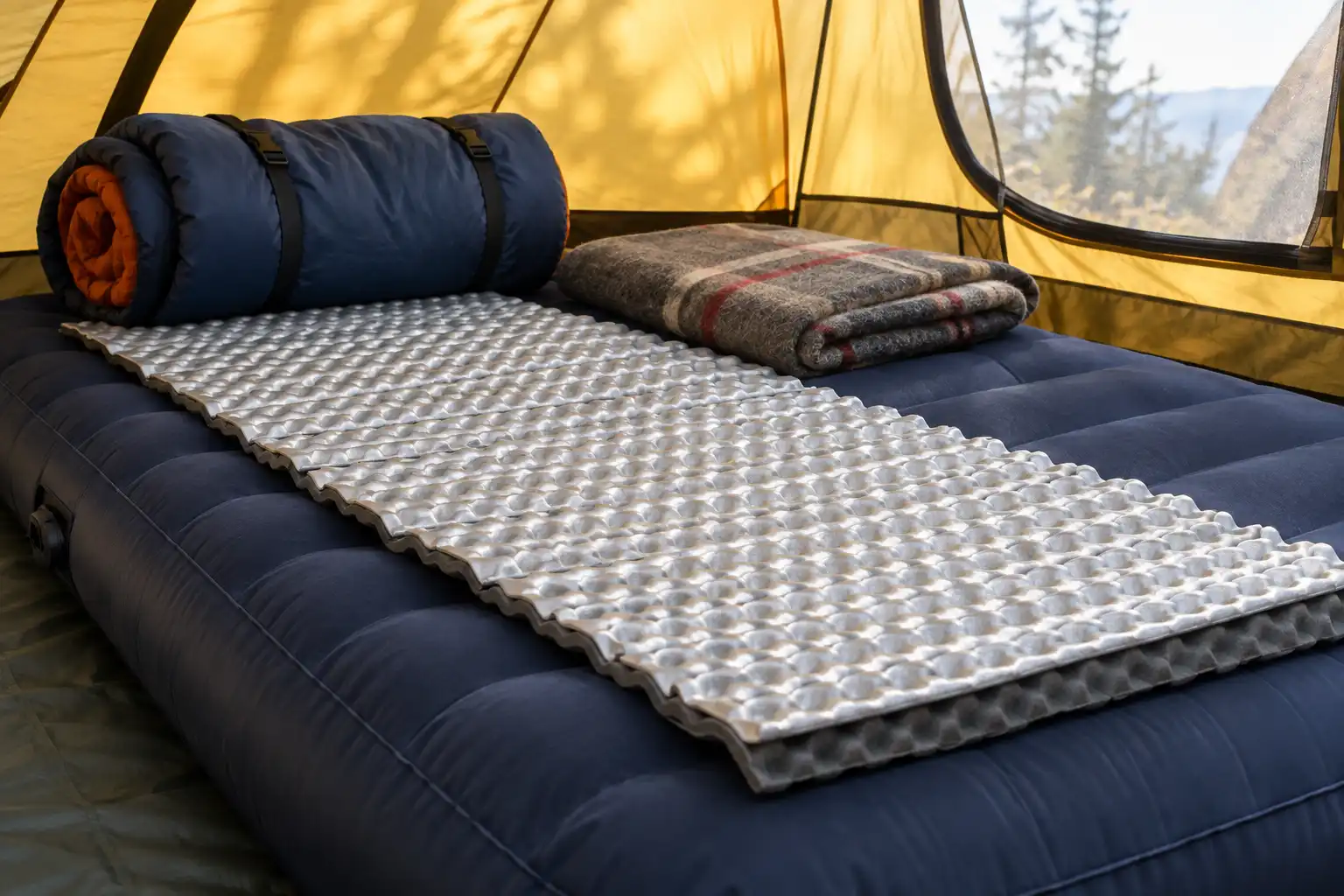
Put a closed cell foam pad or a folded wool blanket directly on top of the mattress, under your sleeping bag. Top side insulation matters more than most campers expect. It separates you from the cold vinyl before the air chamber can pull your warmth downward.
These layers work well, roughly in order:
- Closed cell foam pad. Cheap, light, and usually around R-2. It never punctures and never goes flat.
- Self inflating pad. Warmer and softer, often R-2 to R-5. Because a self inflating pad works with foam inside, it keeps insulating even at low pressure.
- Wool blanket. Two folded wool blankets add real warmth and feel good against skin.
- Quilted mattress topper. Too bulky for backpacking, but fine for car camping.
Skip the thin reflective emergency blanket as your main top layer. It reflects radiant heat, yet it also traps sweat against your body. Instead, slide one between the foam pad and the mattress, never right under you.
What should you put under an air mattress?
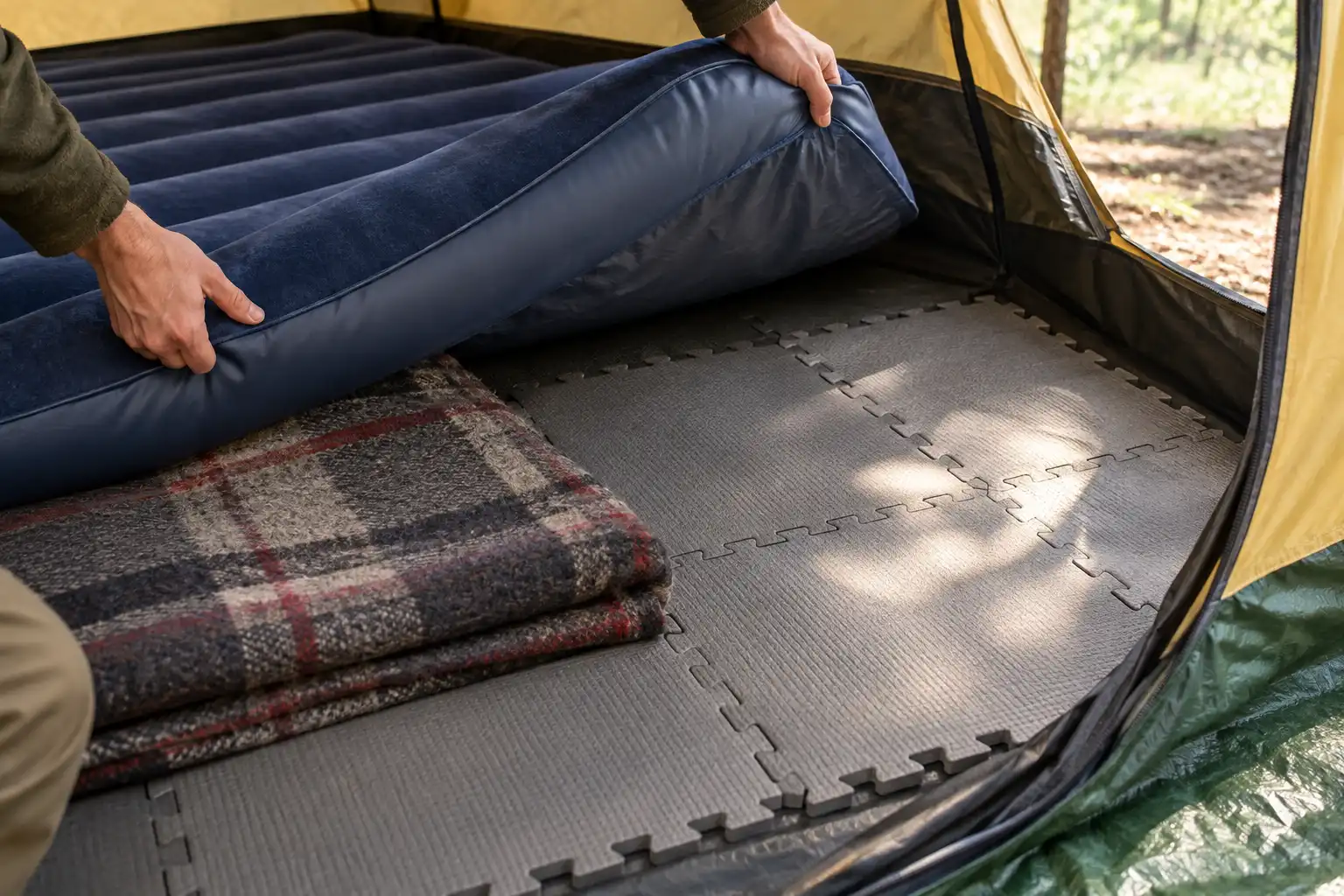
Put a foam layer under the mattress so vinyl never touches the cold tent floor. Ground temperature stays low all night, and bare vinyl passes that cold straight into the air chamber.
Good options, cheapest first:
- Flattened cardboard. Free and surprisingly effective, though useless once it gets damp.
- Cheap foam camping mats or interlocking gym tiles. My favorite for car camping.
- A wool blanket or a small rug. Heavy, but warm and quiet.
- A second closed cell foam pad. The same gear works above or below.
Lay a tarp or footprint under the tent as well, since damp soil steals heat faster than dry soil. A footprint keeps the tent floor drier too, which helps every layer above it perform.
One bonus: anything soft under the mattress also shields it from sharp sticks and stones. Most of my air bed punctures happened on rocky ground when I skipped that under layer.
How do you build the layers, step by step?
- Clear sticks, stones, and roots from the tent spot.
- Lay a tarp or footprint under the tent floor.
- Put foam mats, a rug, or cardboard inside the tent.
- Set the air mattress on that layer, away from the tent walls.
- Inflate until firm, then release a little air so you sink slightly.
- Add a closed cell foam pad or wool blanket on top.
- Cover everything with a fitted sheet so nothing slides.
- Put your sleeping bag or quilt on the sheet.
- Throw one extra blanket over the bag if frost looks likely.
Keep 4 to 6 inches of space between the mattress and the tent walls. Condensation runs down the inside of a single wall tent, and wet vinyl pulls heat fast. Also check that your tent size fits a queen air mattress before you count on that gap.
How much should you inflate an air mattress in cold weather?
Inflate until the mattress feels firm, then let out a little air so your hips sink slightly without touching the floor. A rock hard mattress spreads your weight thin. It also leaves no room for your sleeping bag to loft around your sides.
Cold air contracts as well. A mattress filled at 60°F in the afternoon will feel soft by 3 a.m. at 35°F. So inflate at camp in the evening, never inside a warm car, then add a few pumps right before you get in.
I learned this the hard way at Boga Lake in Bandarban one January. My bed felt perfect at sunset and sagged to the tent floor by midnight. Now the pump stays inside the tent, within reach.
Does a camping cot make an air mattress warmer?
A cot removes ground conduction, but it exposes the whole underside of the mattress to moving air. So a cot alone does not solve the cold. On a windy night, airflow under a cot can actually feel worse than still ground.
Treat a cot exactly like the tent floor. Put a foam pad or wool blanket between the cot deck and the mattress, then insulate on top as well. When you are weighing a cot against a sleeping pad, think about wind exposure first.
Cots still help in two ways. First, they lift you above pooled water after heavy rain. Second, they stop a damp tent floor from soaking your bedding. In warm and humid weather, that airflow becomes a benefit instead of a problem.
What are the safest ways to add heat?
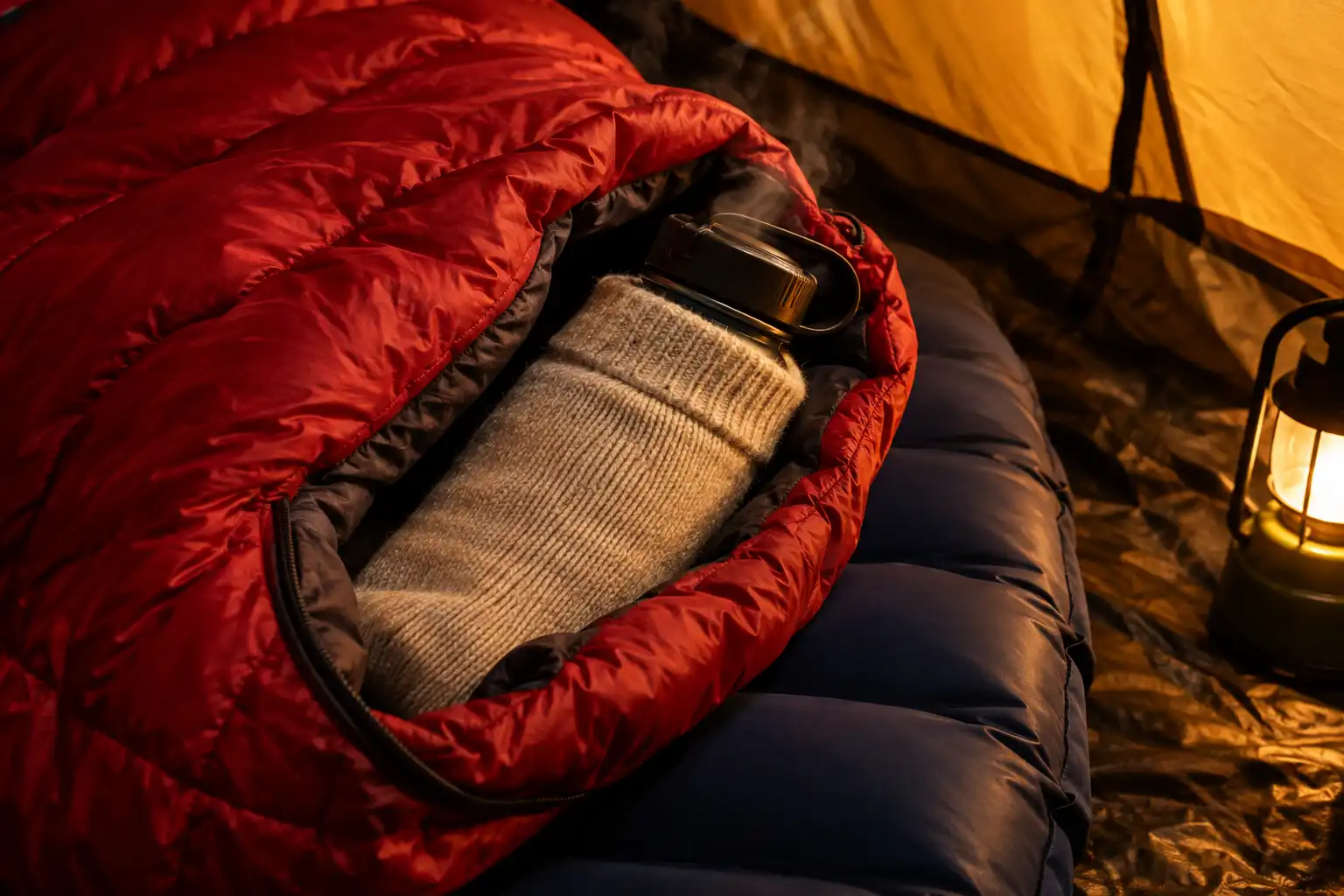
A hot water bottle is the safest and most reliable heat source for an air mattress. Fill a hard sided bottle with hot water, not boiling water. Then wrap it in a sock or towel and place it at your feet about 20 minutes before bed.
Other options that work:
- Heated mattress pad or electric blanket. Use these only at a powered site. Place the pad above the mattress, never below it, and confirm the maker allows use on inflatables.
- USB heated pads. Run them from a power bank for short warm up sessions.
- Extra water bottles. Fill them while your stove is already running at dinner.
Never burn anything inside a tent for warmth. The CPSC warns that camping heaters, stoves, lanterns, and charcoal all produce carbon monoxide, which kills sleeping campers every year. Opening a flap does not make it safe. Keep any heat source off bare vinyl too, because heat softens vinyl and splits the seams.
How do you stop condensation from chilling the mattress?
Vent the tent so moisture escapes before it settles on cold surfaces. Your breath releases a surprising amount of water overnight. That vapor condenses on the coldest surfaces around you, and a vinyl mattress qualifies.
Damp bedding loses most of its insulating power. Therefore a small vent gap matters far more than the couple of degrees of air warmth you give up. Cracking the rainfly vents also cuts the drips that land on your bag, so start with the basics of venting a tent in cold weather.
Two habits help even more. Wipe the mattress top with a dry cloth before making the bed. Also park wet boots, jackets, and towels in the vestibule instead of beside your head.
Which habits keep you warm all night?
Small routines protect the insulation you worked to build. These cost nothing:
- Change into dry base layers before bed. Damp day clothes will chill you for hours.
- Wear a beanie and dry wool socks. Both pay off immediately.
- Eat something before sleeping. Digestion produces heat while you rest.
- Use the bathroom first. Your body wastes energy keeping a full bladder warm.
- Keep your face outside the bag. Breath moisture soaks insulation fast.
- Stuff tomorrow’s clothes under the bag. They stay warm and add padding.
Still waking up cold? Check the total R-value of your stack before you blame the bag. Steps for staying warm in a tent overnight help as well, though ground insulation always comes first.
What makes some air mattresses warmer by design?
Insulated camping air pads beat household air beds because they break up the air inside. Makers use internal baffles, foam cores, down fill, or reflective film to interrupt that convection loop.
What to look for:
- A published R-value tested to ASTM F3340. No number usually means no insulation.
- A flocked or fabric top. It feels warmer than bare vinyl and grips bedding.
- A lower profile. Less internal air means less air for your body to heat.
- Internal baffles or foam. One big open chamber circulates cold freely.
Household air beds still suit summer trips and backyard guests fine. For freezing nights, though, I would rather sleep on a proper insulated pad with a tested rating.
FAQs about Keeping air mattress warm while camping

Does putting a blanket under an air mattress help?
Why does my air mattress deflate in cold weather?
Can you put a heated blanket under an air mattress?
Is a sleeping pad warmer than an air mattress?
Do you need a special air mattress for winter camping?
Final thoughts
Warmth on an air mattress comes from what you add, not from the mattress itself. Insulate under it, insulate on top of it, and keep the bed clear of damp tent walls. Then adjust the pressure before sleeping and tuck in a hot water bottle when the forecast turns cold. I have used this same setup on chilly nights in the Bandarban hills, and it works with gear most campers already own.