Chingri Jhorna (Waterfall), Bandarban: A Complete Travel Guide

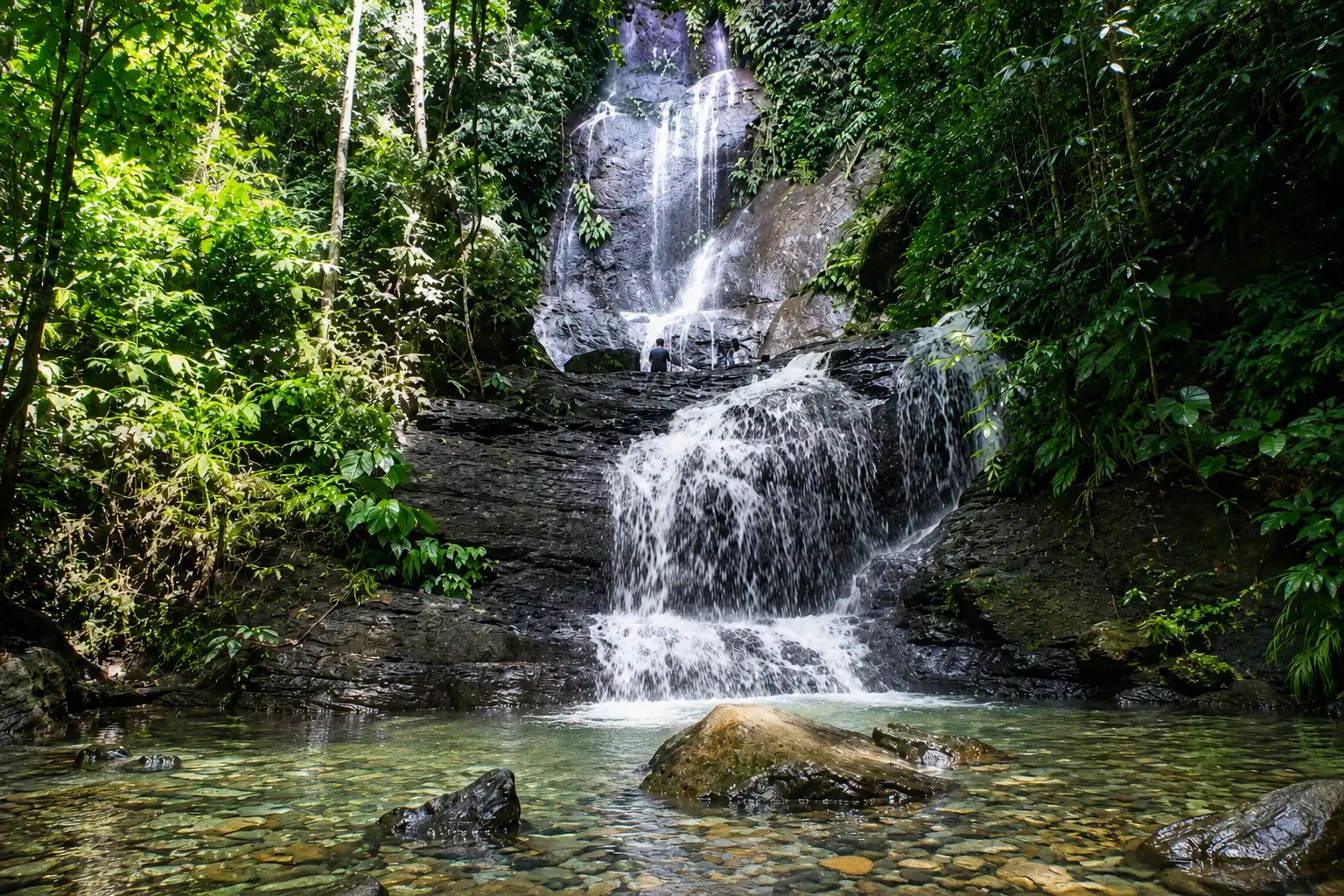
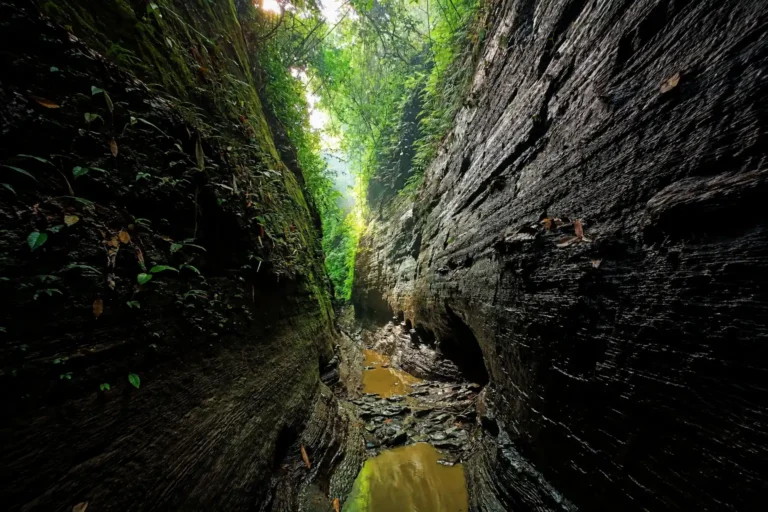
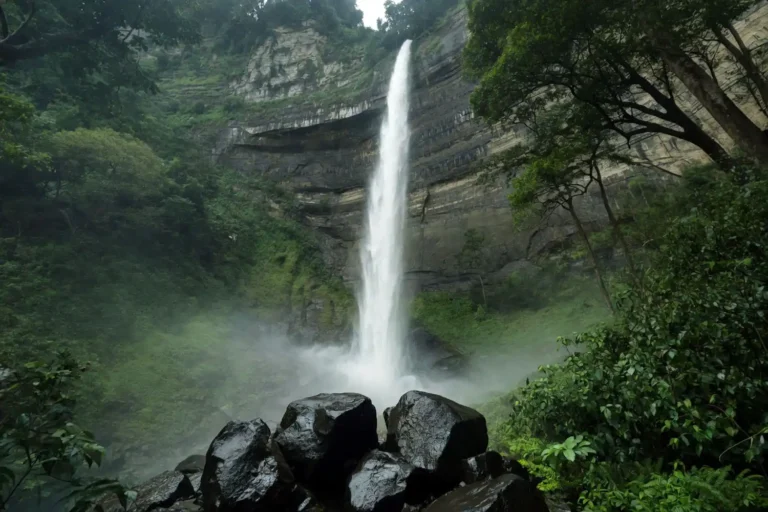
Chingri Jhorna (চিংড়ি ঝর্ণা), also written as Chingri Waterfall, is a small hill waterfall in Bandarban, set on the foot trail between Boga Lake and Keokradong in Ruma Upazila. It takes its name from the shrimp, or “chingri,” that once filled its pool. From Boga Lake, it sits about a 30 to 45 minute walk away.
Where is Chingri Jhorna located?
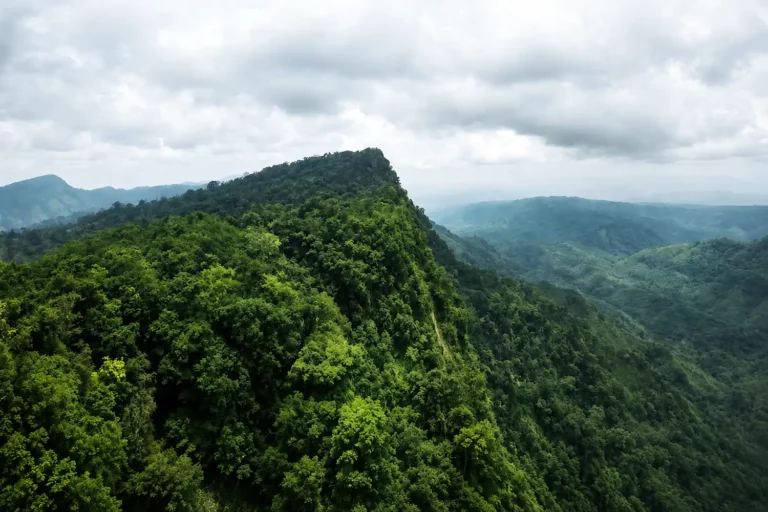
Chingri Jhorna sits in Ruma Upazila of Bandarban, the hill district about 92 kilometers southeast of Chittagong. Bandarban covers roughly 4,479 square kilometers, and besides its hills it holds dozens of small and large waterfalls. Chingri Jhorna is one of them. The falls sit along the trekking path that runs from Boga Lake up toward Keokradong, so most people see it as part of a Boga Lake or Keokradong trip rather than a separate destination.
I’m from the Chittagong Hill Tracts myself, so I treat Chingri Jhorna the way most locals do, as a quick, worthwhile stop on a bigger Boga Lake run. The name has a simple story. Locals say the stream once held plenty of shrimp, and so the waterfall became “Chingri Jhorna,” which means Shrimp Waterfall in Bangla. Today you go for the water and the short trek, not the shrimp.
Also know: How to Visit Jadipai Waterfall
How do you reach Chingri Jhorna?
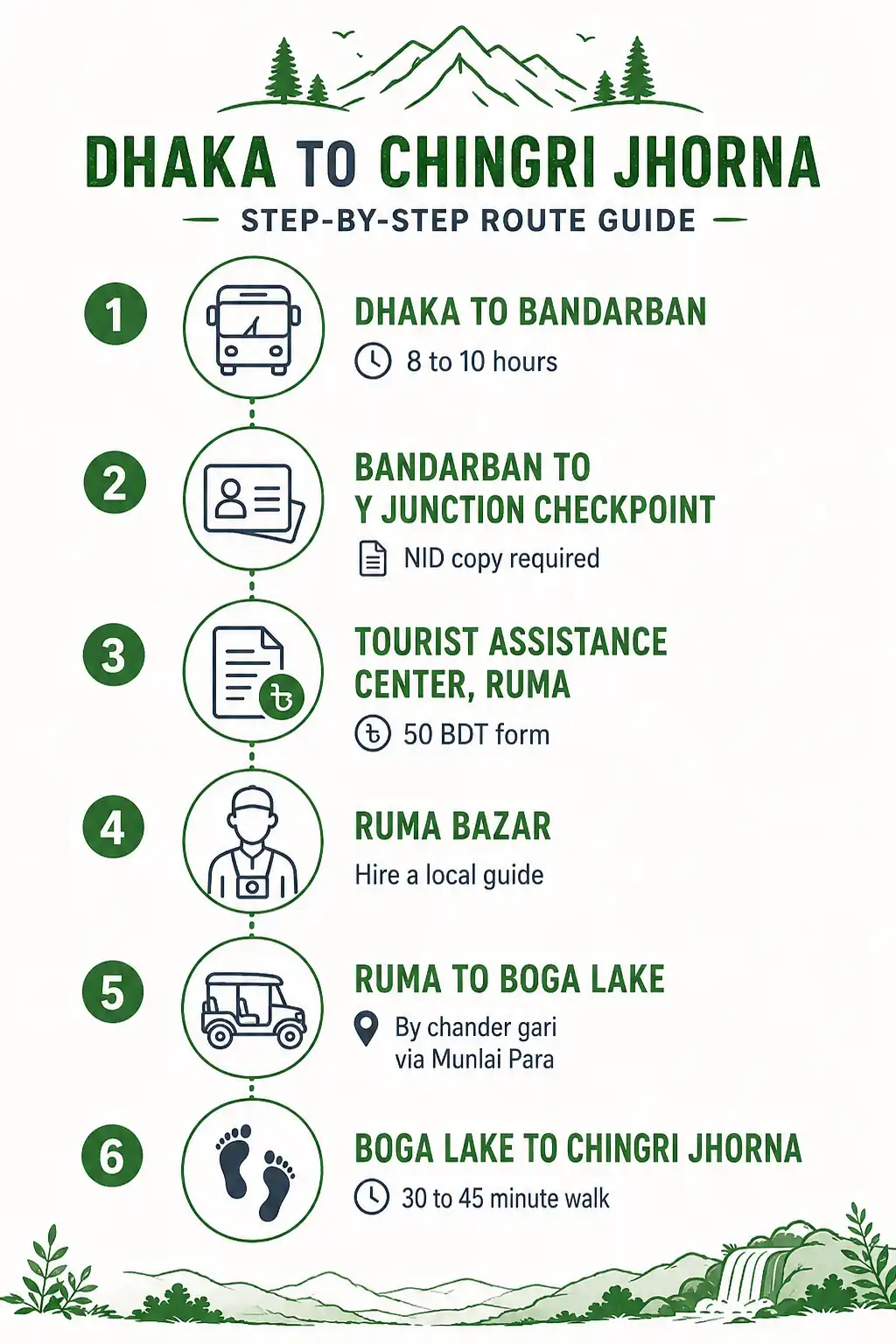
You reach Chingri Jhorna on foot from Boga Lake, after first traveling from your city to Bandarban, then to Ruma, and finally up to Boga Lake. The waterfall has no separate road or gate. Instead, it is a stop on the Boga Lake to Keokradong trail, so the journey is really the journey to Boga Lake plus a short walk.
Here is the route I’d follow, in order:
- Reach Bandarban town from wherever you are in the country.
- Travel from Bandarban to Ruma, stopping at the Y Junction army checkpoint and the Tourist Assistance Center.
- Hire a registered guide in Ruma Bazar and complete the permit forms.
- Go from Ruma up to Boga Lake by chander gari or motorbike.
- From Boga Lake, walk 30 to 45 minutes along the Keokradong trail to Chingri Jhorna.
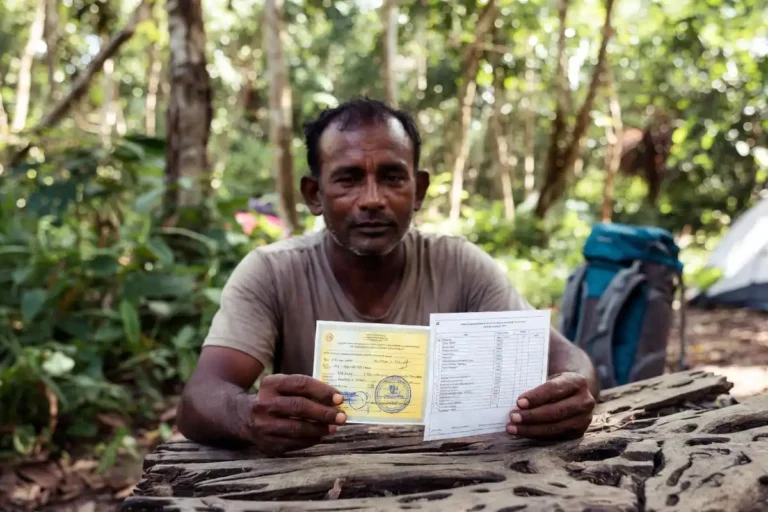
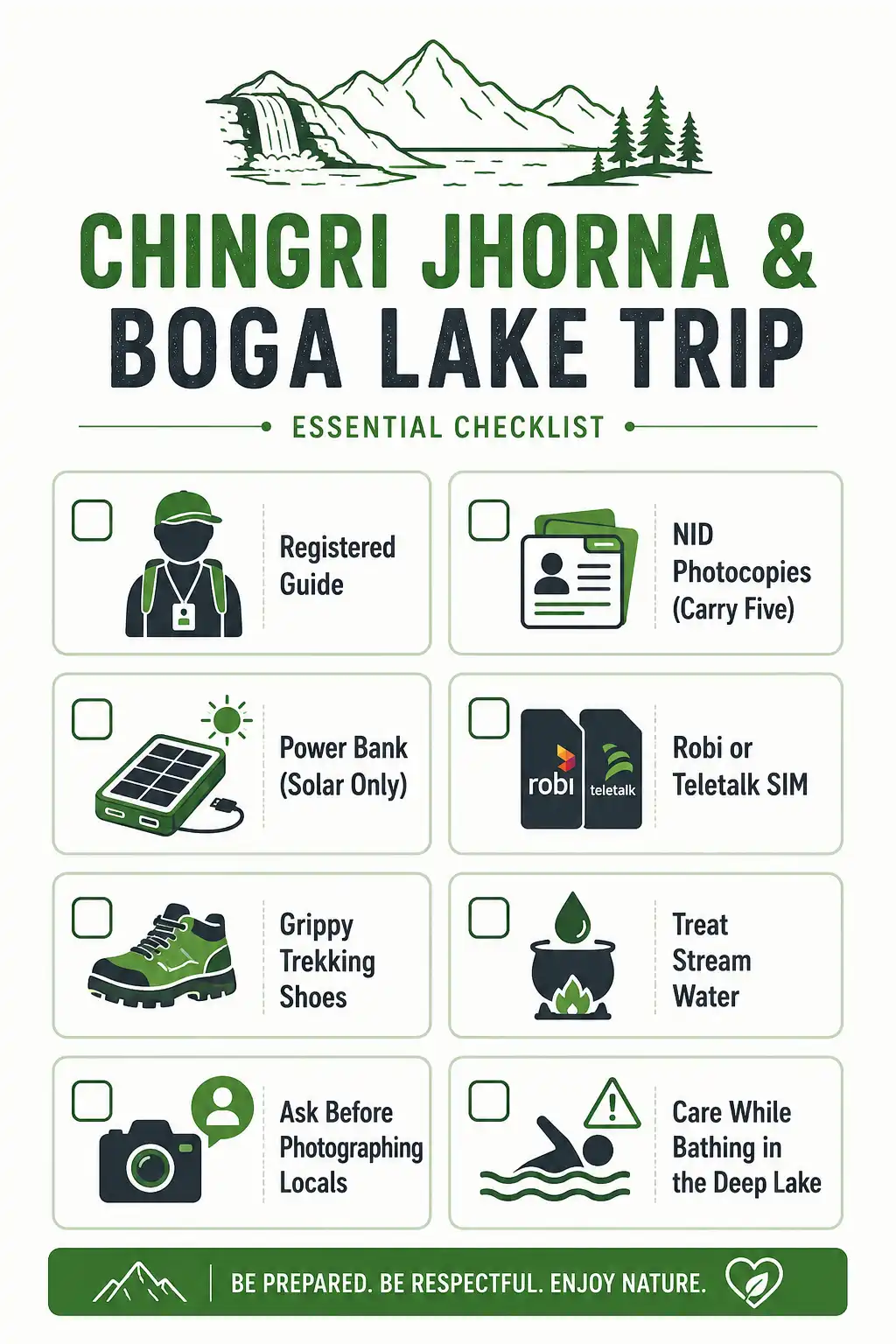
Before you go: You must hire a registered guide for the Boga Lake and Keokradong route. You also need photocopies of your National ID (carry at least five), because you submit them at several army camps and offices along the way. The Keokradong route reopened on October 1, 2025 after a long closure, so always confirm the latest road and registration rules before you travel. The best months are October to March.
Dhaka to Bandarban
From Dhaka, several bus companies run to Bandarban, including S. Alam, Saudia, Saint Martin Paribahan, Unique, Hanif, Shyamoli, and Dolphin. Non-AC tickets cost roughly 800 to 1,000 BDT, while AC tickets run about 1,200 to 1,800 BDT. The trip takes around 8 to 10 hours, so most people take an overnight bus and reach Bandarban in the morning. Prices change often, so treat these as a guide only. If you prefer to fly, take a flight from Dhaka to Chittagong first, then catch a bus or car from Chittagong to Bandarban.
Bandarban to Ruma
From Bandarban, take a chander gari (a local open-roof jeep) or a local bus to Ruma. Local buses leave roughly every hour, with the first one around 7 AM. On the way you stop at the Y Junction, an army checkpoint about 50 to 55 minutes from Bandarban town, where you hand over a photocopy of your NID to get clearance. After another hour or so, you reach the Tourist Assistance Center in Ruma. There you buy a tourist information form for 50 BDT, fill it in, and submit a copy. From the center, it takes about another hour to reach Ruma proper, so plan on roughly four hours from Bandarban to Ruma in total.
Ruma to Boga Lake
In Ruma Bazar you hire a registered guide, which the rules require for both Boga Lake and Keokradong. Guides come through the local guide welfare association, and one guide covers a group of about 14 general tourists (or six bikers). The guide fee runs around 700 BDT per day up to Boga Lake and about 1,000 BDT if you continue to Keokradong, and you also cover the guide’s food and lodging. Once your papers are sorted, you take a chander gari or motorbike up to the lake. The cooperative has fixed fares: a chander gari from Ruma to Boga Lake costs about 2,700 BDT one way and 3,700 BDT for the return, while a motorbike is around 1,000 BDT. On the way up, you pass Munlai Para, a Bawm village often called the cleanest in the country. After it, about an hour more brings you to Boga Lake. At the lake’s army camp you report again and submit another copy of your form.
Boga Lake to Chingri Jhorna
From Boga Lake, the walk to Chingri Jhorna takes 30 to 45 minutes along the same trail that heads toward the Keokradong peak. The path is short, but it is real hill trekking, so wear shoes with grip. After you reach the falls, spend some time there, then walk back to the lake. If you still have time and energy, you can carry on past the waterfall toward the climb up to Keokradong, since the falls sit right on that route.
Is the Keokradong route open now?
Yes, the Keokradong route through Boga Lake is open as of 2026. Authorities had restricted travel up to the Keokradong summit for about three years, and they lifted the ban on October 1, 2025 after reviewing security in the area. A new motorable road now runs much of the way to the peak, so vehicles like Land Cruisers, chander gari, and motorbikes can reach near the top. For Chingri Jhorna, though, the experience is still a walk, because you head to it on foot from Boga Lake. Since rules and road conditions in this region can change, check the current status with your guide or the Ruma guide association before you lock in dates.
When is the best time to visit Chingri Jhorna?
The best time to visit Chingri Jhorna is the monsoon and the weeks around it, when the falls run full. Like any waterfall, it looks strongest when the streams are loaded with water. You can still go in other seasons, and many people do, but the flow will be thinner. October to March stays popular for the wider trip, because the skies are clearer and the trekking is comfortable. Heavy monsoon brings one real risk: landslides on the hill roads. So if you travel in peak rain, ask about road conditions first. On my trips, the rocks below the falls turn slick fast once rain sets in, so I keep the pace slow in the wet months. The same care you would put into timing any destination trip applies here.
Where can you stay near Chingri Jhorna?
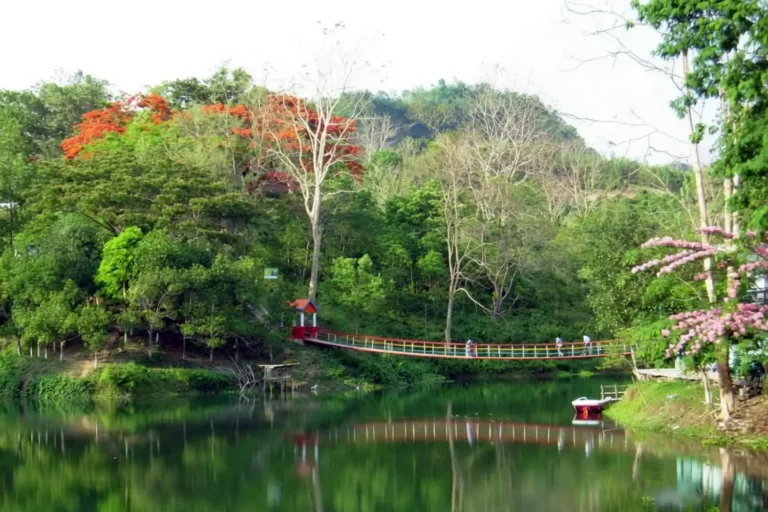
You stay at Boga Lake, where indigenous families run simple cottages along the water. Coming all this way and not spending a night would be a waste, so plan for at least one overnight at the lake. Most travelers come mainly for Boga Lake or Keokradong, and Chingri Jhorna ends up as a bonus on the same trip. The cottages are basic, but the setting by the lake makes the night memorable. Expect to pay roughly 150 to 300 BDT per person, though prices rise in peak season, so confirm on arrival. One room usually sleeps five to six people. If you want a separate cottage for a couple or for women, the hosts can arrange that too. Tell your guide your preference in advance, or sort it out once you arrive. For a complete planning a night at Boga Lake, my guide goes deeper on cottages and timing.
What food is available at Boga Lake?
At Boga Lake you eat in the indigenous homes, since there are no restaurants on the lake itself. A meal package usually costs around 150 to 350 BDT depending on the meal. The standard spread is rice, egg, mashed potato (alu bhorta), and hill chicken. You order ahead, telling the host what you want and how many people will eat, so ask your guide to pass this on while you are still on the way. I order the hill chicken ahead every time; it is simple, but it hits the spot after a trek. Ruma Bazar, by contrast, has several regular hotels for food before you head up. Many cottages also have barbecue setups, so you can buy a hill chicken and grill it by the lake for a change.
Tips and safety for visiting Chingri Jhorna
A few practical notes make this trip smoother and safer:
- Watch your step at the falls. The rocks below Chingri Jhorna get very slippery, so move slowly and test your footing. A pair of trekking poles for steep, slick ground gives you extra balance on the way down.
- Carry a power bank. Boga Lake has no grid electricity, only solar power, so charge your devices in Ruma and bring a power bank for the trip.
- Bring the right SIM. Not every network works at the lake. I always carry a Teletalk SIM up here, since that and Robi are the ones that hold a signal.
- Be careful in the water. There have been accidents while bathing at Boga Lake, and the lake is deep, so take real care if you get in.
- Treat your drinking water. You can refill bottles from the stream, but it is safer to treat wild water before you drink it, especially on a multi-day trip.
- Respect the local communities. The indigenous hill communities live differently from people on the plains, so avoid anything that disrespects them. Always ask before photographing people, because many do not like photos taken without permission.
- Travel carefully on the hill roads. The whole Bandarban to Boga Lake road is winding and steep, so go slow, especially on a motorbike.
- Keep your ID ready. Carry several photocopies of your National ID, because you submit them at the Y Junction, the Tourist Assistance Center, Ruma Police Station, the guide association, and the Boga Lake camp.
- Follow the army camp rules. You need permission from the army camps to travel this route, and you report again on the way back, so keep your paperwork handy.
FAQs about Chingri Jhorna

Why is it called Chingri Jhorna?
How long is the walk to Chingri Jhorna from Boga Lake?
Can I visit Chingri Jhorna in one day from Bandarban?
Do I need a guide and permit for Chingri Jhorna?
Is Chingri Jhorna worth visiting?
Final thoughts
Chingri Jhorna is not a place you travel to on its own. Instead, it is a short, rewarding stop on the way up from Boga Lake toward Keokradong, and that is exactly how I’d plan it. Get your guide and permits sorted in Ruma, spend a night at Boga Lake, then walk out to the falls in the morning. Keep an eye on the season and the road, carry your ID copies, and respect the people who call these hills home. Do that, and the trip stays simple, safe, and well worth the effort.