What to Do if Bitten by a Rattlesnake While Hiking

A rattlesnake bite on the trail is a medical emergency, and the first ten minutes shape how the next two weeks go. Below you get the exact steps to follow, the old myths that still injure people, how to get off the trail, and what happens once you reach a hospital.
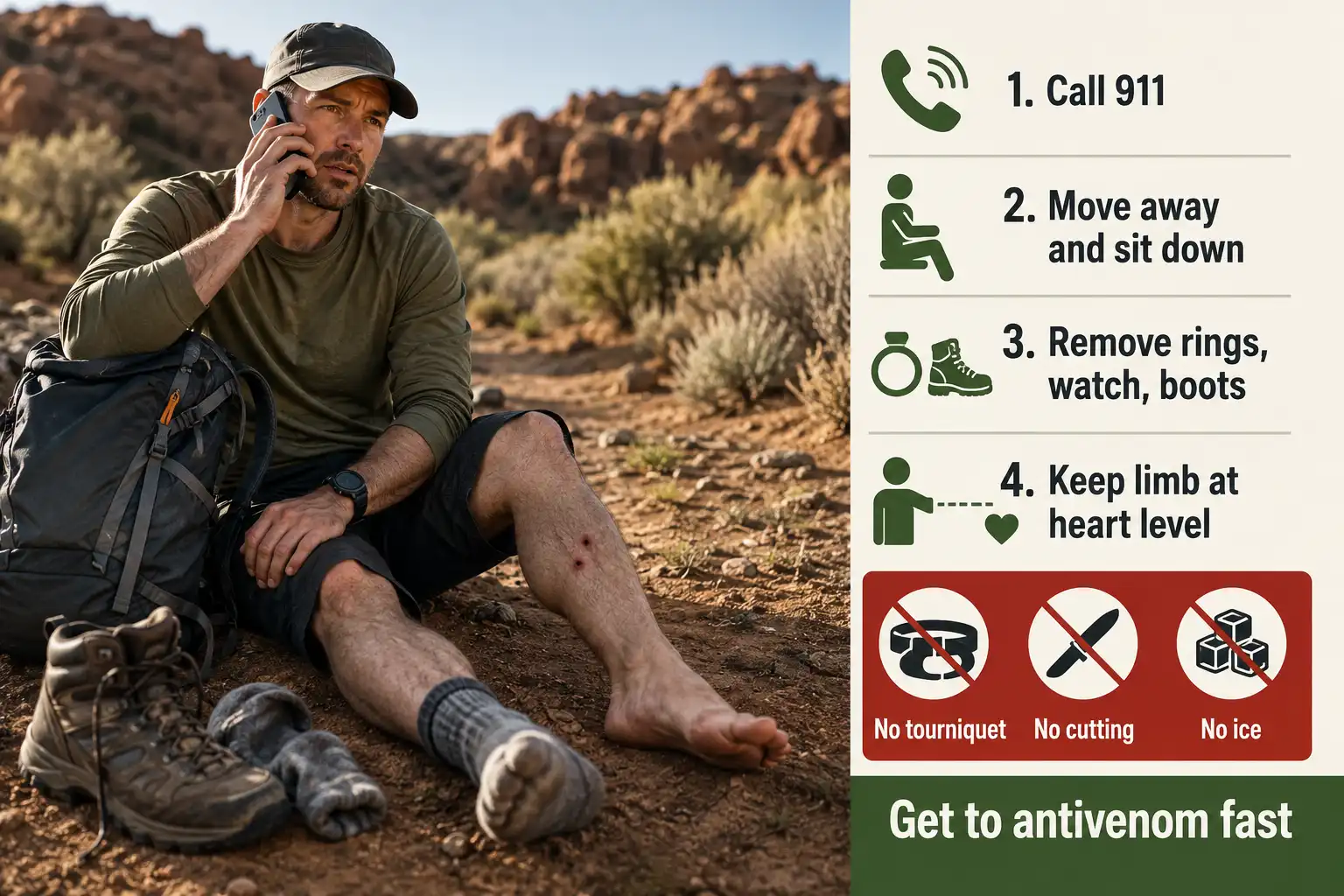
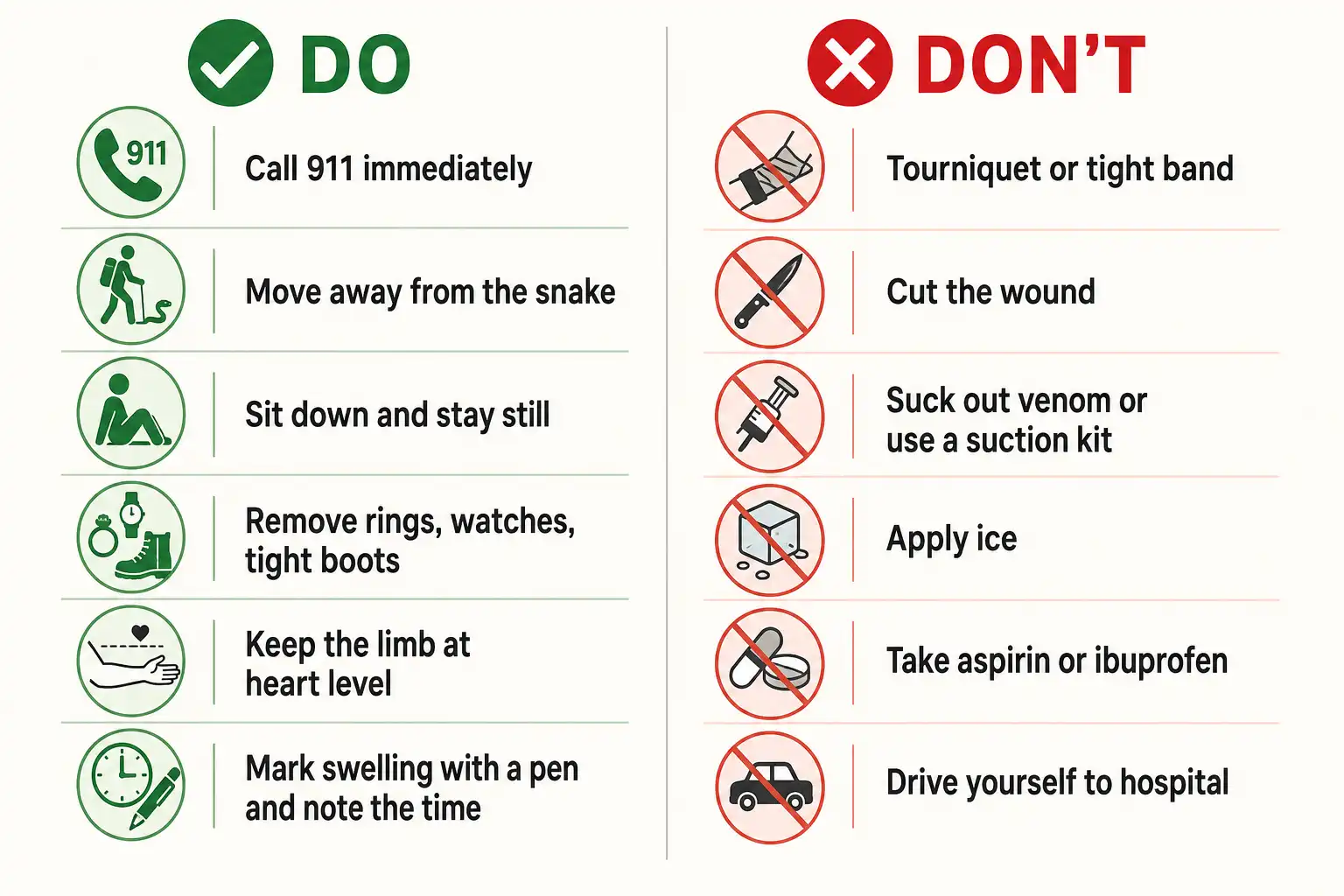
Call 911 first. Then back away from the snake, sit down, and take off rings, watches, and tight footwear before swelling starts. Keep the bitten limb loosely still at heart level. Finally, reach a hospital that stocks antivenom as fast as you safely can.
What are the first steps after a rattlesnake bite?
Get out of striking range, call for help, and then stay still while rescue comes. Work through this order.
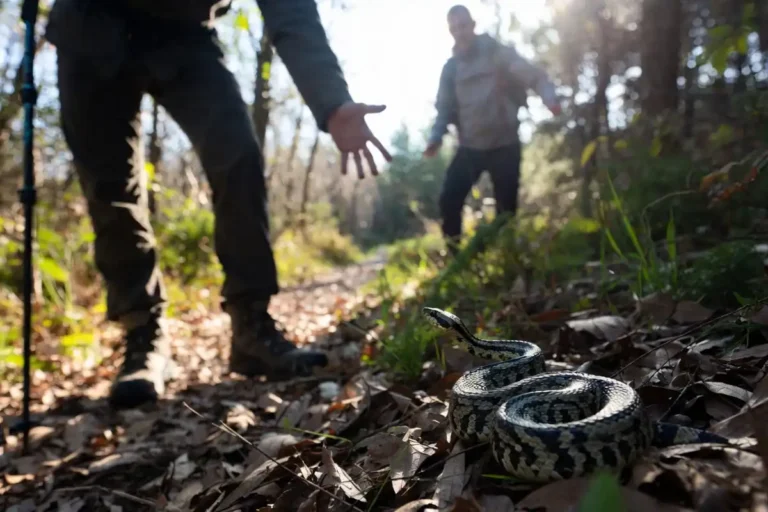
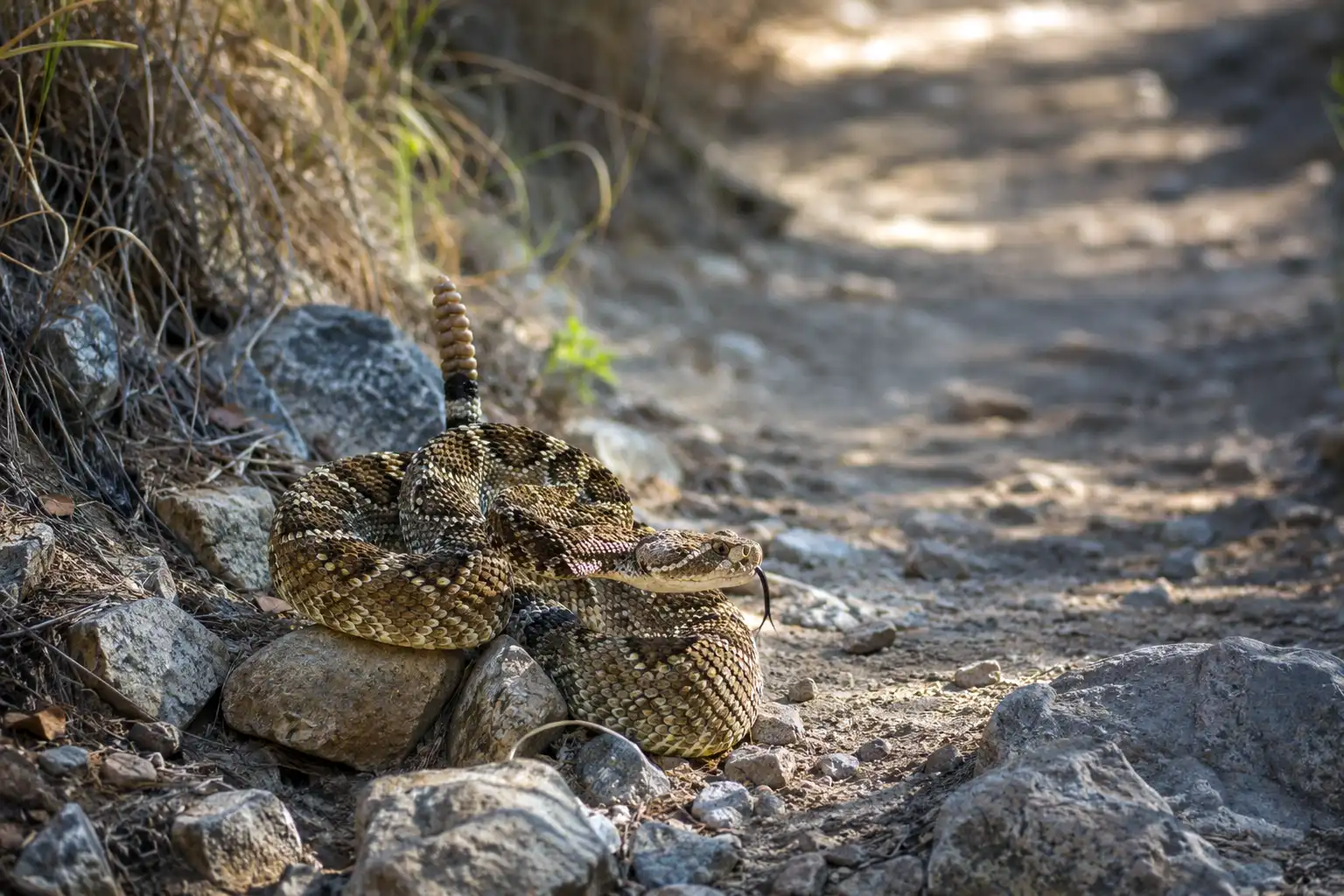
- Move away. Rattlesnakes strike roughly half their body length, so put clear distance between you and the snake before you stop.
- Call 911 or your local emergency number. In the United States, Poison Control also answers free at 1-800-222-1222, around the clock.
- Sit or lie down. Panic drives your heart rate up, so slow breathing genuinely helps here.
- Strip anything tight. Rings, watches, bracelets, boots, socks, and snug pant legs all come off immediately, because swelling turns them into tourniquets within an hour.
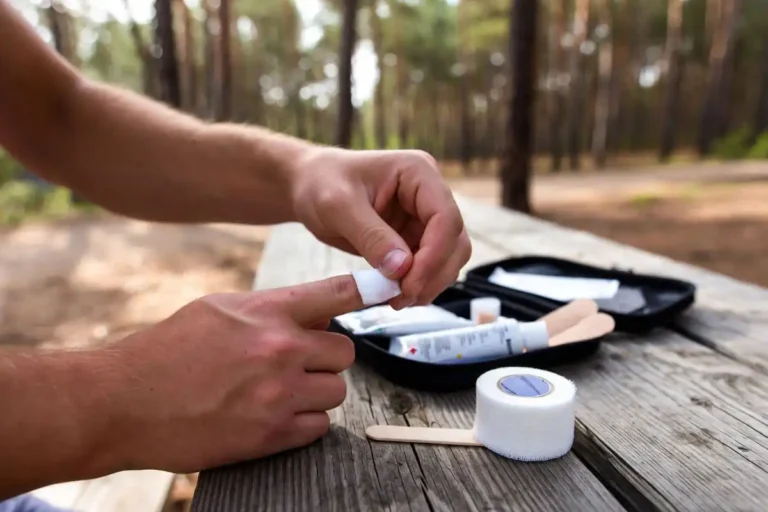
- Clean gently. Wash the punctures with soap and water if you carry them, then cover the wound with a clean dry dressing.
- Splint loosely at heart level. The 2026 Wilderness Medical Society guidelines call for a loosely immobilized limb held at heart level in the field.
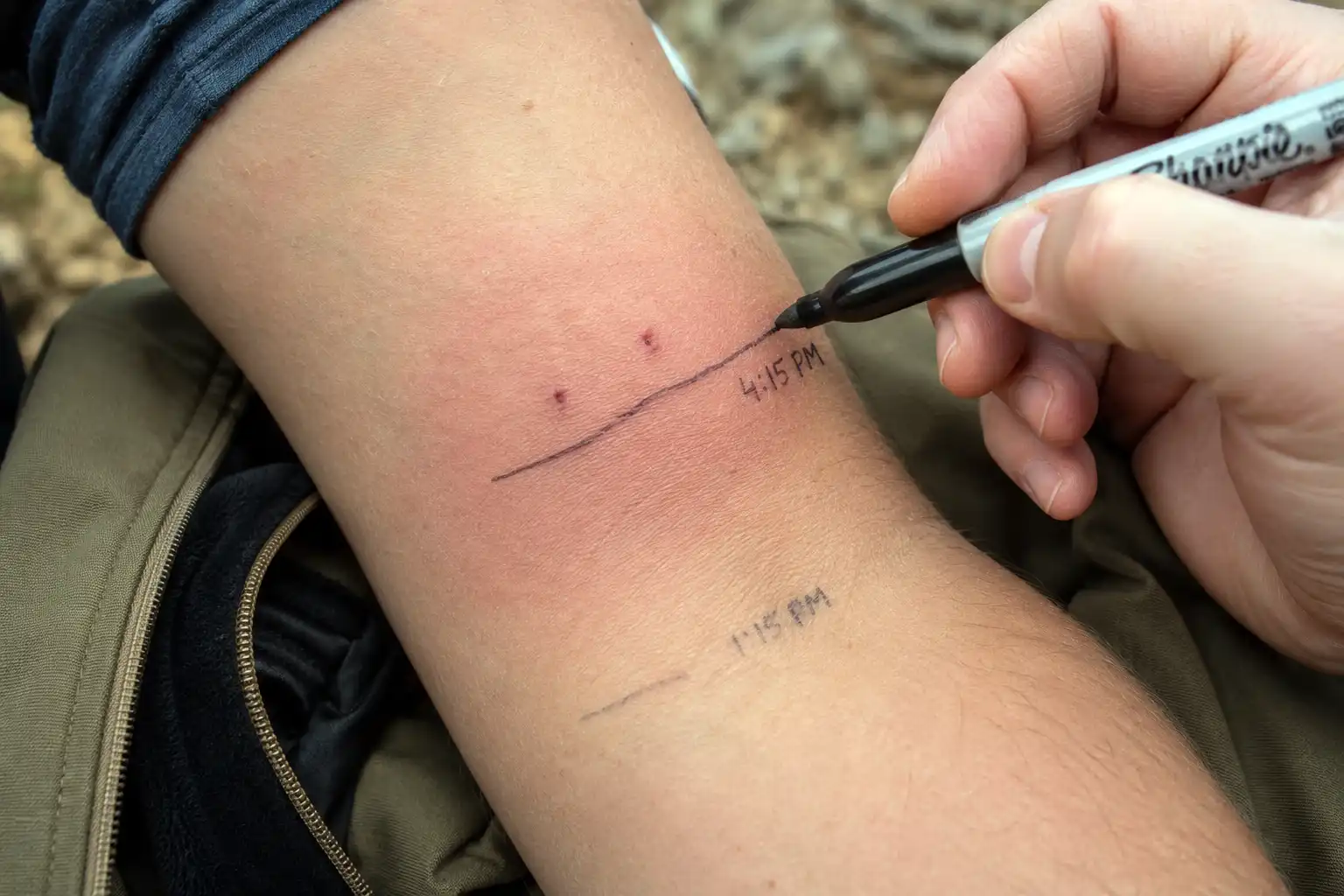
- Mark the swelling. Draw a pen line at the leading edge of swelling and write the time beside it. Repeat every 15 to 30 minutes so the hospital can see how fast venom is spreading.
- Record the time of the bite. Photograph the snake only from a safe distance, at least twice its length, and never chase it.
Learn more: Hiking The Narrows in Zion
What should you never do to a rattlesnake bite?
Skip every field remedy you have seen in movies, because none of them remove venom and most of them cause extra damage.
- No tourniquet or constricting band. Trapping venom in one limb concentrates tissue destruction, and that has cost people fingers.
- No cutting. A blade adds a fresh wound on top of an envenomation, then raises infection risk.
- No mouth suction or suction kits. Extractor devices pull out almost no venom. Meanwhile they injure tissue and burn minutes you cannot spare.
- No ice or cold packs. Cooling does nothing to venom, so you only risk adding frostbite to an already damaged limb.
- No pressure immobilization bandage. That method suits neurotoxic elapid bites instead. The American Red Cross specifically advises against using it after pit viper bites, including rattlesnakes.
- No electric shock. Stun guns and shock devices have no medical support whatsoever.
- No alcohol, aspirin, or ibuprofen. Each one thins your blood, and rattlesnake venom already attacks clotting. Acetaminophen is the safer painkiller.
- No driving yourself. A bite can leave you dizzy or unconscious at the wheel, so let someone else drive.
The 2026 guidelines group suction devices, cut and suck, electrotherapy, cryotherapy, tourniquets, and pressure immobilization together as techniques showing no benefit and possible harm. Therefore, leave the bite alone and move toward antivenom.
How do you know if the snake injected venom?
You cannot tell in the field, so treat every rattlesnake bite as an envenomation until a doctor rules it out. Symptoms sometimes take hours to appear, and waiting for proof wastes the window when antivenom works best.
Watch for these signs:
- Burning pain at the punctures within minutes
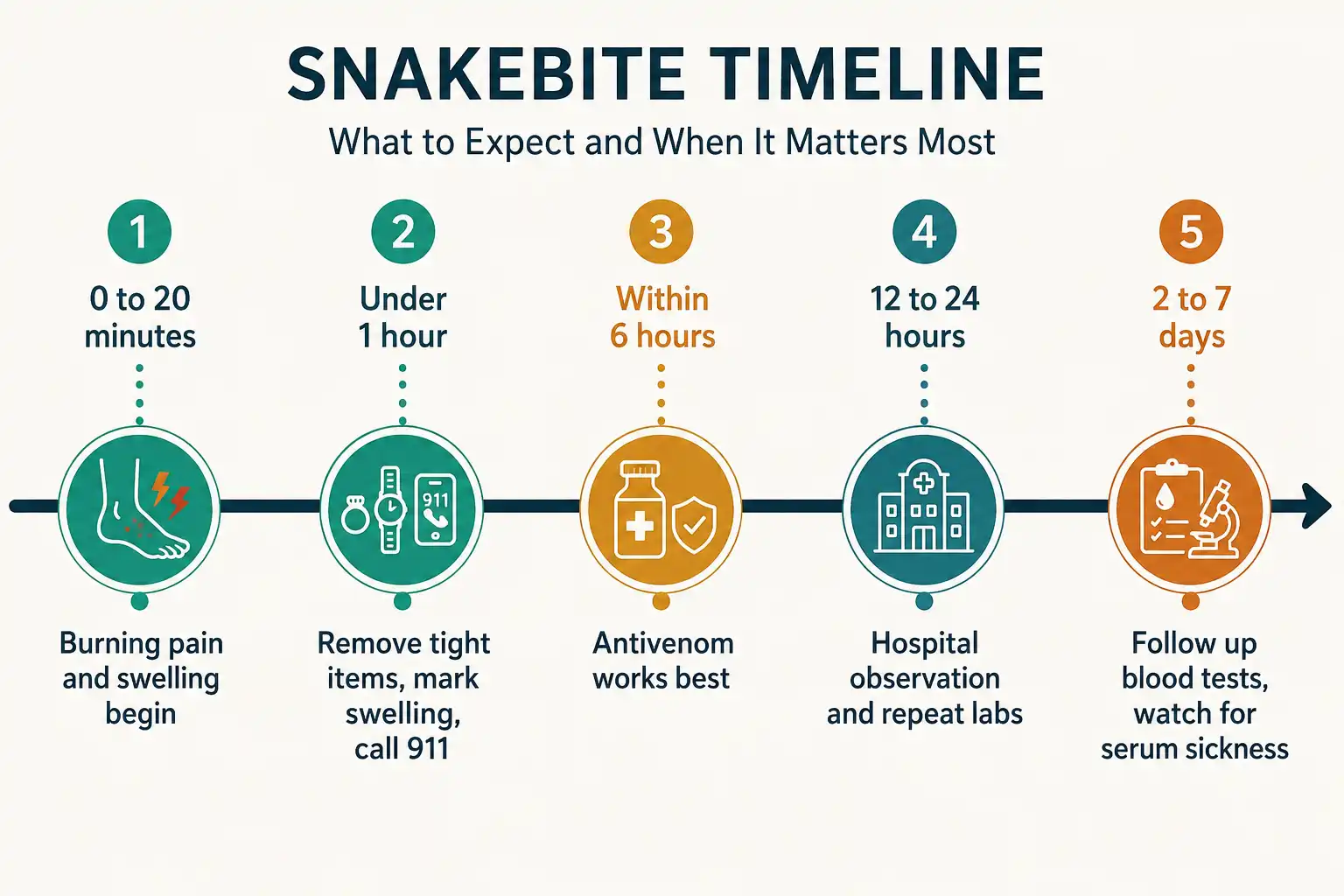
- Swelling that starts within 5 to 20 minutes, then creeps up the limb
- Bruising, discoloration, or blood blisters around the bite
- A metallic taste, or tingling around the lips and face
- Nausea, vomiting, sweating, or lightheadedness
- Bleeding gums, nosebleeds, or unusual bruising elsewhere
- Muscle twitching or weakness
Roughly a quarter of rattlesnake bites are “dry,” which means the snake injected no venom at all. Published estimates range widely though, from about 10% up to half, depending on the species and the study. Because of that spread, never assume you got lucky. A dry bite still leaves open punctures, and infection follows easily, so it still needs a hospital.
How do you get off the trail after a rattlesnake bite?
Take the fastest safe route to definitive care, and avoid walking under your own power if anyone can carry you. Speed matters more than technique here.
If you hike with partners, let them do the work. One person calls for help while another carries your pack, supports you, or builds an improvised litter. If you are solo and stuck without bars, hold position and use your emergency device rather than pushing deeper into dead zone terrain. My own habit in the hills is a satellite messenger plus a written trip plan left with someone at home, since that combination beats hope every time. Learning to signal for help when you have no phone service pays off long before a snake ever enters the picture.
Helicopter evacuation becomes reasonable in remote backcountry. Ground ambulance works fine for most trailheads. Either way, the rule stays the same: fastest and safest transport to a facility carrying antivenom. Those flights also get expensive fast, which is exactly why I check travel insurance for outdoor trips before any trip far from a road.
What happens at the hospital?
Doctors give antivenom, run bloodwork, and watch you closely for at least 12 to 24 hours. Two antivenom products carry FDA approval for North American pit vipers: CroFab, an ovine Fab product available since 2000, and Anavip, an equine F(ab’)2 product available since 2018.
Early treatment works better. Antivenom given within six hours produces faster recovery of limb function and cuts opioid use afterward. Staff also draw labs, including blood counts, clotting times, and fibrinogen, then repeat them as your case develops.
Two things surprise people. First, the hospital elevates the bitten limb above heart level, which differs from the heart-level position used in the field. Second, surgery rarely enters the picture now. Guidelines rule out early tissue removal, and fasciotomy stays uncommon because proper antivenom dosing usually handles the swelling. Even a bite with no symptoms earns roughly 12 hours of observation, because venom effects sometimes show up late.
What does recovery look like afterward?
Recovery runs longer than most hikers expect, and follow-up appointments matter. Patients treated with antivenom typically stay at least 24 hours, then leave with instructions about delayed problems.
Watch for serum sickness in the days after discharge. Fever, joint aches, and hives fall into that category, and they call for a return visit. Clotting problems can also reappear after you feel fine, so doctors repeat labs around 2 to 3 days for CroFab patients and 5 to 7 days for either product.
For about two weeks after discharge, doctors advise skipping contact sports, dental procedures, tattoos, piercings, and elective surgery. Physical therapy usually starts early, since gentle movement prevents long-term stiffness. Lasting damage does happen: the CDC reports that 10 to 44% of people bitten by rattlesnakes keep some lasting injury, such as reduced use of a finger. Consequently, plan a real recovery instead of a quick return to the trail.
How dangerous is a rattlesnake bite, really?
Serious, though rarely fatal once you reach treatment. Around 7,000 to 8,000 venomous snakebites happen in the United States each year, and snakebites drive up to 9,000 emergency department visits annually.
Deaths stay uncommon. A 30-year review found an average of 3.4 snakebite deaths per year in the United States between 1989 and 2018. Among pit viper bites reported in one recent year, only 3% produced major effects, meaning life-threatening problems or permanent disability. In many fatal cases, though, the person never sought medical care at all.
So the honest framing is this. A rattlesnake bite will probably not kill you if you reach a hospital. It can absolutely wreck a hand, a foot, or a summer, especially when someone delays treatment or reaches for a tourniquet first.
How do you avoid a rattlesnake bite while hiking?
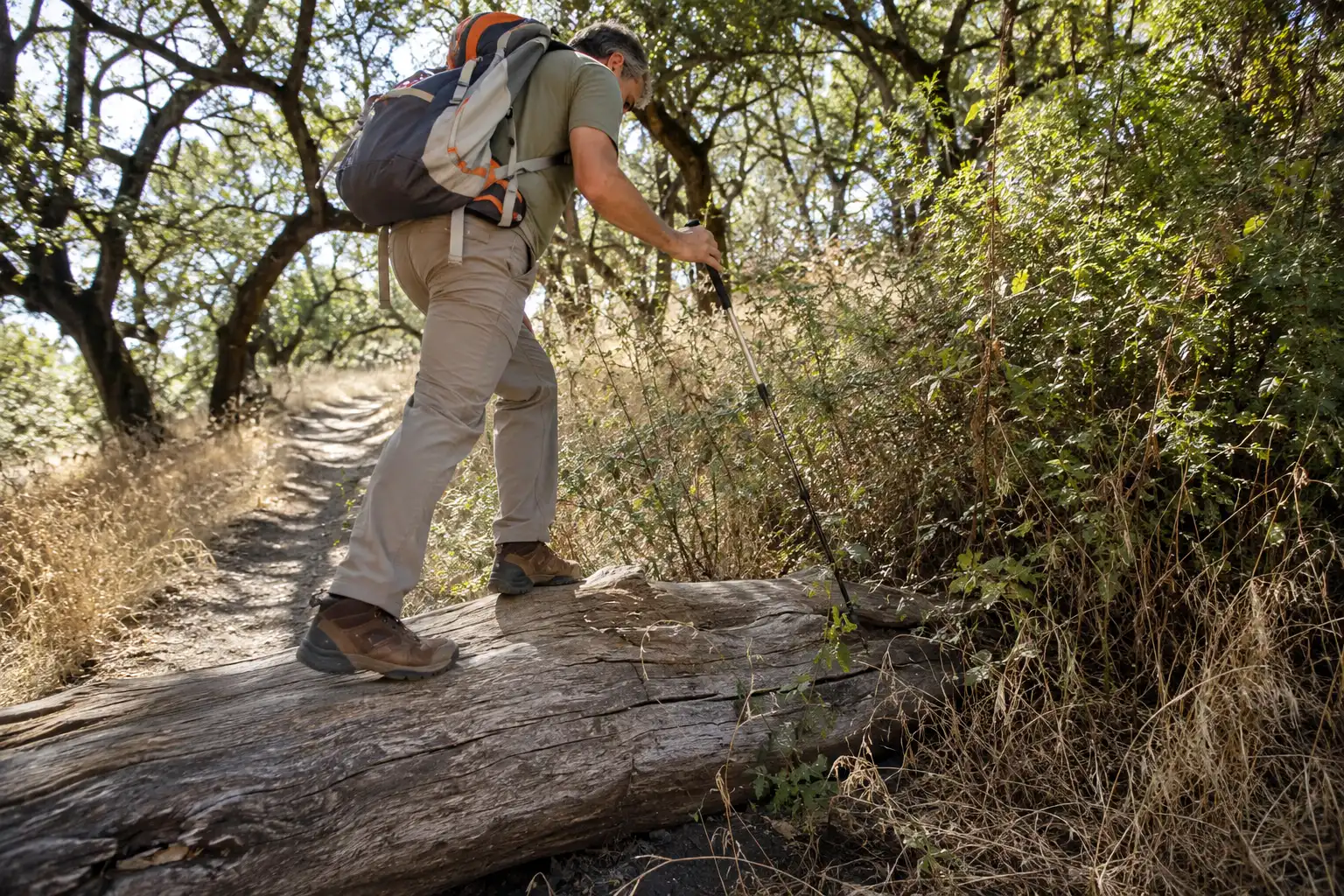
Watch where you put your feet and hands, and leave every snake alone. Most bites happen by accident when someone steps or reaches near a snake without seeing it.
Practical habits that work:
- Stay on the trail rather than cutting through tall grass or brush.
- Step onto logs and rocks, then look before stepping down on the far side.
- Never place hands on ledges, into crevices, or under woodpiles you cannot see into.
- Use trekking poles to probe ahead in overgrown sections.
- Wear boots and long pants. Research shows denim reduces the venom a striking rattlesnake delivers, and sturdy footwear blocks fangs outright. If you are still choosing boots over low-cut trail shoes, snake country makes a decent argument for boots.
- Hike carefully at dawn, dusk, and through warm months, when snakes move most. Anyone walking a trail after dark should sweep the ground ahead constantly.
- Leash your dog, since curious noses find snakes fast.
- Leave dead snakes alone. A severed head still bites through reflex.
Handling is the big avoidable risk. Registry data shows 19% of bites came from intentional interactions, such as catching or killing a snake. Simply put, admire it and walk away.
What should you carry for snake country?
Carry a charged phone, a satellite messenger, a permanent marker, and a trip plan left with someone at home. That short list covers nearly everything a snakebite demands from your pack.
Notice what is missing. Commercial snakebite kits with blades and suction cups belong in the trash, not your first aid pouch. Instead, spend that space on communication and navigation. My approach mirrors the standard day hiking essentials list, plus a marker, so I can track swelling if a snake bites anyone in the group.
One more thing, and I want to be straight about it. I hike the hills around Kaptai and Bandarban, where green pit vipers and other venomous snakes live, so I plan every trip around slow evacuations and thin phone coverage. Rattlesnakes belong to the same pit viper family, yet they live nowhere near me. Everything clinical above therefore comes from the 2026 Wilderness Medical Society guidelines, the CDC, and US poison control resources rather than personal rattlesnake encounters.
FAQs on Rattlesnake Bite on the Trail

Can you walk out after a rattlesnake bite?
How long do you have after a rattlesnake bite?
Is a baby rattlesnake more dangerous than an adult?
What if a rattlesnake bites my dog?
Does every rattlesnake bite need antivenom?
The bottom lines
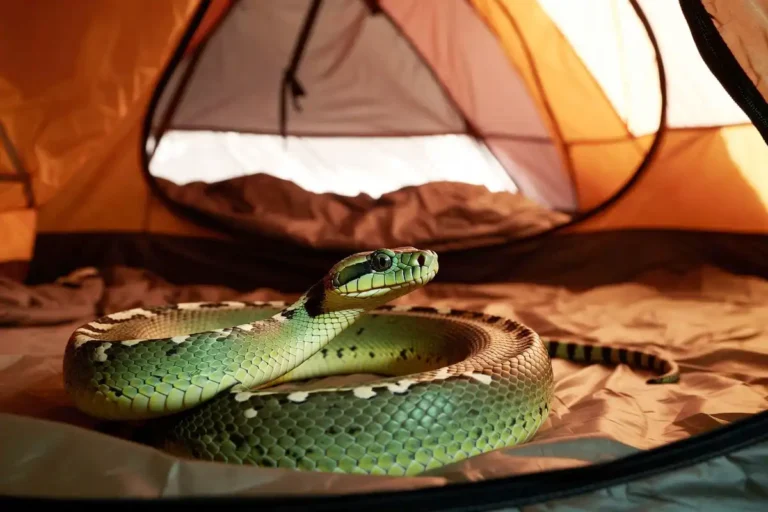
A rattlesnake bite comes down to three moves: get away from the snake, call for help, and get to antivenom fast. Everything else people remember from old survival shows makes the injury worse. Remove tight items early, mark the swelling with a pen, keep the limb at heart level, and let someone else move you toward the trailhead. The same calm approach applies to dealing with a snake bite at camp, since panic causes more damage than the fangs usually do.