How to Secure a Tent Without Stakes: 7 Anchors That Hold

Stakes go missing. They bend, they snap, and some ground simply refuses to take them. I have pitched on bare rock in Bandarban and on soft sand beside Kaptai Lake, and neither spot held a peg. Here is how I anchor a tent when stakes are not an option.
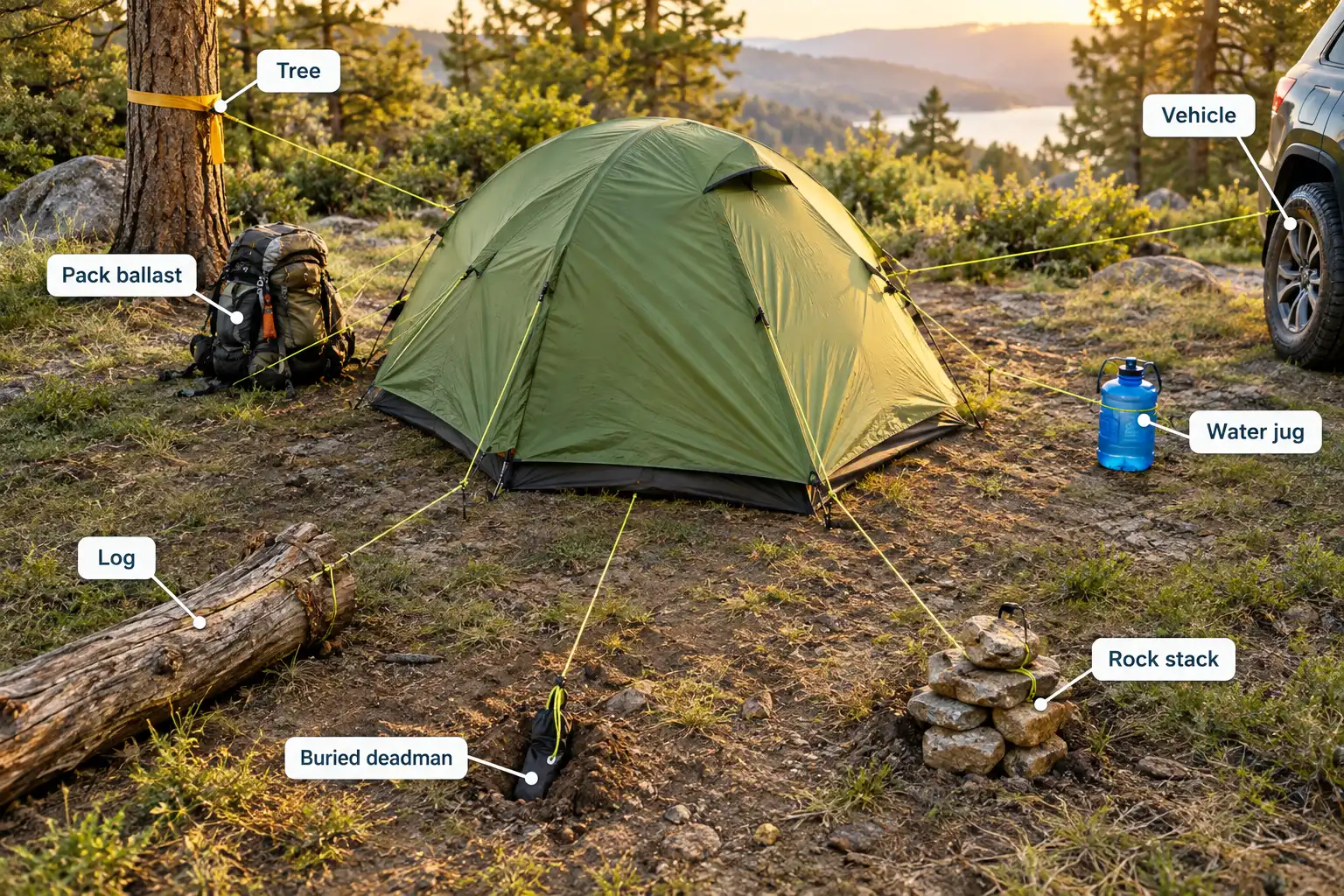
Secure a tent without stakes by tying every stake loop and guyline to a heavy object instead of driving metal into the ground. Rocks, buried stuff sacks, logs, water jugs, trees, and your own loaded pack all work. Weight and friction replace what a stake would have held.
What actually holds a tent down?
Three forces keep a tent in place: downward weight, outward tension on the fabric, and a low pull angle on each guyline. A stake supplies only one of those. Therefore any object heavy enough to resist the pull can take its place.
Tension matters more than most campers expect. A guyline should leave the tent at roughly 45 degrees and run out to an anchor set well away from the wall. Set that anchor too close, and the line pulls upward instead of outward. Then the fabric flaps and the anchor lifts.
Weight needs scale with wind, not with tent size. In still air, a few kilos at each corner holds fine. Once gusts pick up, though, I want anchors I would rather not carry in a pack. So I gather them at the site instead of packing them from home.
Which anchors work when you have no stakes?
Any object heavy enough to resist the pull works, and the best choice depends on what the site gives you. Reading the ground first matters as much here as it does when you are pitching on rocky or sandy ground with a full peg set. Seven options cover nearly every campsite I have used.
Rocks
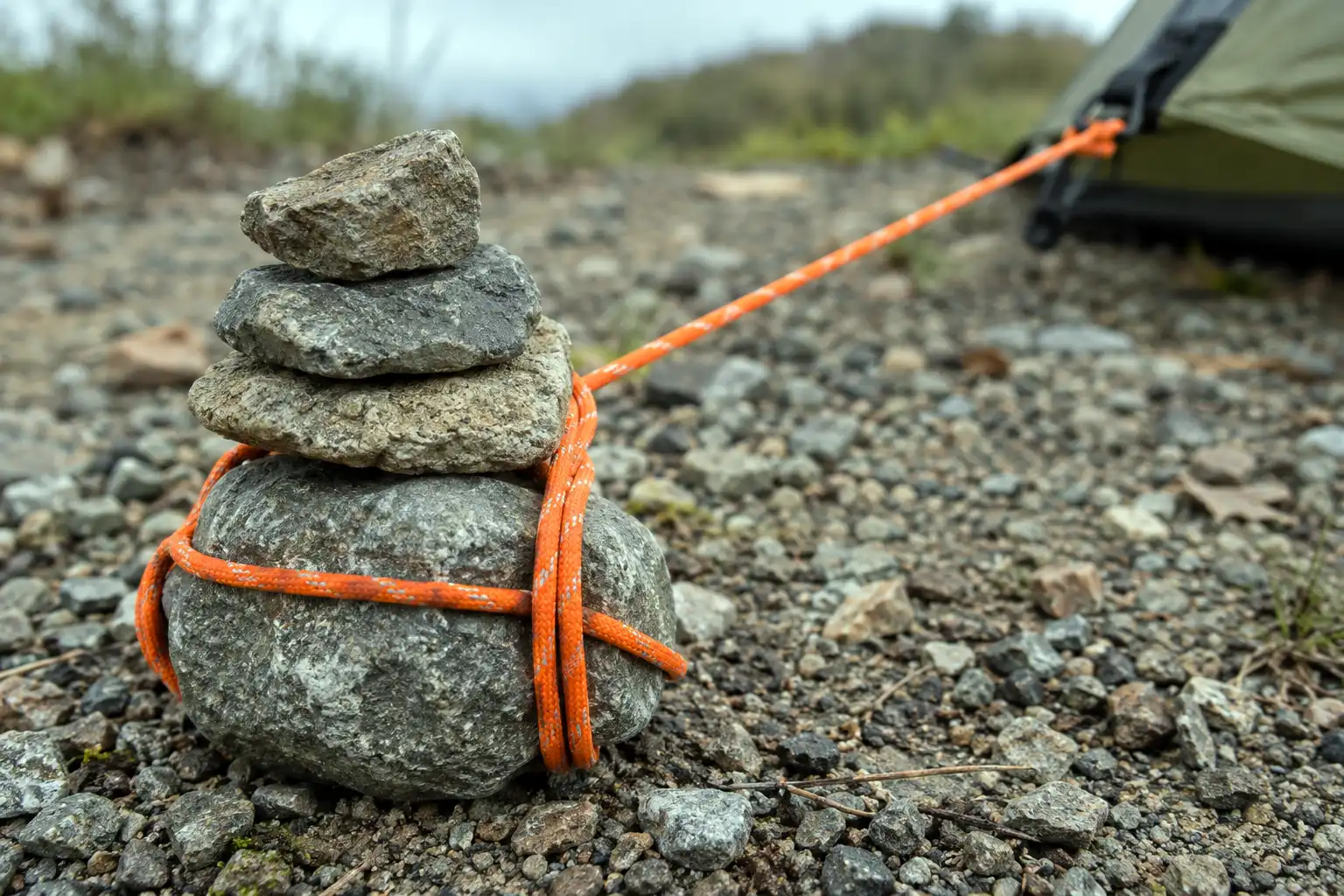
Rocks are the fastest anchor in hill country and on gravel bars. Pick one you can barely lift with both hands, then loop the guyline around it with a girth hitch so the line cannot slide off. After that, stack two or three more rocks on top of the first to lock it down.
One flat rock laid across a guyline does almost nothing. The line slips out the moment wind pushes sideways. So wrap first, then weigh down.
Buried deadman anchors
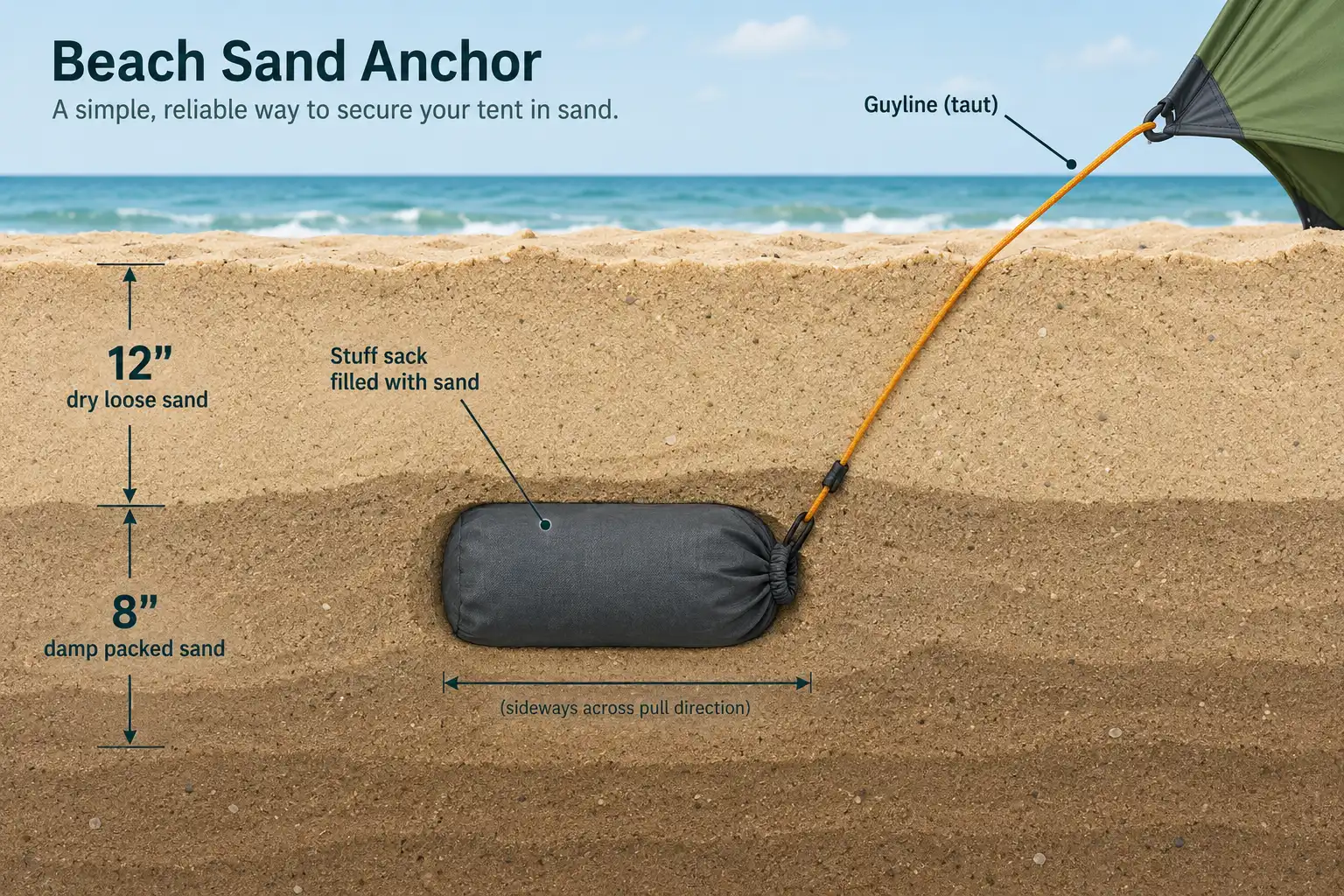
A deadman anchor is a heavy object buried in the ground with the line running out to your tent. Field & Stream and the US Forest Service both describe the same basic method. Bury a stick, rock, or filled sack sideways across the pull direction, then pack the ground down on top.
This holds better than anything else in loose ground. Dig a T shaped trench, lay the anchor along the top bar, run the line out through the stem, and fill the trench back in. Campers who set these often go about 8 inches deep in damp packed sand and 12 to 18 inches in dry loose sand.
Logs and fallen branches
A fallen log works as a surface deadman when you cannot dig. Lay it across the pull direction, tie off around the middle, and roll it a quarter turn so the line seats under the wood. Rocks wedged on the far side stop it from rolling back.
Also test the log before you trust it. Rotten wood snaps under tension, and insect eaten pieces crumble in your hands.
Sandbags, water jugs, and dry bags
Anything you can fill becomes an anchor. Stuff sacks, dry bags, shopping bags, and even a spare sock will hold sand, gravel, or snow. A 5 liter water jug weighs about 5 kg, which is enough for a calm night.
Fill on site and empty before you leave. That way you carry no extra weight, and the site looks the same as when you arrived.
Trees and shrubs
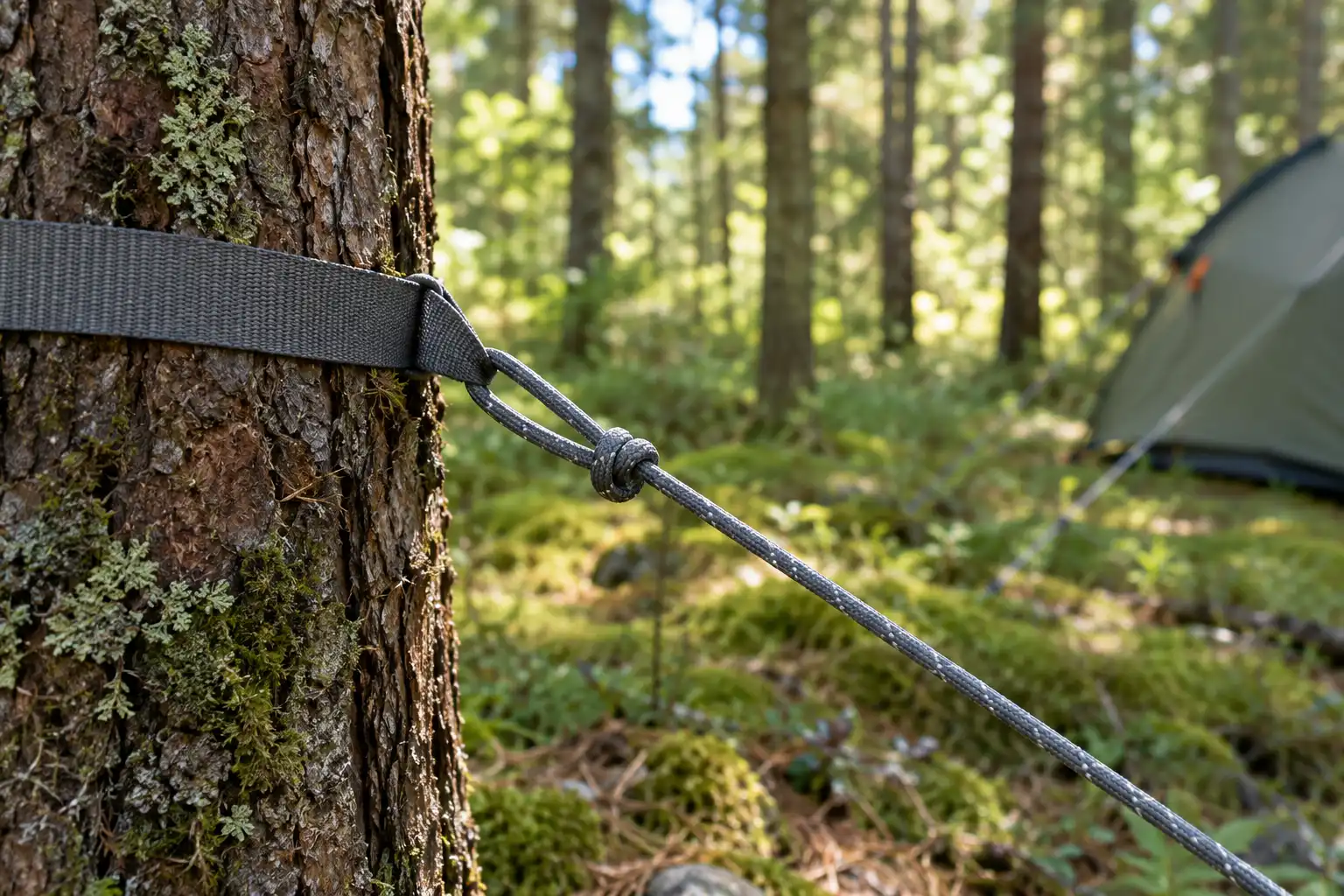
Trees give you the strongest anchor available, and they cost nothing. Run the guyline around the trunk and back to itself with a running bowline, or wrap wide webbing around the bark first. Thin cord bites into soft bark on pine and birch, so slip a bandana or a strip of webbing under the line.
Low shrubs and exposed roots also work. Tie near the base rather than out on a flexible branch, because a branch springs back and lets the line go slack.
Your backpack and loaded gear
Your own gear anchors a tent well once nothing else is nearby. A loaded pack, a full cooler, a water bladder, or a stuffed duffel all sit heavy enough for calm conditions. Clip the guyline to a haul loop, never to a thin zipper pull.
Keep food out of this plan. Scented items belong well away from where you sleep, and keeping food secure overnight at camp matters more than one extra anchor point.
Your vehicle
Car campers have the easiest answer. Tie guylines to a tow hook, a roof rack, or a wheel, and the tent stays put. Just park so the vehicle blocks the prevailing wind, and leave enough slack that nobody trips over a line at night.
How do you tie a guyline without a stake?
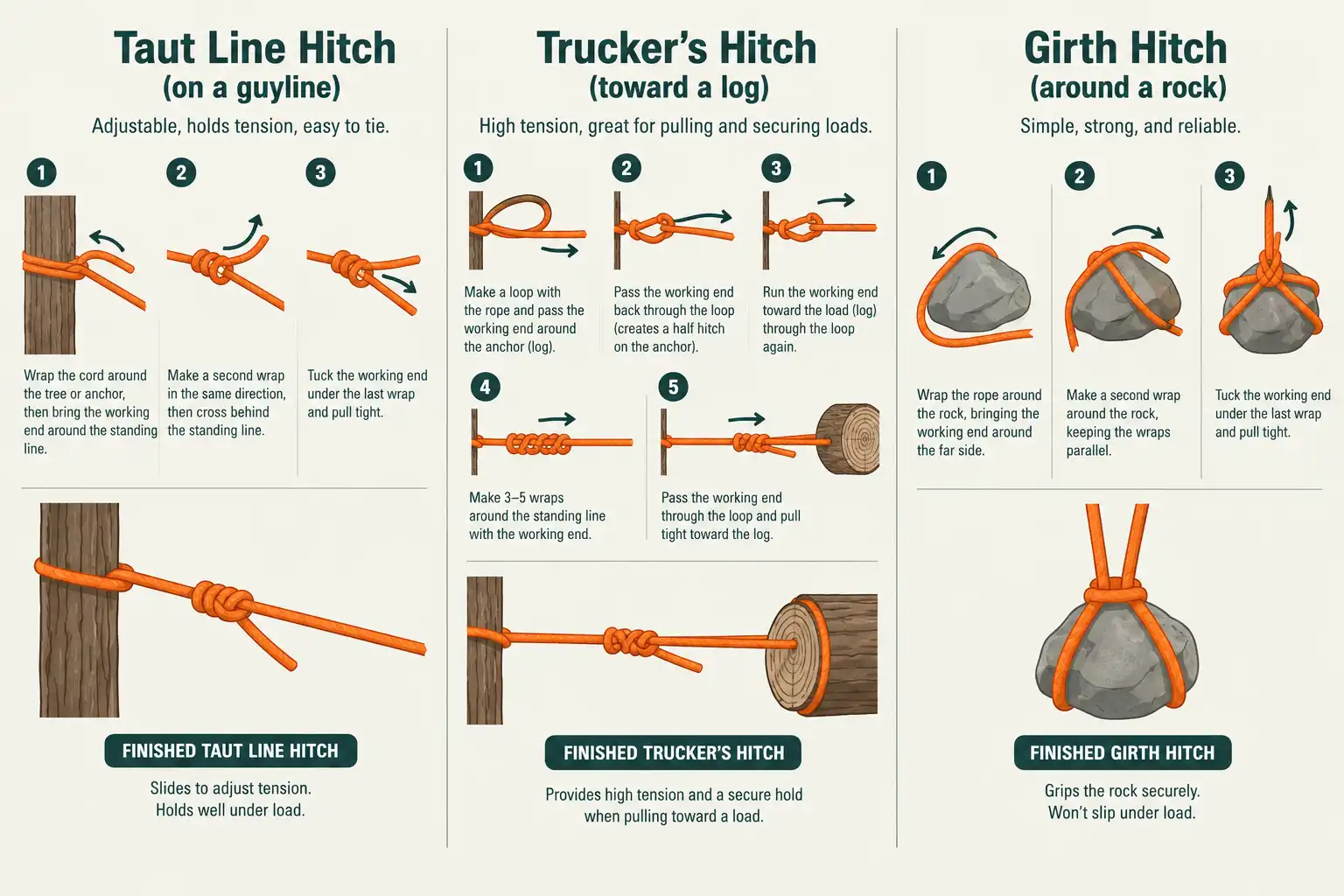
Use a taut line hitch at the tent end and a fixed knot at the anchor end. The taut line hitch slides to tension and then grips under load, so you can retighten at 2 am without untying anything.
Three more knots cover the rest:
- Trucker’s hitch for maximum tension on a long line to a tree or a log.
- Running bowline around a trunk, since the load sits on the knot rather than on the bark.
- Girth hitch around a rock or a buried stick, because it tightens as the line pulls.
Practice these at home once. Learning a new knot by headlamp in cold wind goes badly.
Does this work for freestanding and trekking pole tents?
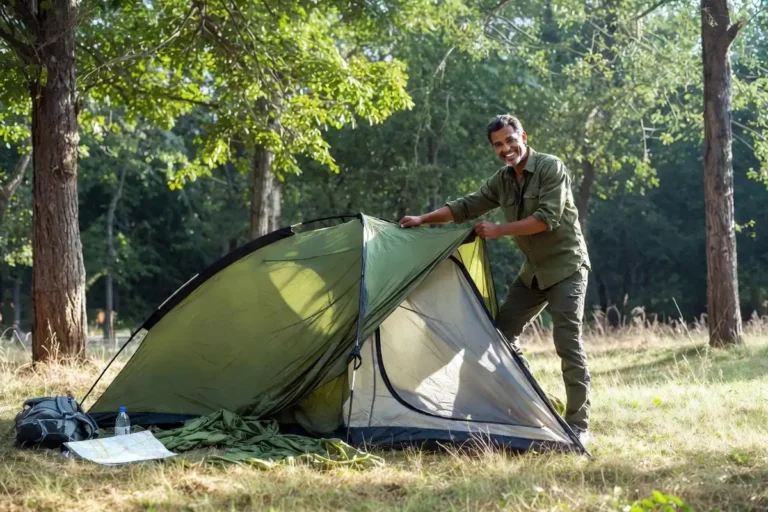
Both work, though freestanding tents are far easier. Their poles hold the shape alone, so you only need weight at the corners to stop the tent from sliding or lifting.
Trekking pole tents ask more of you. Their shape depends on tension, which means every corner anchor has to resist a steady sideways pull. Loose ballast simply slides. Therefore buried deadman anchors or wrapped rock stacks beat gear ballast every time with these shelters.
Tarps follow the same rule, and choosing the right tarp size for your setup decides how many anchor points you need in the first place.
How do you secure a tent on sand?
Bury your anchors instead of pressing them onto the surface. Dry sand gives almost no grip at the top, yet it grips a buried object very well.
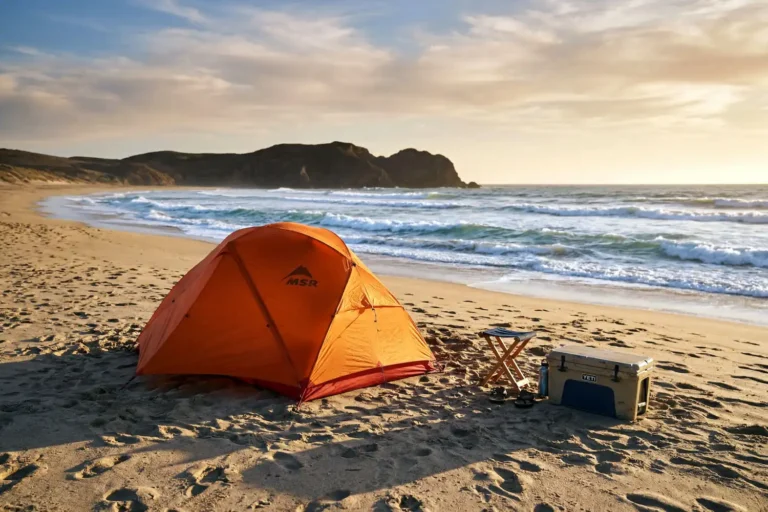
Fill four stuff sacks with sand, tie a guyline to each drawcord, and bury them about 12 inches down. Damp packed sand near the waterline holds at roughly 8 inches. After filling the hole, tamp the surface with your boot so the sand settles.
Check the tide line before you choose a spot. Beach camping rules and tide timing change from coast to coast, and a buried anchor helps nobody if water reaches your tent at 3 am.
How do you secure a tent on snow?
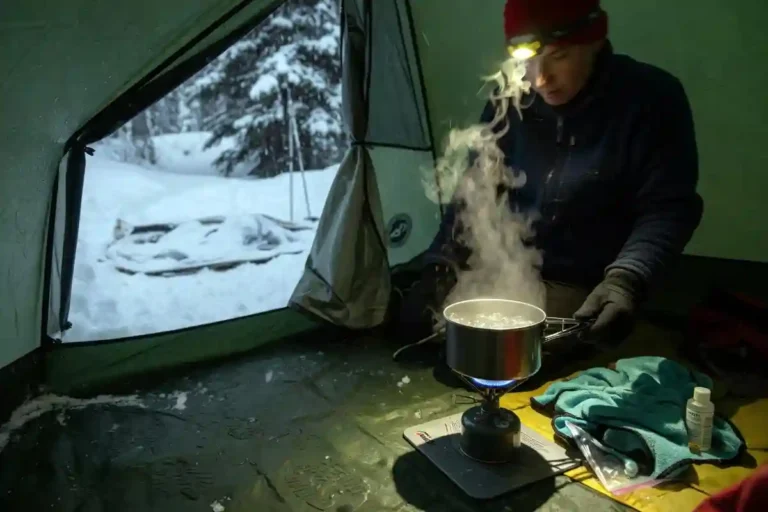
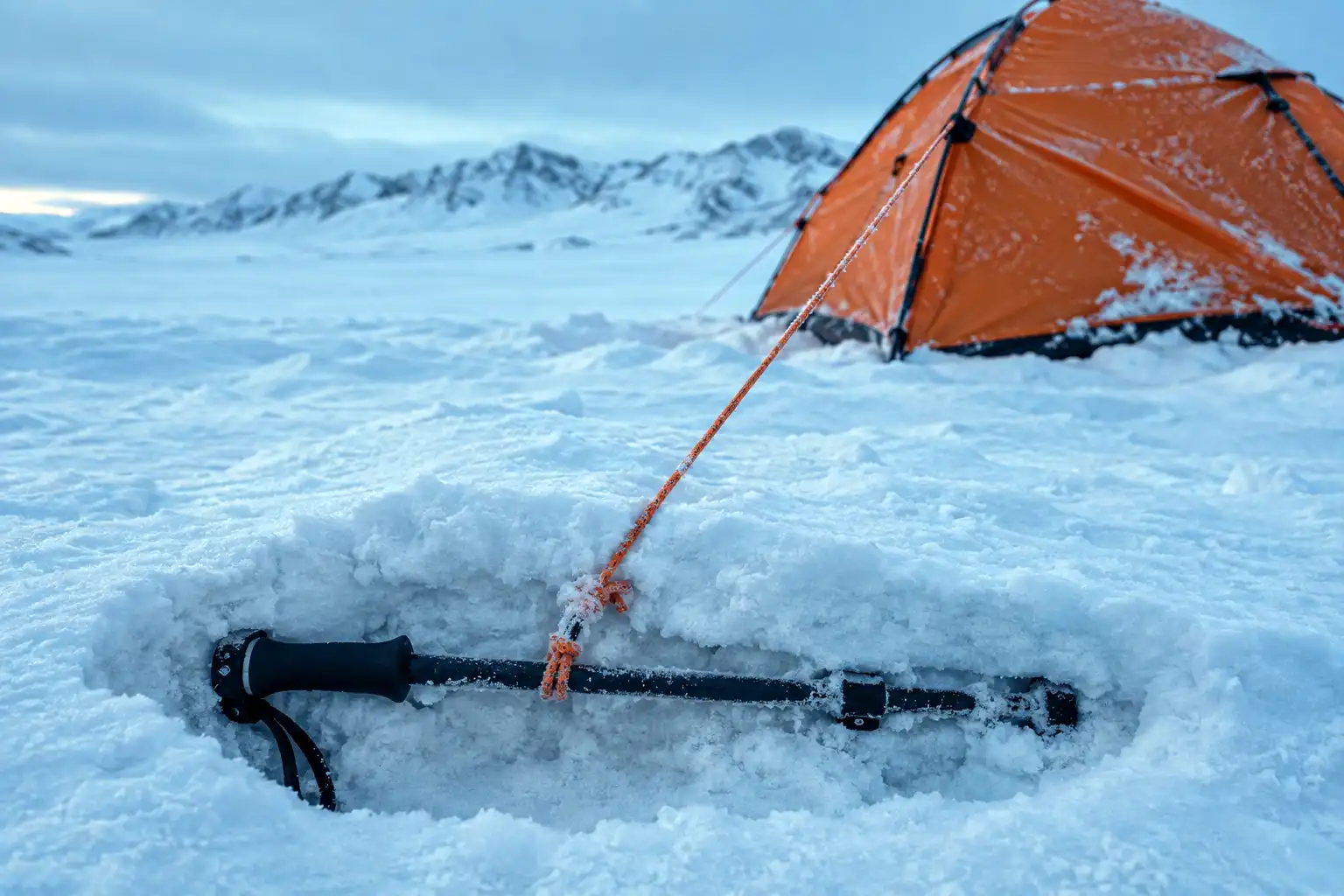
Bury gear as deadman anchors, then let the snow freeze around it. Skis, trekking poles, ice axes, stuff sacks packed with snow, and even a sealed freezer bag full of snow all hold once buried.
Dig 12 to 18 inches down, lay the anchor across the pull direction, and pack snow firmly over it. Give it 20 to 30 minutes to sinter before you load the line fully. Pull tests on buried bag anchors have shown holding strength far beyond anything a tent needs.
How do you secure a tent in strong wind without stakes?
Cut the wind load first, then double up on anchors. Face the lowest end of the tent into the wind, drop any tall vestibule, and close the windward vents.
After that, add more anchor points rather than more weight at one point. Six moderate anchors beat two heavy ones, because the load then spreads across the tent instead of concentrating on a single loop.
Move your heaviest gear inside as well. A loaded pack in each corner adds downward weight exactly where it helps. Finally, walk the perimeter before bed and retension every line by hand.
Can you make tent stakes in the field?
Yes, and a carved stick often holds better than the thin wire pegs that ship with budget tents. Find a dead branch about as thick as your thumb and 10 to 12 inches long. Sharpen one end, then cut a notch an inch below the top so the guyline cannot ride off.
Drive it in at a slight backward lean, away from the tent. Hardwood takes the hammering well, while softwood splits, so tap gently with a rock rather than swinging hard. Check local rules too, since many parks prohibit cutting wood of any kind.
Mistakes that let a stakeless tent break loose
- Anchors set too close. The line then pulls upward and lifts the weight. Place anchors about as far out as the tent is tall.
- A single flat rock resting on the line. It slides off in the first gust. Wrap the line, then weigh it down.
- Slack guylines. Loose fabric snaps back and forth, and that motion works anchors free over a few hours.
- Ballast tied to a zipper pull or mesh loop. Those tear. Use reinforced stake loops and haul loops only.
- No overnight check. Ground settles, sand dries, and snow compacts, so retension before you sleep.
Most of these come from rushing at dusk. A packing checklist that catches forgotten essentials also keeps the stake bag in your pack in the first place.
FAQs

Can a tent stand without any stakes?
How much weight does each corner need?
Can I use rocks from around the campsite?
What if the ground is solid rock?
Can you bring tent stakes in carry on luggage?
Final Thoughts
Losing your stakes does not end a trip. Once you treat anchoring as a weight and tension problem, the ground underneath matters far less. Rocks, buried sacks, logs, water, trees, and your own pack hold a tent through a normal night. Buried deadman anchors hold through a rough one. Carry 15 meters of spare cord, learn the taut line hitch, and you can pitch almost anywhere. That single habit has rescued more of my nights in the hills than any piece of gear I own.