Do You Need a Pillow in a Hammock? Sleep Without Neck Pain

A stiff neck after one night in a hammock sends most people straight to this question. I have hung hammocks in the hills around Kaptai for years, some nights with a pillow and plenty without one. This guide covers when a pillow helps, when it makes things worse, and what to use instead.
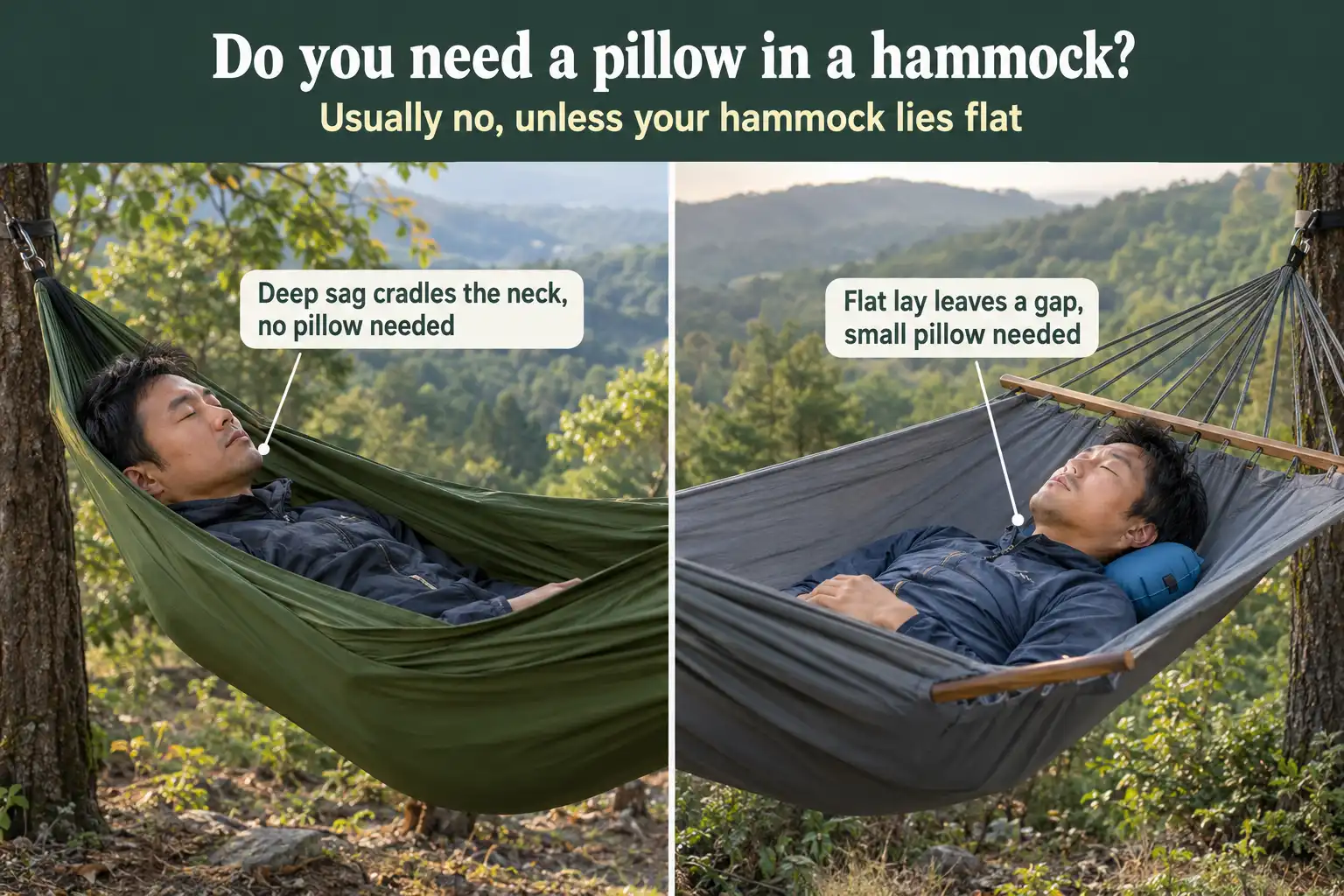
No, you do not need a pillow in a hammock. A gathered-end hammock hung with proper sag already cradles your head and neck. However, bridge hammock users, side sleepers, and campers with neck problems usually sleep better with a small pillow tucked under the neck.
Why most hammock campers sleep fine without a pillow
A hammock has no flat surface, so it never creates the gap a mattress does. On a bed, your head sinks into the pillow while your neck stays unsupported. A pillow fills that gap. In a hammock, the fabric wraps around your skull and neck and fills it for you.
Sag does most of the work here. When the hammock hangs with a deep curve, your head rests slightly higher than your chest. From what I have read, doctors often suggest that same mild head elevation, roughly 10 to 30 percent above flat, for easier breathing. So a well hung hammock already covers part of the job your pillow does at home.
Pressure is the other half of it. Fabric spreads your weight across a wide area instead of one point behind your skull. Because nothing digs in, the sore spots you get from a thin camp pad rarely show up. That is also why many first-time hammock sleepers wake up surprised.
Still, “most campers” is not “all campers”. Some setups remove that natural cradle completely.
When you actually need a pillow in a hammock
You need a pillow whenever the hammock cannot form a curve behind your neck. Six situations cause that.
- Bridge hammocks. Spreader bars at the head and foot pull the fabric into a flat rectangle. That flat lay feels like a bed, so it leaves the same neck gap a bed leaves. Nearly every bridge hammock sleeper carries a pillow.
- A hang that is too tight. Pull the suspension drum tight and the fabric flattens out. Then your head tips back and your chin points at the sky.
- Side sleeping. Turn onto your side and the space between your shoulder and your ear needs filling. A thin pillow handles it.
- Existing neck problems. If your neck hurts on a normal mattress, it will usually hurt in a hammock too.
- A sleeping pad inside the hammock. Foam and air pads stiffen the fabric and kill the cradle. After that, you are back to needing head support.
- Cold nights with a short underquilt. Most underquilts run three-quarter length and stop near the shoulders. A pillow adds insulation where the quilt ends.
How your hang and your lay change the answer
Fix the hang before you buy a pillow. Most hammock neck pain traces back to setup, not to missing gear.
Set the sag close to 30 degrees
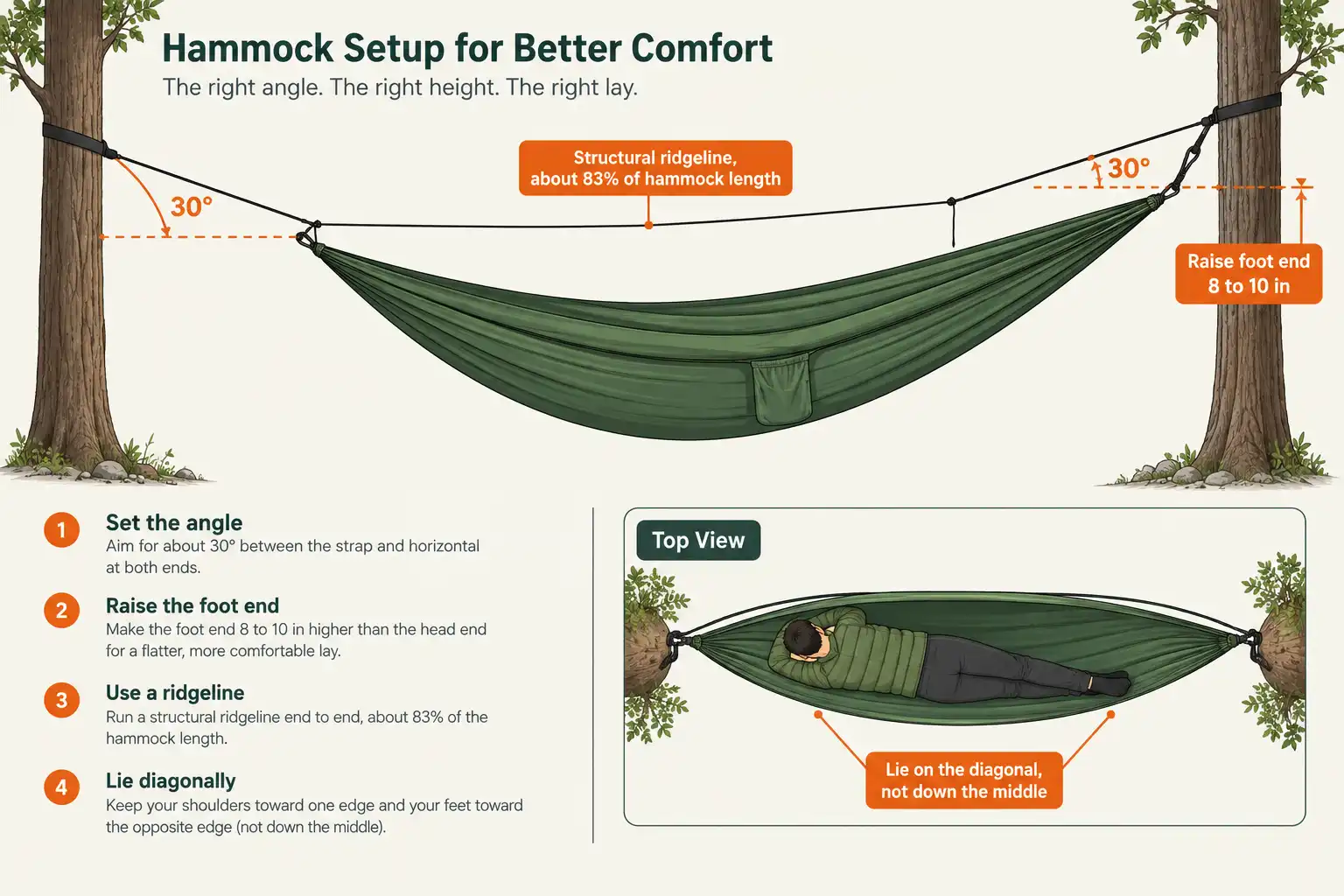
Aim for about a 30 degree angle between each suspension strap and the ground. That angle is the standard starting point for gathered-end hammocks. It also keeps strap loads sensible, because flattening the hang toward 15 degrees nearly doubles the tension on each anchor. A structural ridgeline cut to roughly 83 percent of your hammock length repeats the same sag every night. The same 30 degree target applies to posts, stands, and anchors that work without trees.
Lie on the diagonal
Shift your shoulders toward one edge and your feet toward the other. This diagonal position flattens your body and cancels the banana curve. Makers cut gathered-end hammocks wide for exactly that reason. Many campers also raise the foot end by 8 to 10 inches so they stop sliding down overnight. Once you set up your hammock between two trees with real sag and lie across it, test one night pillow-free before spending money.
What kind of pillow works best in a hammock?
A small pillow that supports the neck works best in a hammock. Big bed pillows push your chin toward your chest and tighten your airway. Target something close to the size of a rolled fleece, not something you would put on a bed.
| Pillow type | Packed size | Best for | Watch out for |
|---|---|---|---|
| Inflatable | Fist sized | Backpacking, humid nights | Slides on slick nylon |
| Compressible foam | Grapefruit sized | Cold weather, comfort | Bulk, holds damp |
| Hybrid foam and air | Orange sized | Most three-season trips | Costs more |
| Stuff sack of clothes | Free | Cutting pack weight | Lumps, shifts around |
| U-shaped travel pillow | Bulky | Chronic neck pain | Rides up the hammock walls |
Inflatable pillows give you the most control, because you can bleed air out until the height matches your lay. Many borrow the open-cell foam and valve design behind how self-inflating camping pads work. Because of that, they firm up alone and fine tune with a breath or two.
Height matters for another reason as well. A tall pillow pushes your face up into the mesh. If the netting keeps brushing your nose, drop the pillow height. Otherwise spend five minutes keeping the bug net off your face with a tight ridgeline pull.
Climate counts too. Kaptai stays humid most of the year, so foam pillows soak up sweat and feel clammy by morning. For that reason I carry an inflatable with a wipe-clean shell.

How to stop a hammock pillow from sliding out
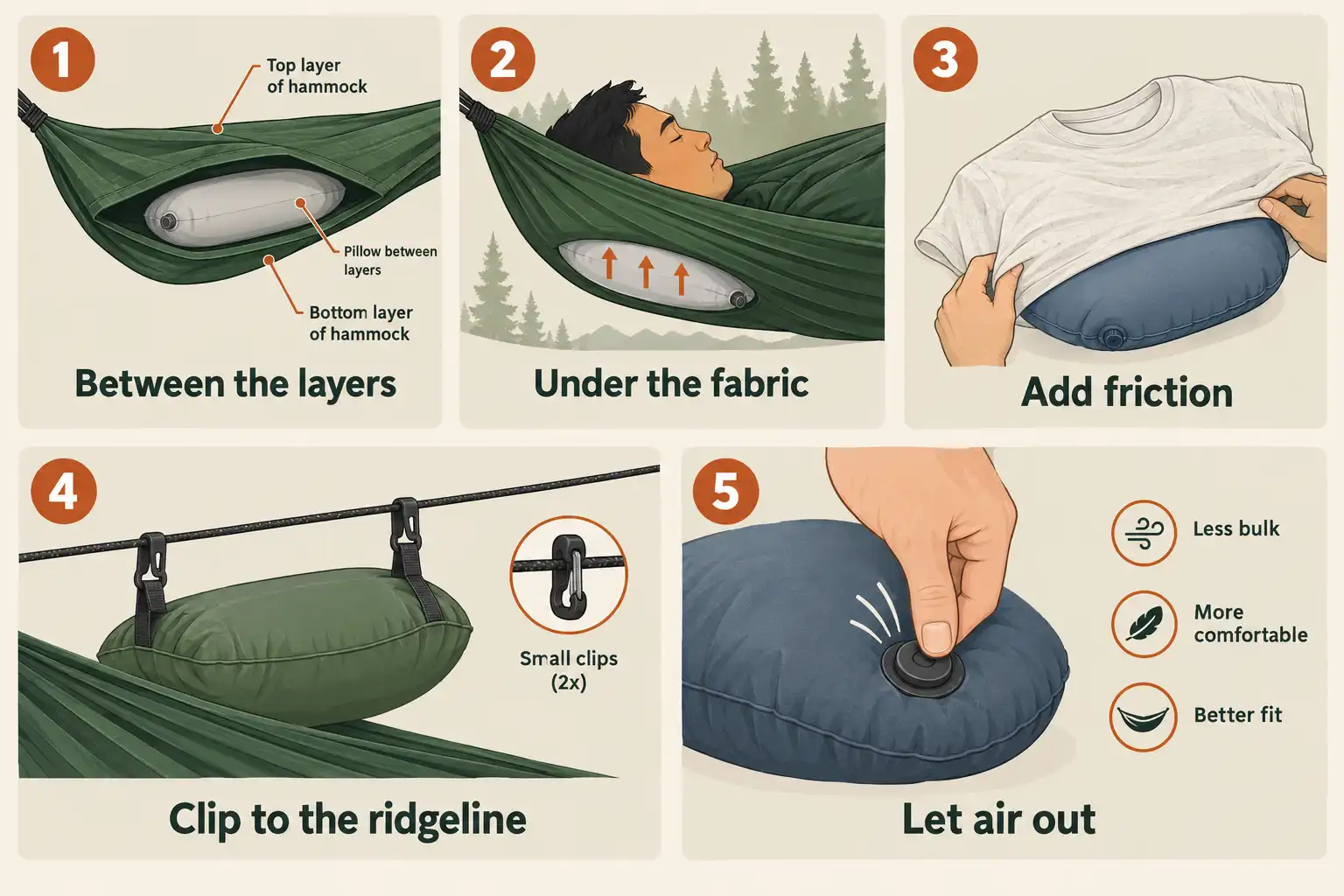
Pillows slide in hammocks because the fabric curves and the nylon runs slick. Five fixes solve almost every case.
- Slide it between the layers. Double-layer hammocks hold a pillow between the two fabric panels. Nothing moves after that.
- Put it under the hammock body. Tuck the pillow beneath the fabric instead of on top. Your head then presses the fabric down onto it and pins it in place.
- Add friction. Pull a cotton T-shirt or a fleece cover over a slippery pillow. Grip beats gravity here.
- Clip it down. Two mitten clips or small safety pins will hold the pillow to your ridgeline or to the hammock edge.
- Let air out. An over-inflated pillow rolls like a log. Soften it until it conforms to your neck and it stays put.
Size helps as well. Small pillows settle into the bottom of the curve, while wide ones climb the hammock walls and flip out around 2 a.m. Some camping hammocks include a sewn pillow pocket at the head end, which solves the problem with no extra gear at all.
How to sleep in a hammock without a pillow
Bunch the fabric under your neck and you get a pillow for free. Grab the loose material at the head end, twist it once, then push the roll under your neck. It holds far better than most people expect on the first try.
Clothing works too. A rolled fleece, a puffy jacket stuffed into its own hood, or a dry bag of spare layers all give enough lift. Because synthetic fill compresses overnight, start a little thicker than feels right.
Also think about your knees rather than your head. On a diagonal lay your knees extend slightly, and people often blame the neck for that ache. A folded shirt or a small pad under the knees clears it up. During nights sleeping outside without a tent, I have used an empty pack for exactly that.
Sore again in the morning? Recheck the hang before buying anything. No pillow fixes a hammock pulled too tight.

Does a pillow matter more in cold weather?
Yes, a pillow matters more in cold weather, because moving air under the hammock pulls heat out of your head. Most underquilts cover only three quarters of your body. They stop somewhere near the shoulders, which leaves the head end of the hammock uninsulated.
Foam blocks that heat loss better than air does. Air-filled pillows let convection currents move inside them, so cold nights favor foam or a hybrid with a foam top layer. Folding a fleece under an inflatable gets you most of the way there for free.
Your top insulation changes the math as well. Hood position decides how much pillow height you actually need, and a hooded quilt sits very differently from a mummy bag. Anyone weighing a quilt against a sleeping bag should test the hood with the pillow in place before a cold trip.
FAQs about Pillow in a hammock

Where should the pillow sit in a hammock?
Can you use a regular bed pillow in a hammock?
What size camping pillow suits a hammock?
Will a pillow fix shoulder squeeze?
Final thoughts
Most campers do not need a pillow in a hammock, and I sleep without one on warm nights here in Rangamati. Fix the sag first, lie across the diagonal, and give it two nights before deciding. If you run a bridge hammock, sleep on your side, or camp in the cold, pack a small pillow and keep it under your neck. Also keep it thin. A pillow that is too tall causes more trouble than no pillow at all.