Are Converse Good for Hiking? What to Know Before You Go

Converse sneakers show up on trails constantly. I wore canvas high tops on the Rangamati hills for years before I owned proper footwear, so I know how they behave. Here is where Chuck Taylors hold up, where they fail, and what to do if they are all you own.
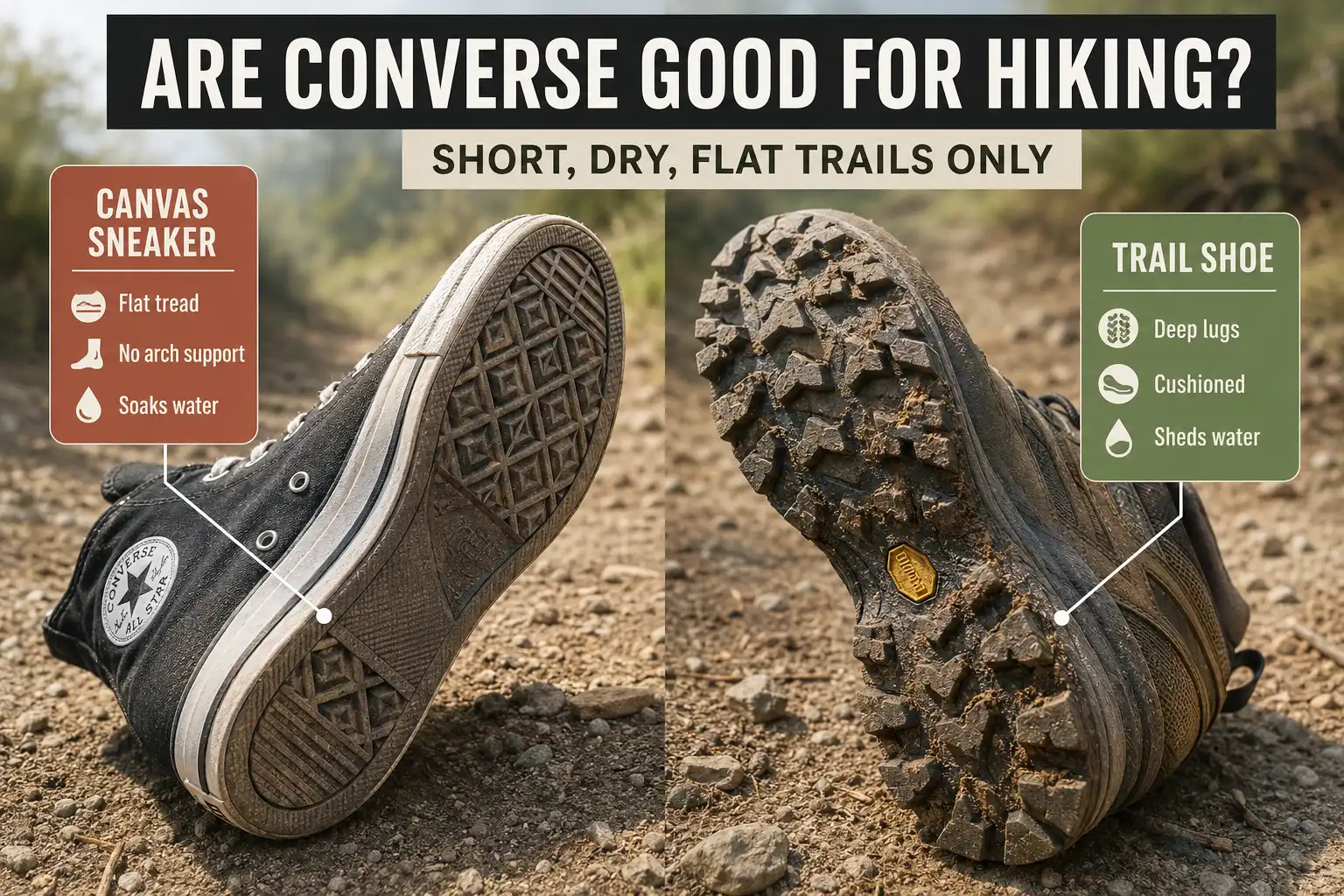
Classic Converse are not good for hiking. The outsole uses a flat diamond tread with almost no bite, the insole is paper thin, and canvas soaks up water fast. However, they can handle short, dry, flat trails under two or three miles if you walk slowly and carry a light pack.
Why Do Converse Perform Poorly on Trails?
Converse perform poorly because the whole shoe targets a basketball court, not dirt, mud, or rock. The Chuck Taylor All Star debuted in 1917 as a court shoe, and the core build has barely changed since. That heritage explains almost every problem you hit outdoors.
The outsole was built for hardwood, not dirt
The classic Chuck uses a smooth diamond pattern outsole with shallow, flat rubber. Hiking shoes instead use deep lugs, often in multi-directional patterns, so they grip on climbs, descents, and side slopes. Podiatrists make this point bluntly: flat sneaker tread creates friction on pavement, yet it cannot bite into loose soil, mud, or wet rock. On a damp, leaf-covered descent, that difference turns dangerous fast.
I learned it on a clay slope above Kaptai after light rain. My feet went out from under me twice in one descent.
There is no arch support or cushioning
The standard All Star has a flat zero-drop platform and a very thin insole. That build is exactly why lifters love Chucks for squats, and also why hikers regret them after two hours. Owners consistently report foot fatigue from ordinary daily wear. Add a pack and a rocky descent, so that fatigue arrives much sooner.
Canvas holds water and dries slowly
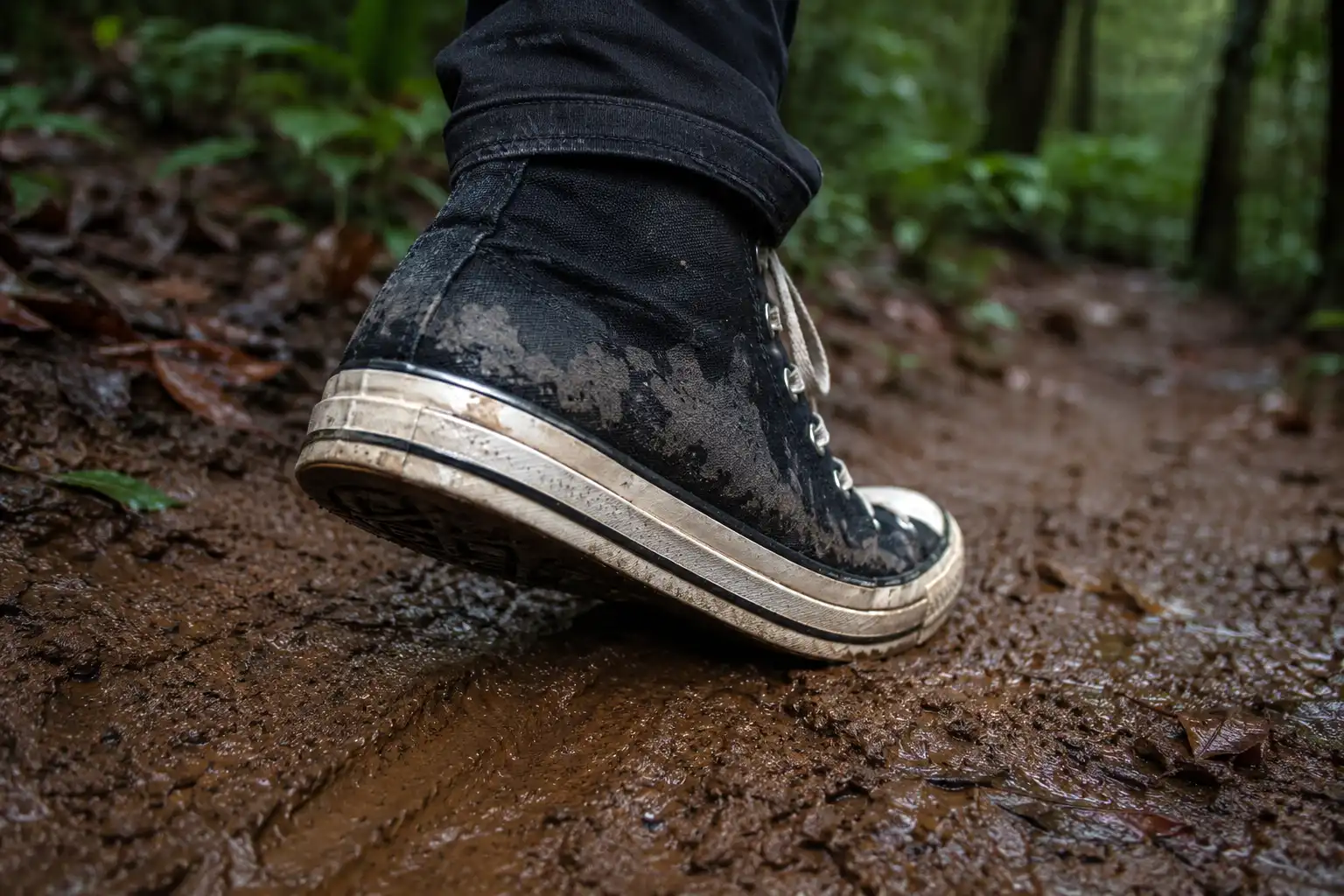
Standard Chuck canvas carries no water treatment at all. Cross one shallow stream, then your feet stay wet for hours. Wet feet rub, and rubbing turns into blisters.
Nothing shields your foot from rocks
Chucks include no rock plate and no stiff shank. Because of that, sharp gravel and roots press straight through the thin sole. After a few miles, the bottoms of your feet feel bruised.
Learn more: Feedback about Compression Socks for Hiking
When Are Converse Okay for a Hike?
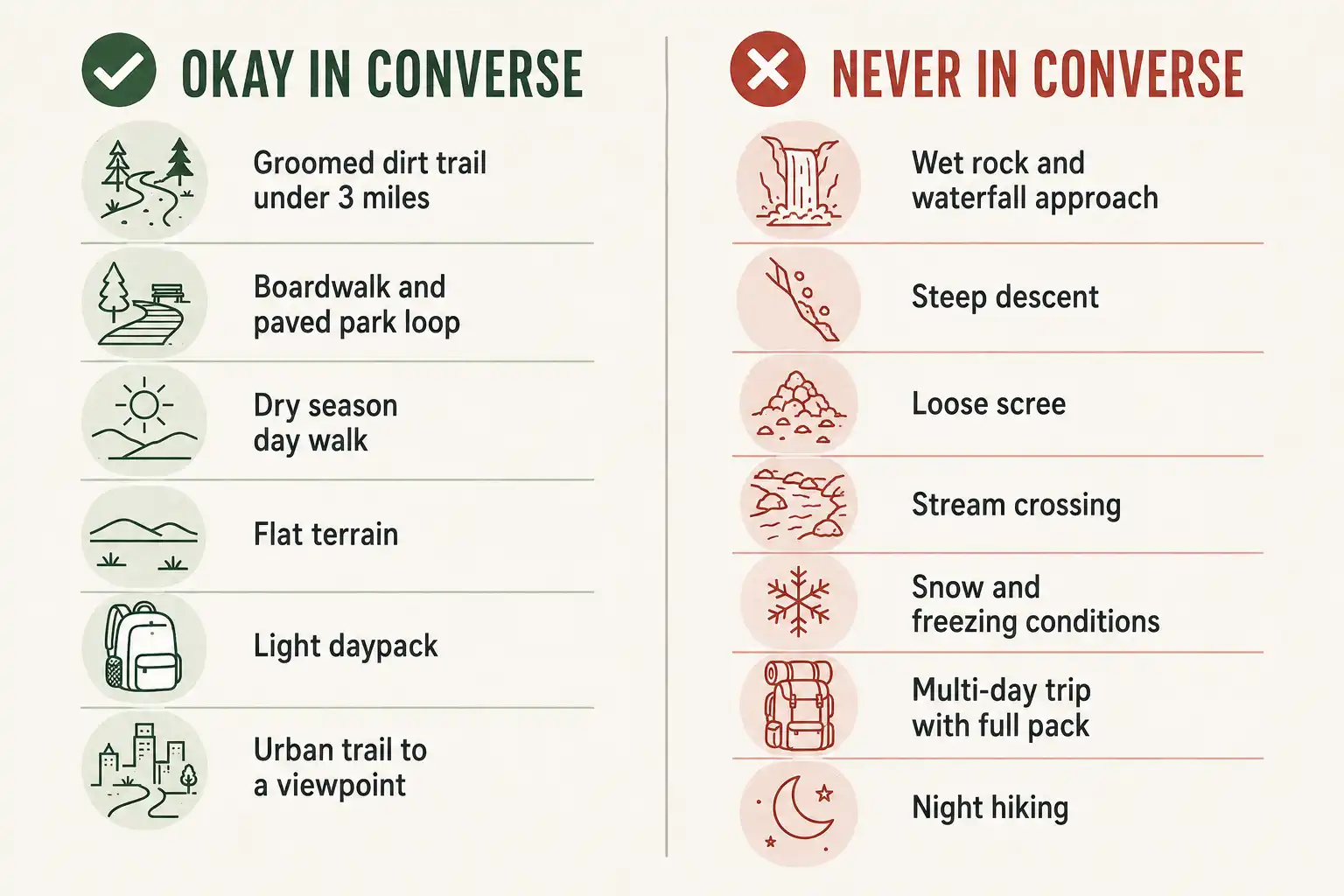
Converse work fine on short, dry, well-maintained trails with gentle grade and no exposure. Plenty of walking counts as hiking, and not all of it demands technical footwear.
They hold up reasonably well in these conditions:
- Groomed nature trails with packed dirt or gravel, under about three miles
- Boardwalk and paved park loops, including most visitor-center paths
- Dry season day walks with no stream crossings and no mud
- Flat terrain with minimal elevation change
- Light loads, meaning a small daypack instead of an overnight kit
- Urban hikes where you walk from a bus stop to a viewpoint and back
Anything past that list starts to expose the shoe. The moment grade steepens or moisture appears, your risk climbs quickly. If you own several casual pairs and want to pick the least bad one, the broader question of wearing everyday footwear on trails covers running shoes and other sneakers too.
When Should You Never Hike in Converse?
Skip Converse entirely on wet rock, steep descents, loose scree, snow, and anything longer than a half-day. These conditions punish flat, unsupported footwear harder than most people expect.
Leave the Chucks at home for:
- Wet rock and waterfall approaches. Smooth rubber on wet stone gives almost zero grip.
- Steep downhill sections. Without lugs or a heel brake, your foot slides forward and your toes jam.
- Loose scree and gravel. Nothing anchors the shoe, therefore each step slips.
- Stream crossings. Canvas soaks instantly, then stays heavy and cold for hours.
- Snow and freezing conditions. Chucks offer no insulation and no waterproofing.
- Multi-day trips with a full pack. Extra weight multiplies every weakness in the shoe.
- Night hiking. Weak traction plus low visibility is a bad pairing.
Around Bandarban, waterfall trails involve wet boulders almost year round. I have watched people in canvas sneakers slow an entire group down on those sections, and I have seen a few bad falls. So I treat wet rock as a hard line.
Chuck Taylor All Star vs Chuck 70: Which Handles Walking Better?
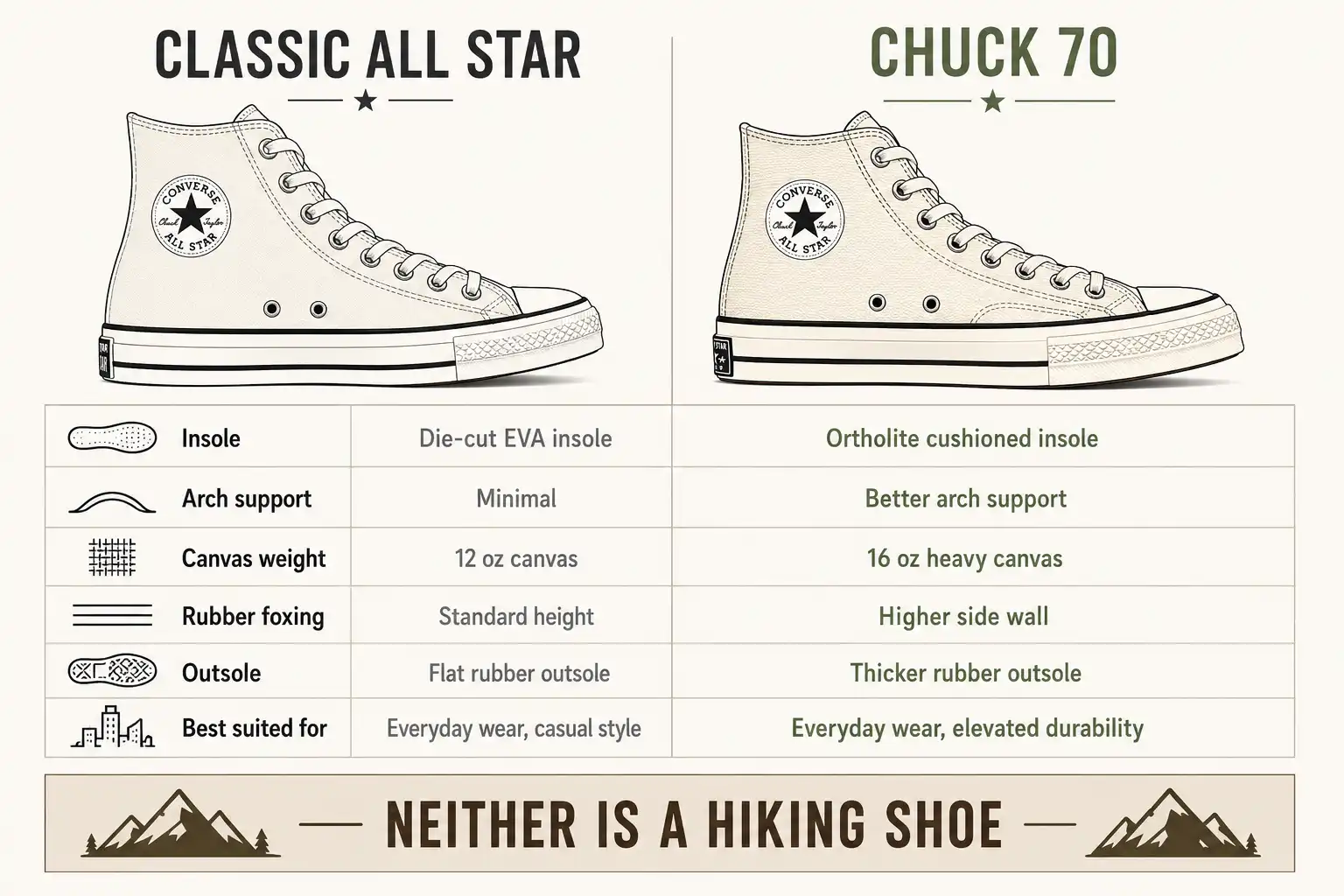
The Chuck 70 handles walking better than the standard All Star, although neither one qualifies as hiking footwear. Converse built the 70 as a premium reissue, and several upgrades genuinely help on longer days.
| Feature | Chuck Taylor All Star | Chuck 70 |
|---|---|---|
| Insole | Thin and minimal | OrthoLite cushioning |
| Arch support | Essentially none | Noticeably better |
| Canvas | Standard weight | Thicker and more durable |
| Rubber foxing | Standard height | Higher, adds lateral stability |
| Outsole | Three-piece rubber | One-piece rubber |
| Suits | Gym lifting, casual wear | Long walking, travel days |
The Chuck 70 brings thicker canvas, higher rubber foxing, better cushioning, improved arch support, and longer life. Therefore, if you already plan to buy Converse and you walk a lot, the 70 is the smarter pick. Still, the tread pattern stays broadly similar, so grip on wet or loose ground barely improves.
Sizing matters too. Chucks tend to run about half a size large, and the midfoot is narrow, which frustrates wide-footed buyers. Because fit drives comfort more than any other factor, the same rules from getting trail shoe sizing right apply here.
Which Converse Models Are Actually Built for the Outdoors?
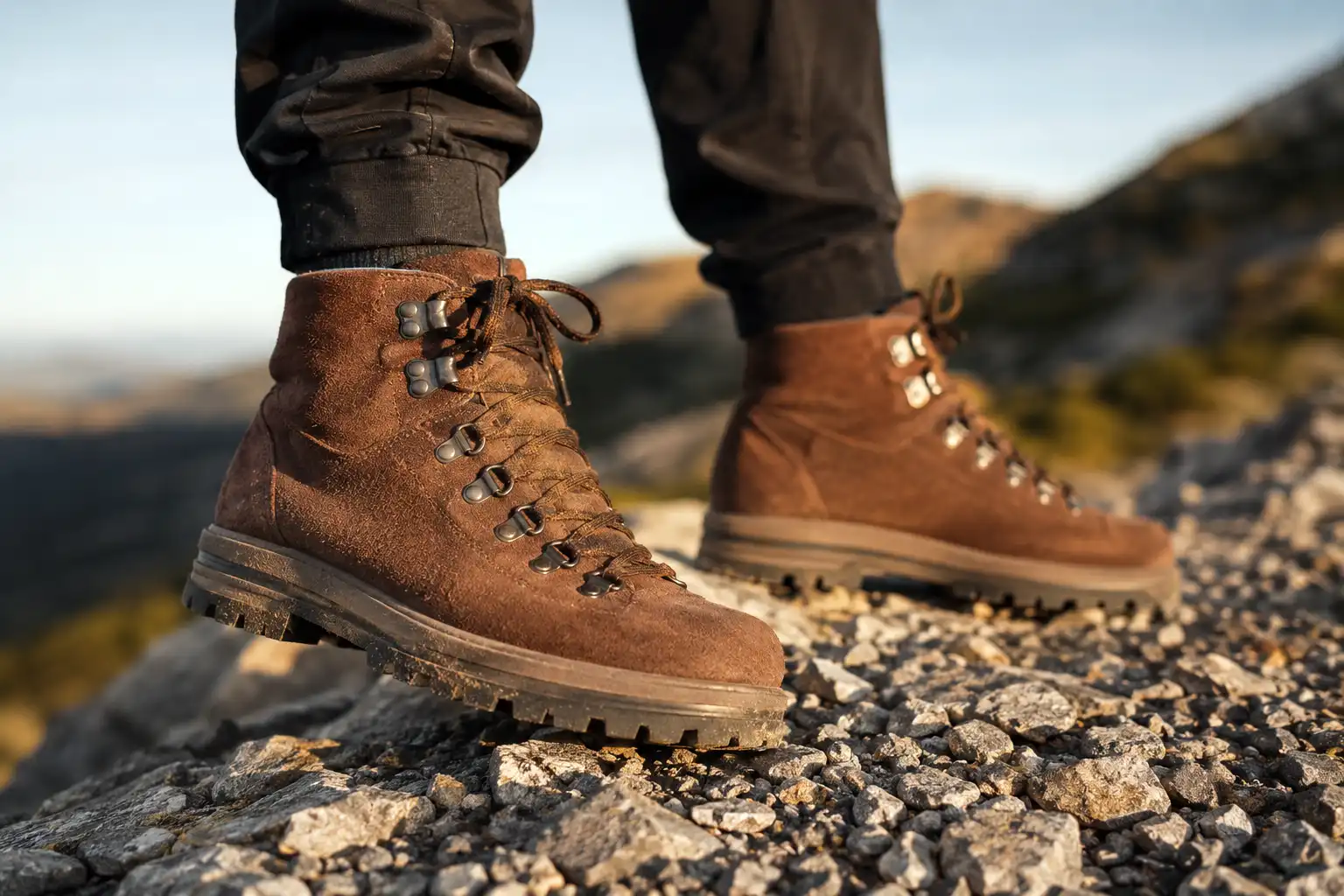
Converse does make several trail-leaning models, and they perform far better than classic Chucks. These sit in a middle zone: stronger than canvas sneakers, still well below a real hiking shoe.
Chuck Taylor All Star Hiker Boot. A high-top with water-resistant suede, a lugged sole, and an OrthoLite insole. This one genuinely handles light trails.
Lugged 2.0 Collection. Converse markets these as sneaker-boot hybrids with a winter-ready lugged sole, offered across All Star and Run Star shapes. The deeper tread helps on mud and packed snow.
Chuck 70 GORE-TEX. Built for damp mornings and light drizzle, this version adds a waterproof membrane plus OrthoLite cushioning. Good for wet city walking, not for trail water.
All Terrain / Counter Climate. A waterproof leather upper, fleece lining, D-ring lacing, and a channeled traction outsole. This is the most weather-capable option in the lineup.
All Star Trekwave. An EVA midsole absorbs impact, and the treads run deeper with anti-slip properties. However, the upper remains untreated canvas.
Stay honest about these, though. Converse designs them as fashion products with outdoor styling. They beat classic Chucks by a wide margin, yet they still lack the torsional rigidity and sticky rubber compounds that dedicated trail outsoles deliver.
How Do You Make Converse Safer if That Is All You Have?
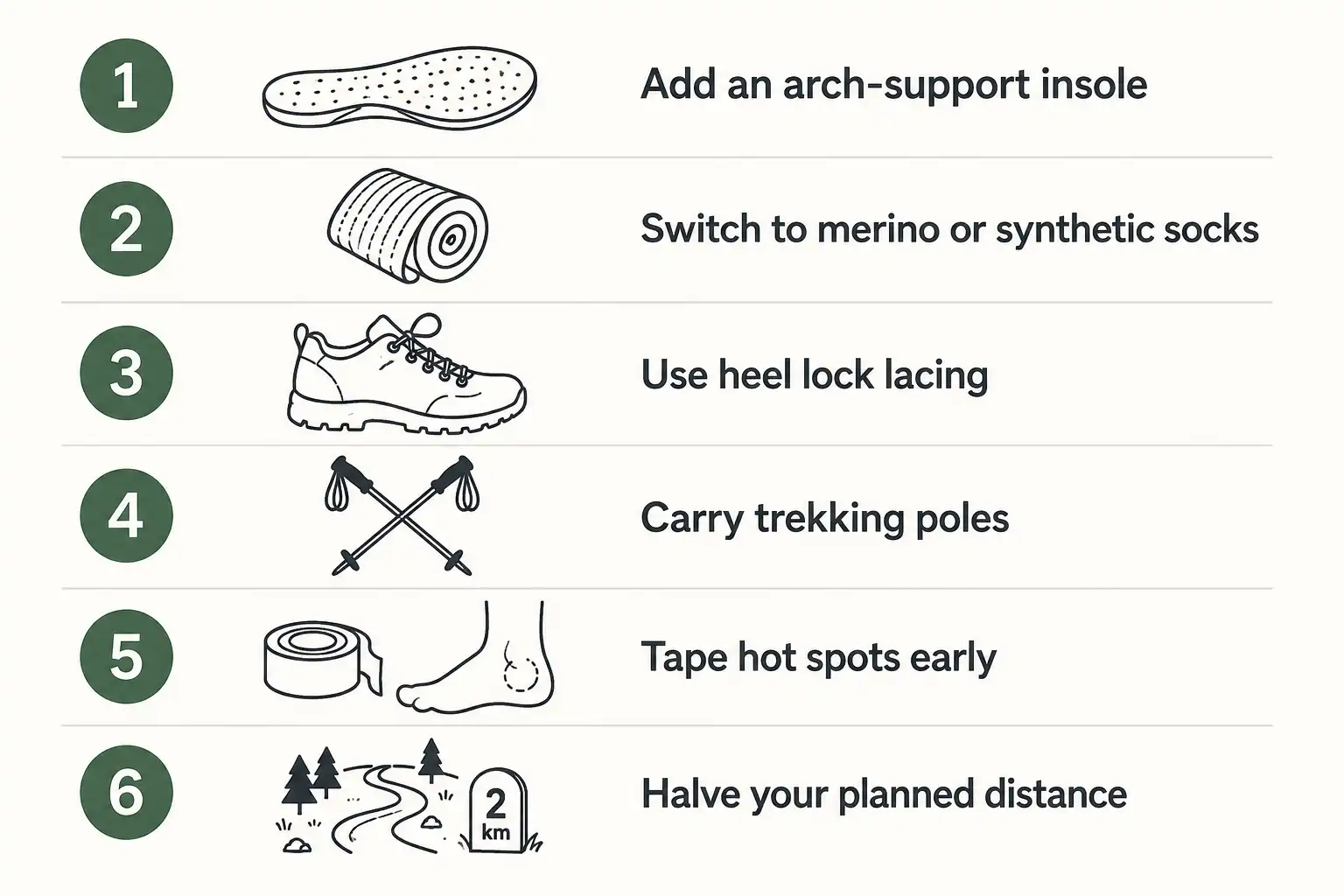
Add a supportive insole, wear wool socks, lace with a heel lock, then slow down on descents. None of this turns a Chuck into a hiking shoe, but each step meaningfully cuts your risk.
- Drop in an aftermarket insole. This fixes the biggest weakness. Even a cheap arch-support footbed changes how the shoe feels after mile two.
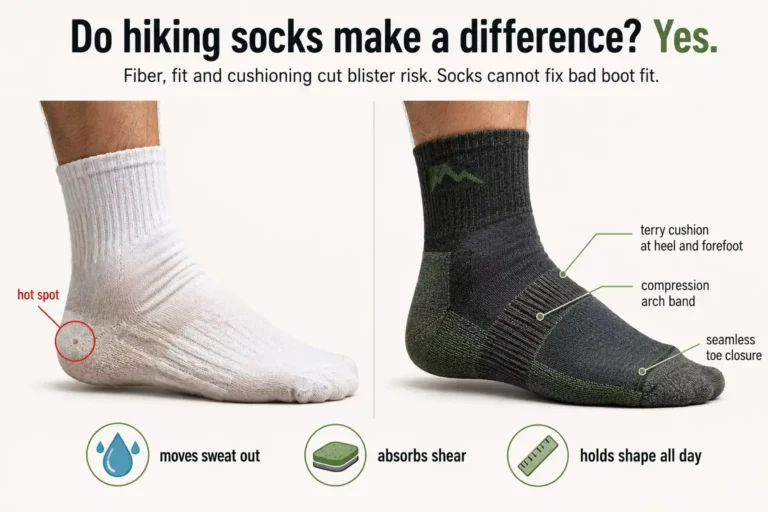
- Wear merino or synthetic socks. Cotton holds moisture and creates friction, so swap it out. Picking socks that cut friction and stop blisters matters more in canvas shoes than in proper boots.
- Use a heel lock lacing pattern. Thread the top eyelets into a loop on each side, then cross the laces through. Your heel stops sliding, which protects your toenails on descents.
- Carry trekking poles. Poles give you two extra contact points, and they compensate directly for weak traction. Knowing how poles protect your knees on steep ground pays off immediately when your soles cannot be trusted.
- Tape hot spots early. Check your feet at the first sign of rubbing instead of pushing through.
- Cut your pace and your distance. Plan roughly half the mileage you would normally cover.
What Should You Wear Instead?
Pick trail runners for dry, fast days, hiking shoes for general use, or boots for rough terrain and heavy loads. Each category solves the exact problems Converse creates.
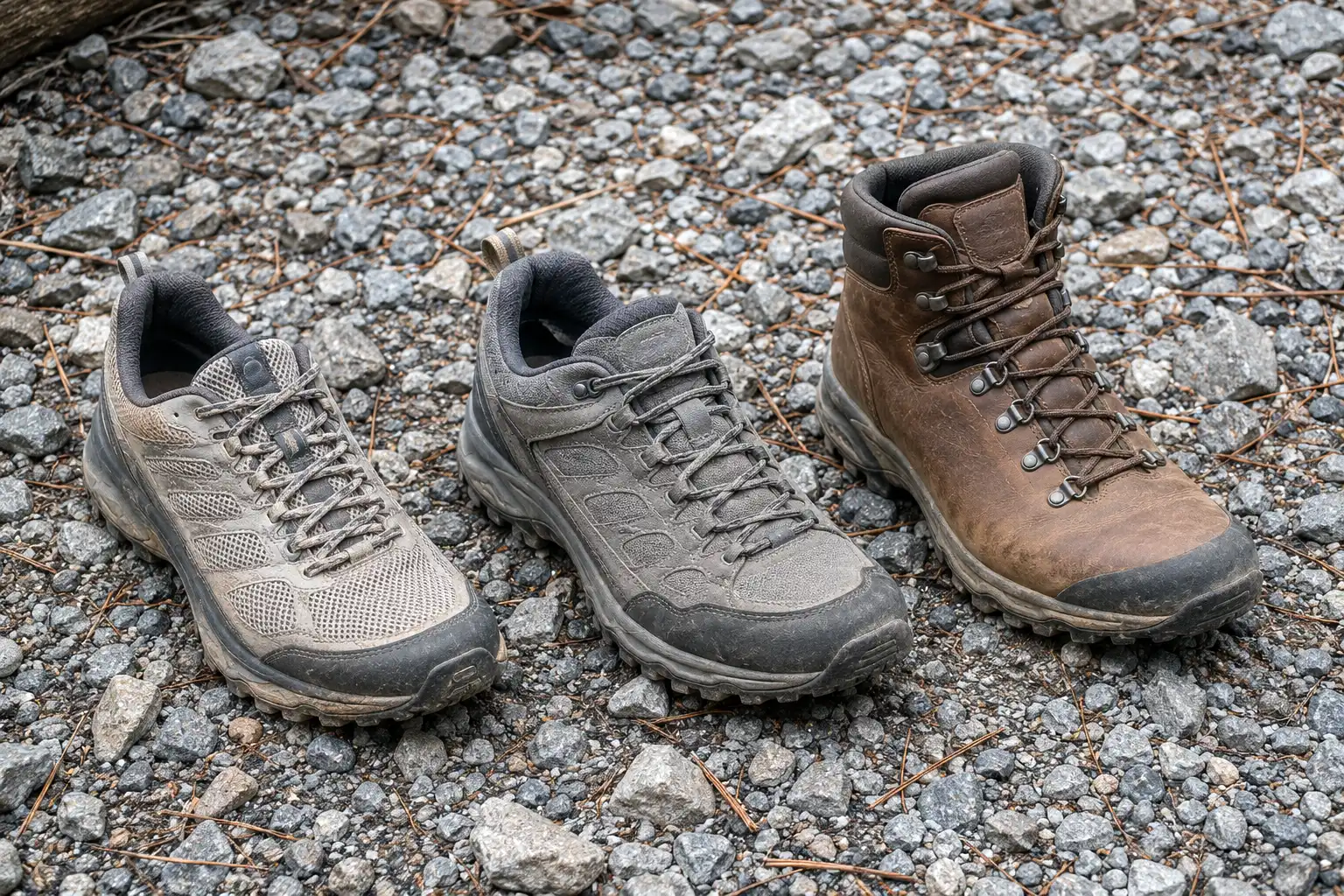
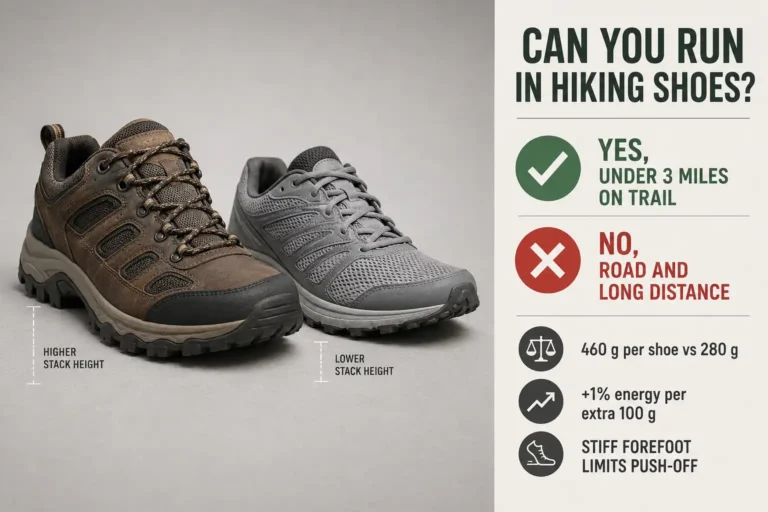
Trail runners weigh little, dry quickly, and use grippy multi-directional lugs. These suit day hikes on established trails.
Low-cut hiking shoes add stiffer midsoles, better underfoot protection, and tougher uppers. Most hikers do well in these year round.
Mid or high boots add ankle coverage and stiffer soles. Research on ankle protection shows that high-top boots improve joint awareness, limit inversion once a sprain starts, and steady you on uneven ground. Therefore they earn their weight on rocky terrain and heavy-pack days.
Not sure which height suits you? The tradeoffs between boots and shoes for newer hikers come down to terrain, load, and personal comfort. Solid entry-level pairs start well under $100, which costs less than most beginners assume.
FAQs on Hiking in Converse

Can you hike a mountain in Converse?
Are high-top Converse better than low-tops for hiking?
Do Converse cause blisters on long walks?
Are Chucks the same as barefoot shoes?
How long do Converse last with regular trail use?
Final Thoughts
Converse belong on sidewalks, not switchbacks. For a flat two-mile nature trail on a dry afternoon, they will get you through without drama. For anything steeper, wetter, longer, or rockier, they turn a pleasant walk into a slipping, aching problem. If Chucks are truly your only option, add an insole, wear proper socks, carry poles, then cut your distance. After that, put the money you save toward trail runners. Your feet will notice the difference on the very first hike.