How Long Does It Take to Hike Mount Monadnock? (2026 Times)

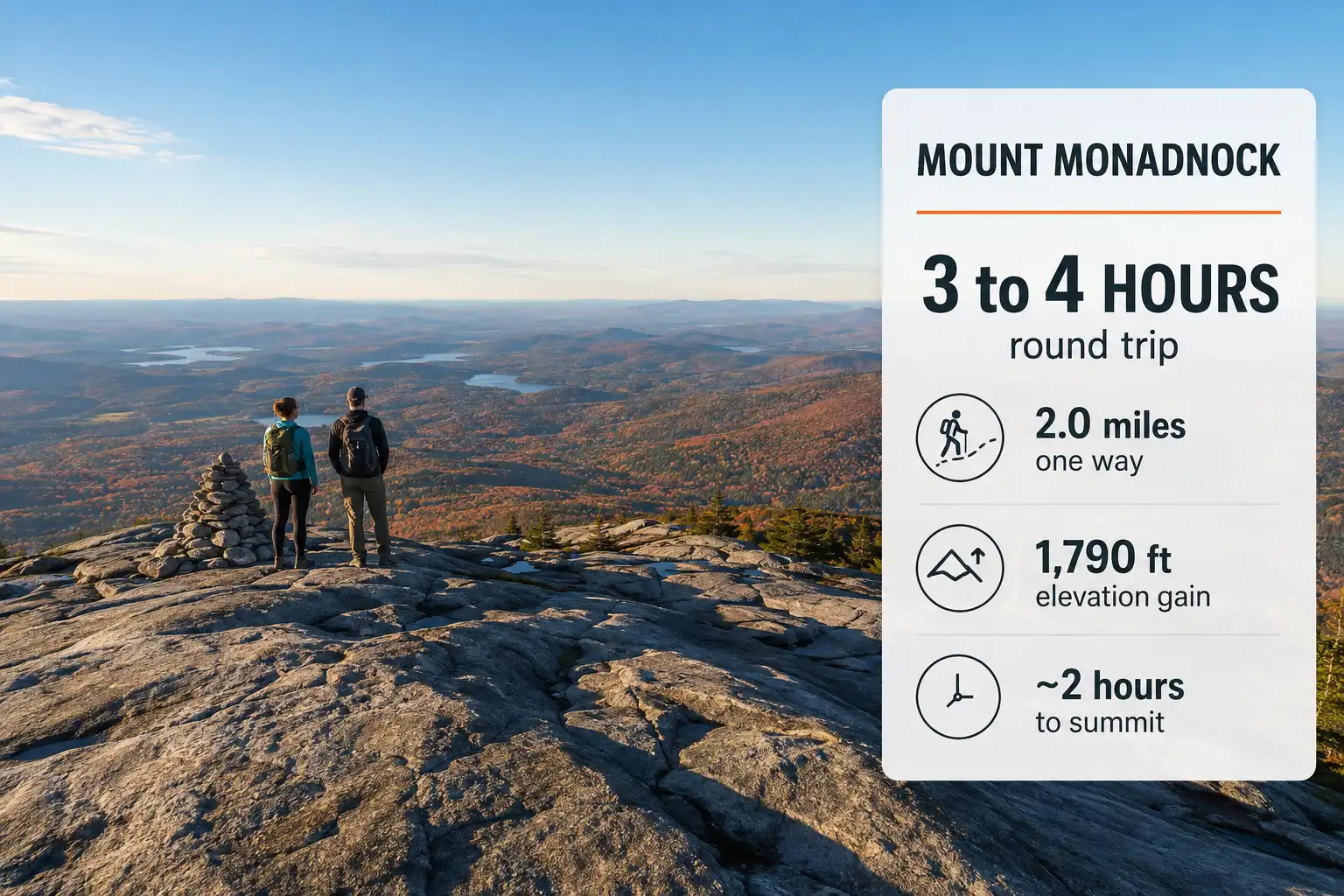
Mount Monadnock takes far longer than its two mile trail length suggests. This guide gives you the official park times for every route. You also get an hour by hour breakdown and the start time you need to finish in daylight.
Most hikers reach the summit of Mount Monadnock in about 2 hours and finish the round trip in 3 to 4 hours. Monadnock State Park lists the White Dot Trail as 2 miles with a 2 hour climb. Add 30 to 45 minutes if you plan to eat lunch on the summit.
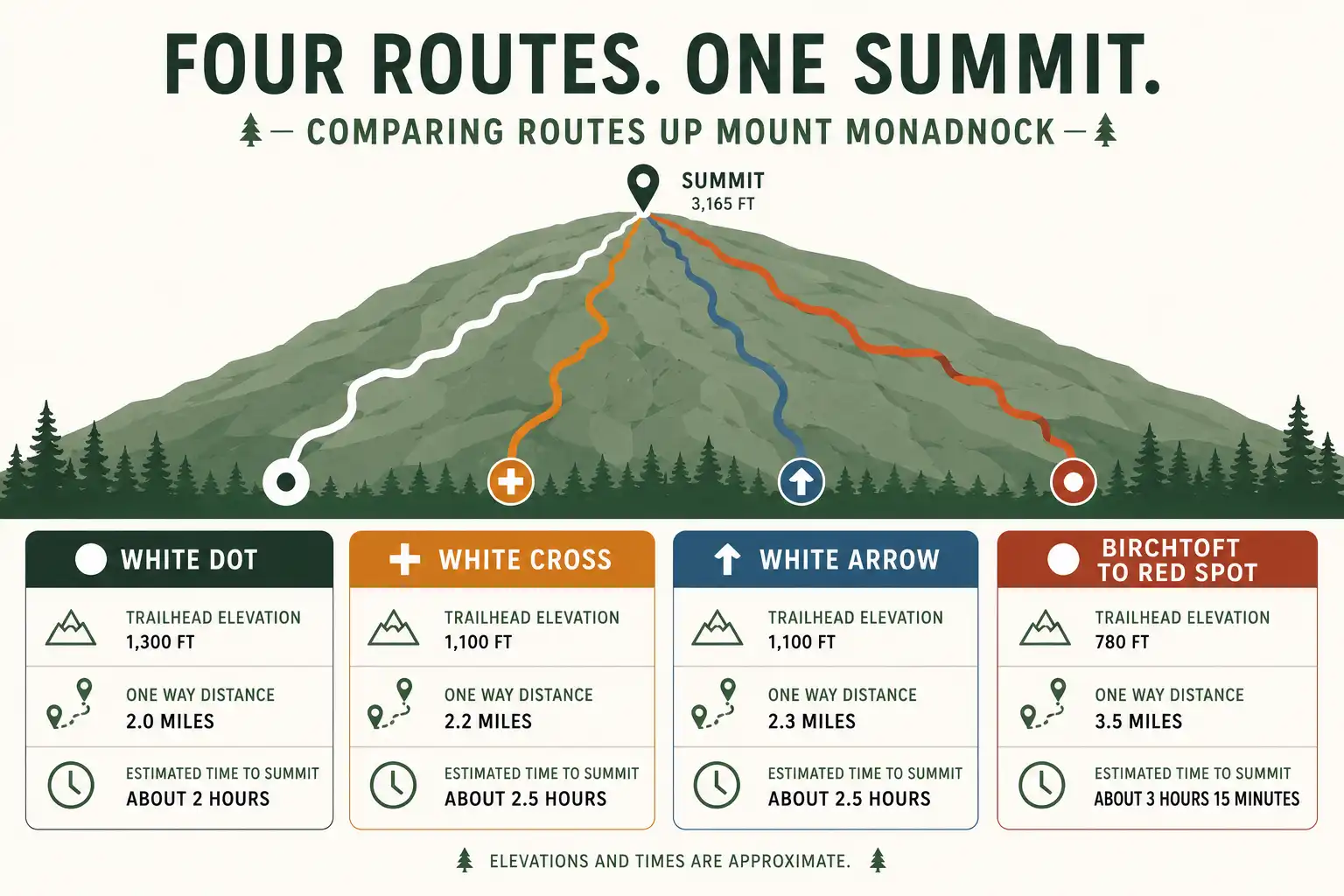
Here are the official times from the March 2026 Monadnock State Park hiking map:
| Trailhead | Route | Distance one way | Park estimate to summit | Realistic round trip |
|---|---|---|---|---|
| Park HQ (1,375 ft) | White Dot | 2.0 miles | About 2 hours | 3.5 to 4 hours |
| Park HQ (1,375 ft) | White Cross | 2.2 miles | About 2.5 hours | 4 to 4.5 hours |
| Old Toll Road (1,485 ft) | White Arrow | 2.3 miles | About 2.5 hours | 4 to 4.5 hours |
| Gilson Pond (1,200 ft) | Birchtoft to Red Spot | 3.5 miles | About 3 hours 15 minutes | 5 to 6 hours |
The park itself describes the standard hike from headquarters as 4 miles and 4 hours round trip. Its Gilson Pond booking page calls that route a 6 hour hike. So treat 3 hours as fast, 4 hours as normal, and 5 hours as completely reasonable.
Learn more: What Clothes to Wear for Hiking
Why do 2 miles take 2 hours?
Because you climb 1,790 feet in those 2 miles. That works out to a 17 percent average grade, and much of the trail crosses bare granite rather than dirt. Your pace drops to roughly one mile per hour, which surprises people who hike flat trails at three.
Three things eat the clock:
- Sustained steepness. There is no flat recovery section after the first half mile. The grade just continues.
- Rock, not tread. You step up stone staircases and walk across angled slab. Each step costs more energy than a normal stride.
- Exposure near the top. The final third sits above treeline. You follow cairns across open rock, and wind slows you down.
For context on the climbing alone, 1,790 feet of gain in two miles sits well above what most day hikers meet on a typical trail. If you want a benchmark, my notes comparing what counts as serious elevation gain put Monadnock firmly in the demanding half of day hikes.
How long does the White Dot Trail take?
The White Dot Trail takes about 2 hours up for an average hiker in decent shape. Fit hikers do it in 75 to 90 minutes. Beginners and families often need 2.5 to 3 hours.
Here is roughly how those two hours break down:
- Trailhead to the lower White Cross junction (0.6 miles): 20 to 25 minutes. Wide, rocky, moderate.
- Up to the halfway sign (about 1 mile): another 25 to 30 minutes. The grade steepens noticeably.
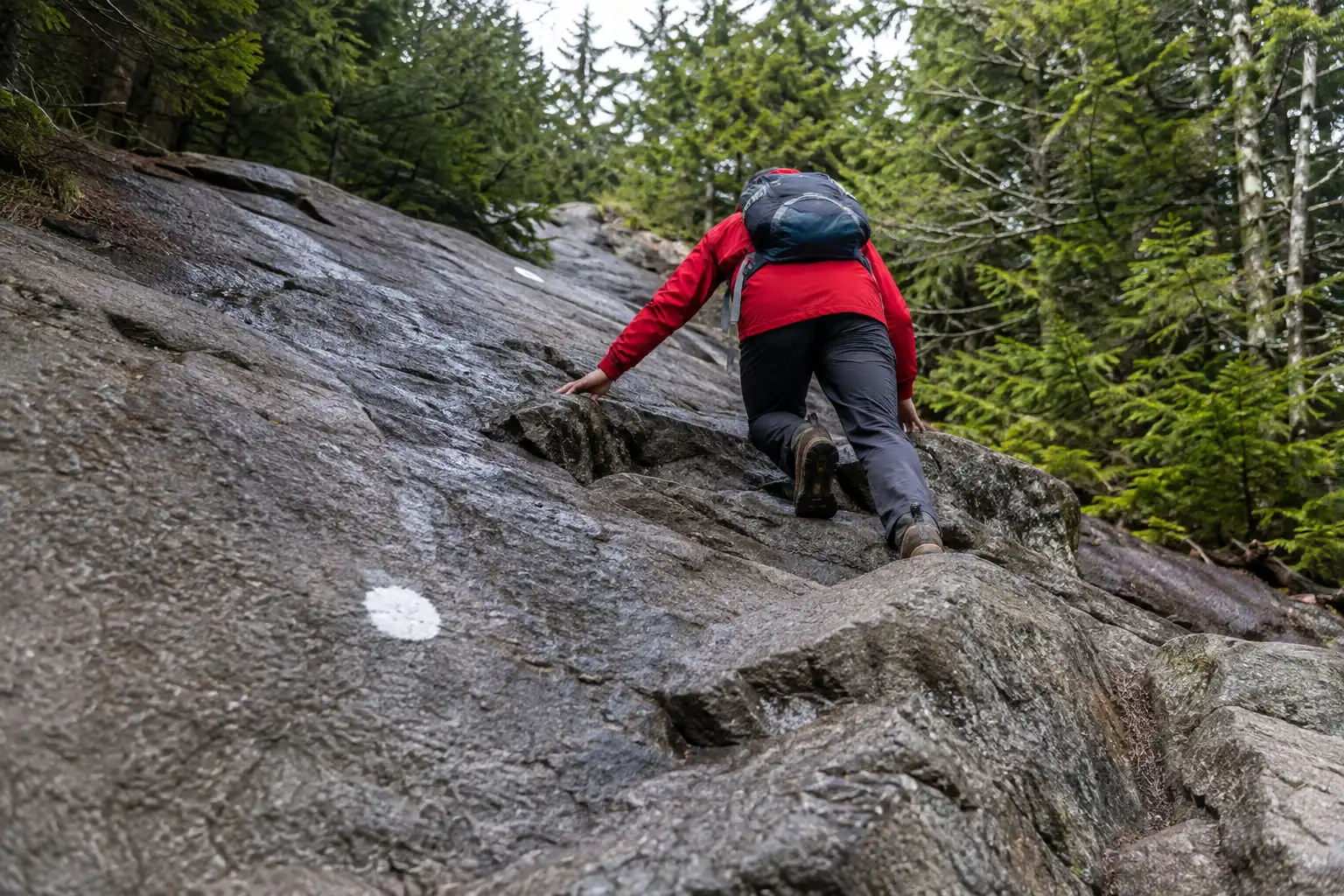
- The steep middle (1.0 to 1.6 miles): 35 to 45 minutes. This is the hardest stretch, with short hands-on sections.
- Above treeline to the summit (final 0.4 miles): 20 to 25 minutes across open rock, following cairns.
Those short hands-on sections catch people off guard. They are not technical, but they do require you to use your hands on rock. Never met that kind of terrain before? Then understanding what scrambling on a trail involves will help you judge your own pace honestly.
How long does the descent take?
Coming down takes 1.5 to 2 hours for most hikers, so plan on roughly the same time you spent climbing. Monadnock does not reward speed on the way down. The rock stays steep, and wet granite gets genuinely slippery.
Most people descend the White Cross Trail instead of the White Dot. White Cross runs 2.2 miles and avoids the steepest scrambles, though it stays rocky the whole way. The extra 0.2 miles usually saves you time and knees.
Speaking of knees, this descent punishes them. Two thousand feet of downhill on rock adds up fast, and hiking poles genuinely help here. Do your joints usually complain afterward? Then learning how poles take pressure off your knees is worth ten minutes before your trip.
How long do the quieter trails take?
The quieter trails add 1 to 3 hours compared with the White Dot. They also cut the crowds dramatically, which is why regulars use them.
- Marlboro Trail (Shaker Farm Road): about 2.1 miles and roughly 2 hours up. Steep slab climbing above the first mile. Round trip runs 4 to 4.5 hours. Parking holds around ten cars, and the lot closes in winter.
- Dublin Trail (Old Troy Road): about 2.2 miles up. Similar timing to Marlboro, with bouldering near the top. Roadside parking is extremely limited.
- Pumpelly Trail (Lake Road, Dublin): the longest direct route at roughly 4.4 miles one way. Trail Finder lists it at 7 hours round trip. The first 1.8 miles roll gently, then the ridge climbing starts.
- Birchtoft to Red Spot (Gilson Pond): 3.5 miles and about 3 hours 15 minutes up per the park map. Budget 5 to 6 hours round trip.
One important detail: your reservation determines your trail. An Old Toll Road pass gives no direct access to White Dot. A Gilson Pond pass gives no access to White Dot or White Cross at all. Book the headquarters lot if you want the standard route.
How much longer does Monadnock take in winter?
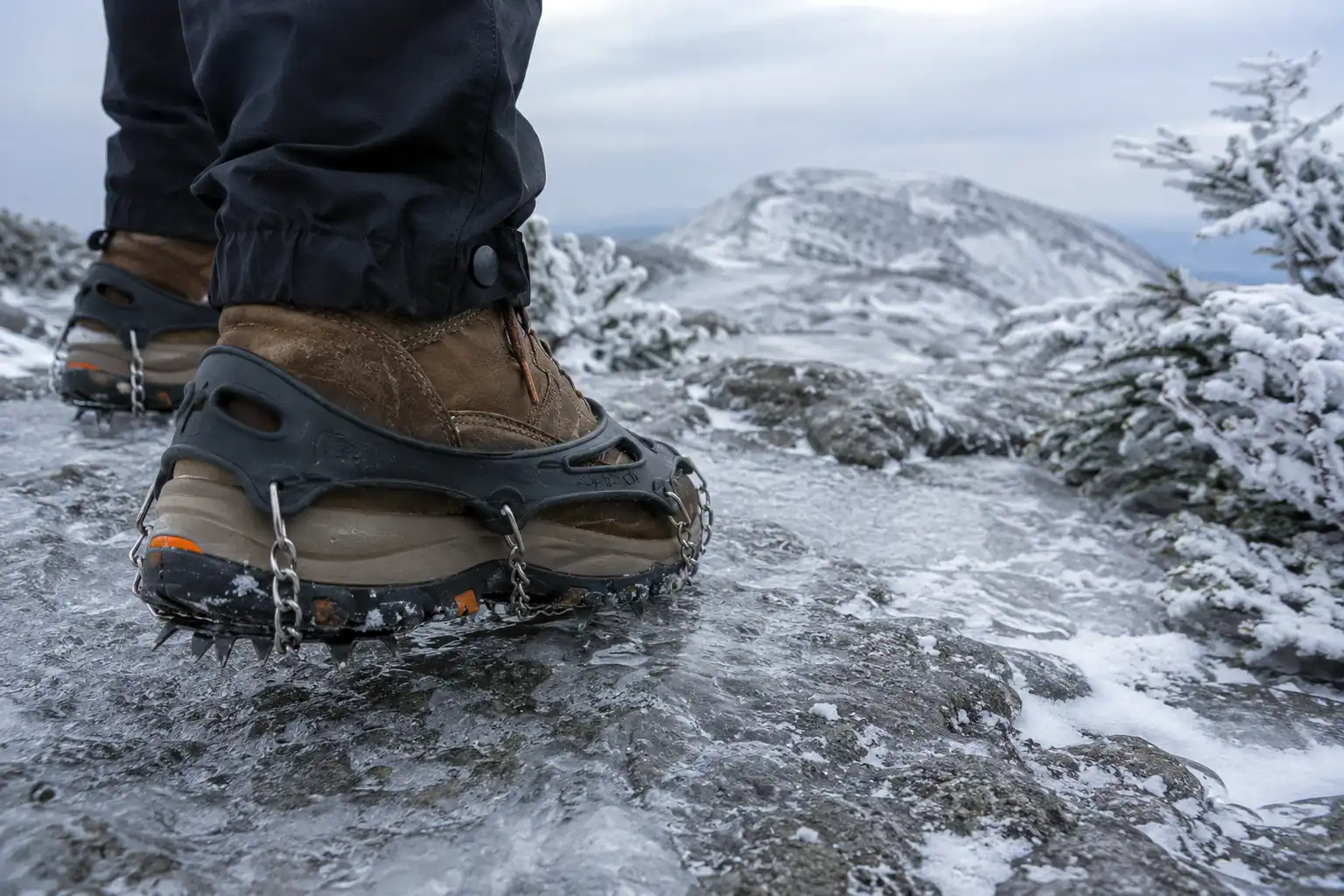
Winter adds 50 to 100 percent to your time, so budget 5 to 7 hours instead of 3 to 4. Monadnock State Park recommends microspikes for winter and spring, and hikers regularly report needing traction from the parking lot all the way up.
Several factors stack up. Ice covers the slab. The packed snow gets glazed by afternoon refreeze. Descending demands more care than climbing, and daylight runs short. Hikers who summit in 2 hours during July commonly need 3 hours in February.
The summit also gets brutally windy with nothing to block it. Temperatures up top can run 20 degrees colder than the parking lot. Sorting out how to layer for cold wind above treeline matters more here than the extra hour does.
What time should you start?
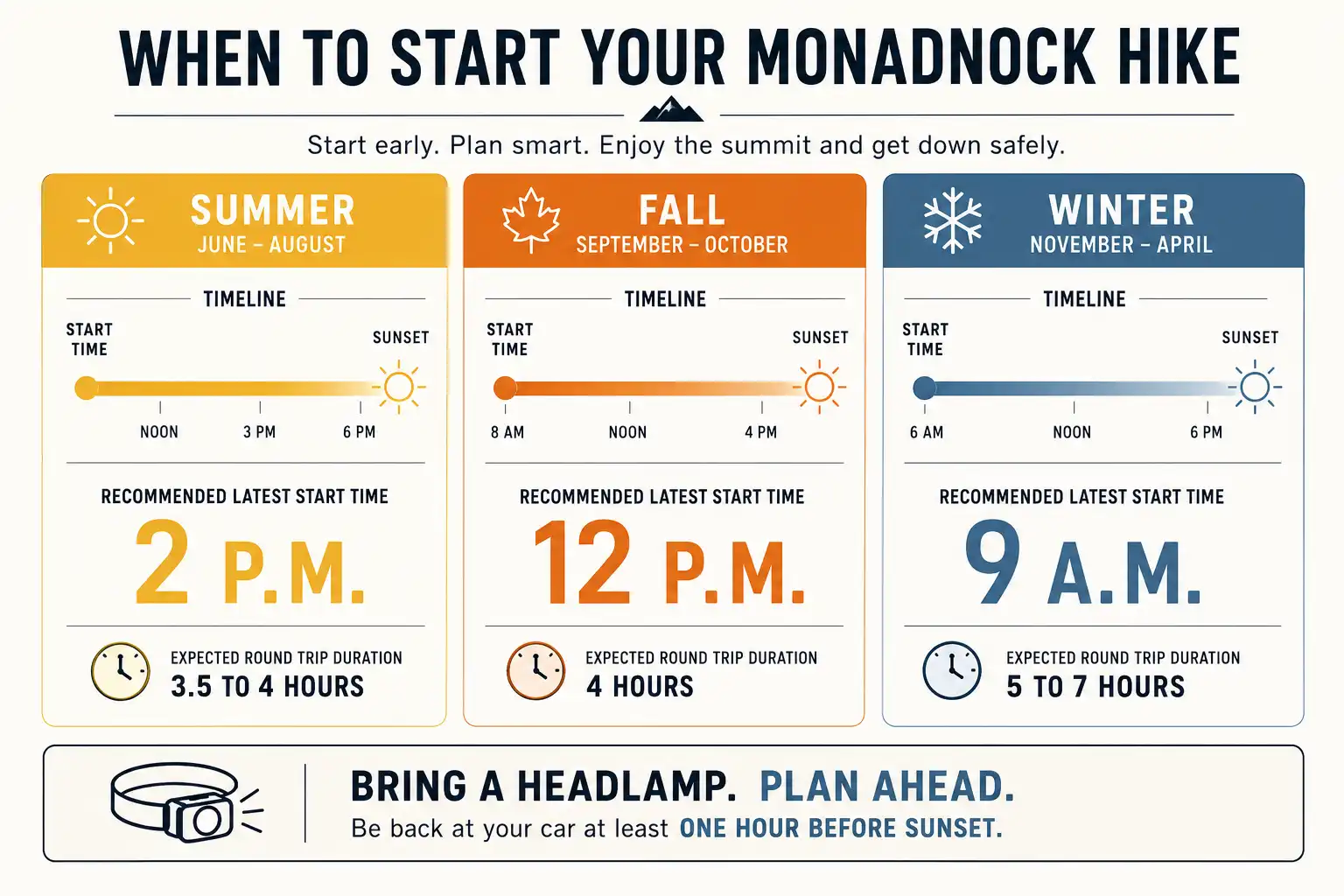
Start early enough to be back at your car one full hour before sunset. Work backward from that, not forward from breakfast.
Practical start times by season:
- June to August: any time before 2 p.m. works for the standard loop. Before 9 a.m. gets you parking and cooler rock.
- September to October: start by 12 p.m. Sunset arrives around 6 p.m. in early October and earlier by month end.
- November to February: start by 9 a.m. You lose daylight by 4:30 p.m., and winter pace runs slower.
New Hampshire Fish and Game has rescued hikers who started too late on this mountain. In one case a hiker began at 6 p.m. and got caught in darkness on the White Arrow Trail. She then fell off a twenty foot ledge while trying to descend without a light. Cell coverage on Monadnock runs poor, so never treat your phone as a backup plan.
Carry a real headlamp regardless of your start time. Knowing how to finish a hike safely in the dark turns a bad situation into a slow one instead of a rescue.
What slows most hikers down?
Five things account for nearly every blown time estimate on Monadnock:
- Forgetting summit time. People budget 4 hours of walking, then spend 45 minutes eating and taking photos on top. That is a 4 hour 45 minute day.
- Group pace. You move at the speed of your slowest member. A group of six moves slower than any individual in it.
- Wet rock. After rain, the slab demands careful footing. Descents stretch by 30 to 45 minutes easily.
- Descending the White Dot. The steep upper section works far better as a climb than a downclimb.
- Weekend crowds. On peak October Saturdays, you queue behind other hikers at the narrow scrambles.
Footwear matters too. Trail runners or hiking shoes with real grip handle Monadnock fine. Smooth-soled sneakers do not, and people wearing them slow their whole group down.
What you need to know before you go
Monadnock State Park charges $15 per vehicle for day use, covering a non-commercial vehicle with up to 6 occupants. Advance reservations cost an extra $1 and open 30 days before your date.
Key rules and logistics:
- The park sells out on weekend days from April through November. Visitors without reservations get turned away once the lot fills.
- You cannot park elsewhere and walk in. The park states this explicitly.
- No pets anywhere in the park, including all trails within park boundaries.
- Season pass holders are covered individually. Other occupants in the vehicle pay $5 each.
- Drones are prohibited at all New Hampshire state parks.
- Camping happens only in designated campsites. Camping on the mountain breaks state law.
- Park headquarters at 169 Poole Road, Jaffrey, stays staffed year-round. Call 603-532-8862 for current trail conditions before you drive out.
There is no water on the mountain and no bathrooms above the trailhead. Carry two to three liters per person in summer. Beyond water, a short checklist of what belongs in your day pack covers the rest.
FAQs about Hiking Mount Monadnock

Can you hike Mount Monadnock in 2 hours?
Is Mount Monadnock hard for beginners?
How long does it take with kids?
Do I really need a parking reservation?
The bottom line
Budget 4 hours for Mount Monadnock and you will rarely be wrong. The White Dot Trail runs 2 miles with 1,790 feet of gain, which the park times at 2 hours up. Add a similar descent, plus time on the summit, and a normal day runs 3.5 to 4.5 hours. Winter pushes that toward 6. Book your parking ahead, wear shoes with grip, carry a headlamp, and start early enough that darkness never enters the picture.
A note on my experience: I hike the steep, rocky hill country of Bandarban and Rangamati in Bangladesh. That includes Keokradong and Saka Haphong, where the grades and bare rock resemble what Monadnock throws at you. However, I have not personally climbed Monadnock. Every time, distance, fee, and rule here comes from the official park hiking map revised in March 2026. I also cross-checked the park’s reservation pages and reports from regular Monadnock hikers.