How to Fluff Up a Synthetic Sleeping Bag: 5 Steps That Work

My synthetic bag came out of storage last November looking like a deflated pool float. It still worked fine, but it needed help first. Below I cover how I bring loft back to a flat synthetic bag. You will also learn which methods work and when the fill has aged out.
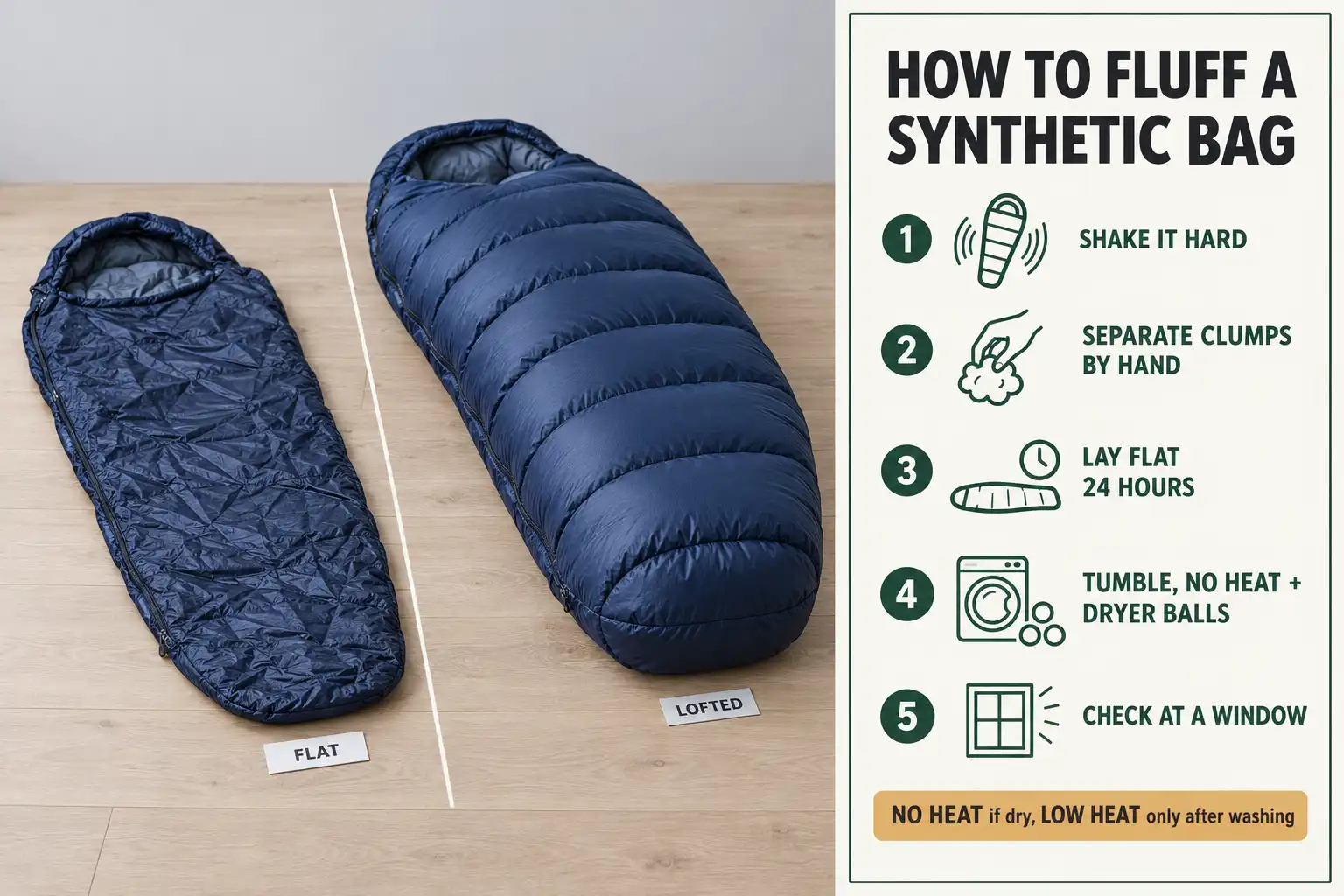
Shake the bag out hard, separate clumped fill with your fingers, then lay it flat for a full day. If it stays flat, tumble it in a large dryer on no heat with two or three dryer balls for 20 to 30 minutes. Wash it only if that fails.
Why does a synthetic sleeping bag go flat?
A synthetic sleeping bag goes flat because crushed, tangled, or coated polyester fibers cannot hold air properly.
Loft simply means trapped air. The fill creates thousands of tiny pockets, your body warms that air, and the air keeps you warm. That is the whole system, and it explains why a sleeping bag holds body heat only when it is thick and springy.
Three things flatten it:
- Long compression. Leaving a bag stuffed in its sack for months crushes the fibers. REI notes that both fill types lose resiliency after months in a compressed state. Synthetics fare worse than down here.
- Body oils and grime. Sweat, skin oil, and sunscreen coat the fibers and glue them together. The fill stops springing back.
- Trapped moisture. A bag packed away slightly damp comes out matted and musty. That is a drying problem, not a fill problem.
Fiber age is the fourth cause, and it does not reverse. More on that below.
How do you fluff up a synthetic sleeping bag?
You fluff up a synthetic sleeping bag by working through five steps in order, from zero risk to highest risk. Start at the top. Most bags recover by step three, so there is no reason to reach for heat or soap right away.
Step 1: Shake the bag out hard
Hold the bag by the foot box and shake it in long, whipping motions. Then flip it and shake from the hood end. Do this for a minute or two.
Next, hold it by the sides and snap it like a bedsheet. This forces air through the batting and loosens compressed fibers. After a hard shake, a bag that spent one weekend in a stuff sack often looks normal again.
Step 2: Separate clumped fill with your fingers
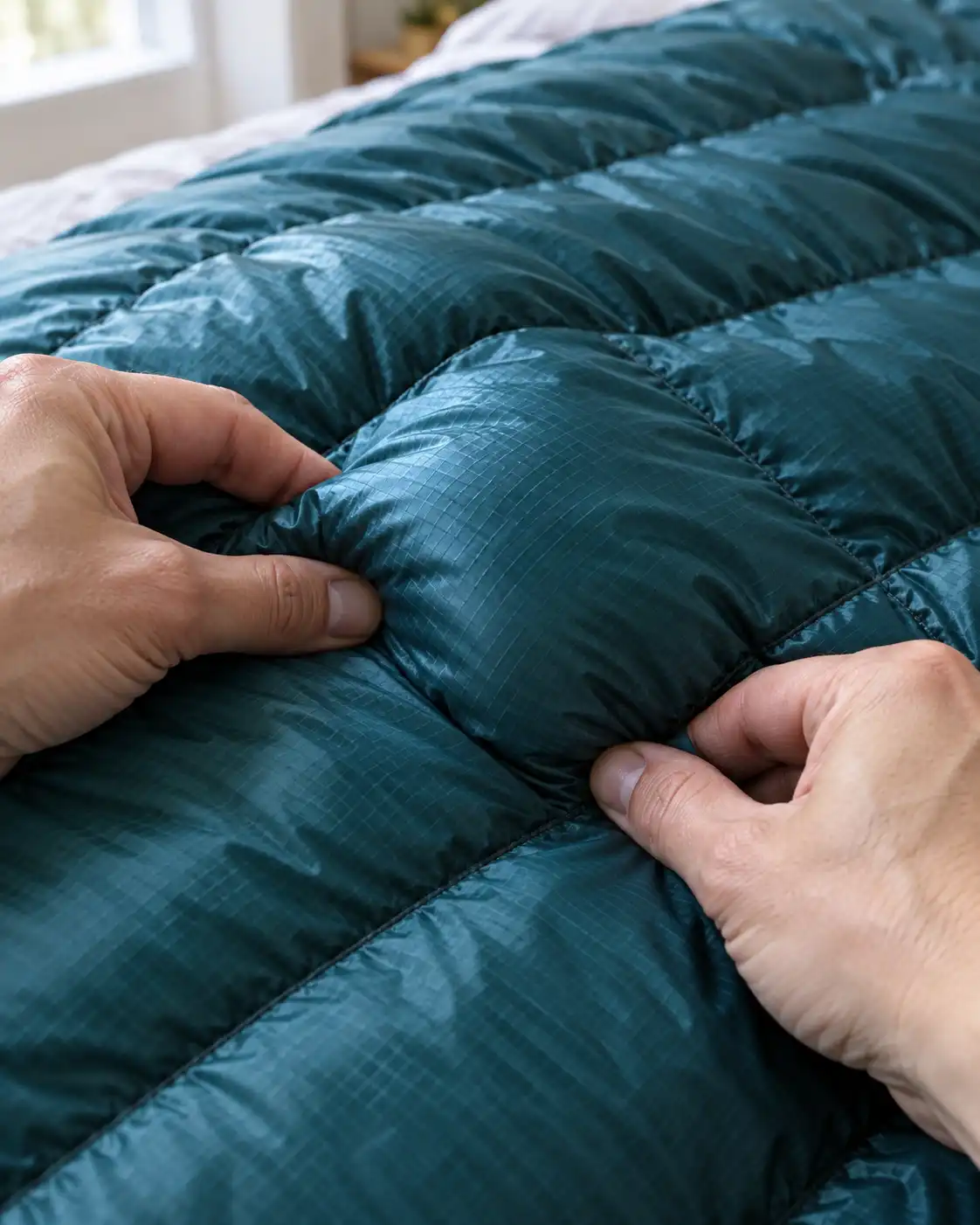
Lay the bag flat and run your palms across every panel. You will feel dense lumps and thin gaps between them. Pinch each lump gently through the shell fabric and pull it apart.
Work slowly along the baffles. Manufacturers bond synthetic fill into sheets, so you are not moving it around like down. Instead, you are unsticking fibers that matted together. Pay extra attention to the foot box and the shoulders, which take the most compression.
Step 3: Lay the bag flat for a full day
Spread the bag open on a bed or a clean floor for 24 hours. Polyester recovers slowly, so patience does real work here. Turn it over halfway through.
Airflow matters more than time. I live in Kaptai where the air stays damp most of the year, so I do this indoors with a fan running instead of outside. Damp air will not dry anything. If your bag also smells stale, the same principles behind drying damp gear fast at the campsite apply at home too.

Step 4: Tumble it with dryer balls
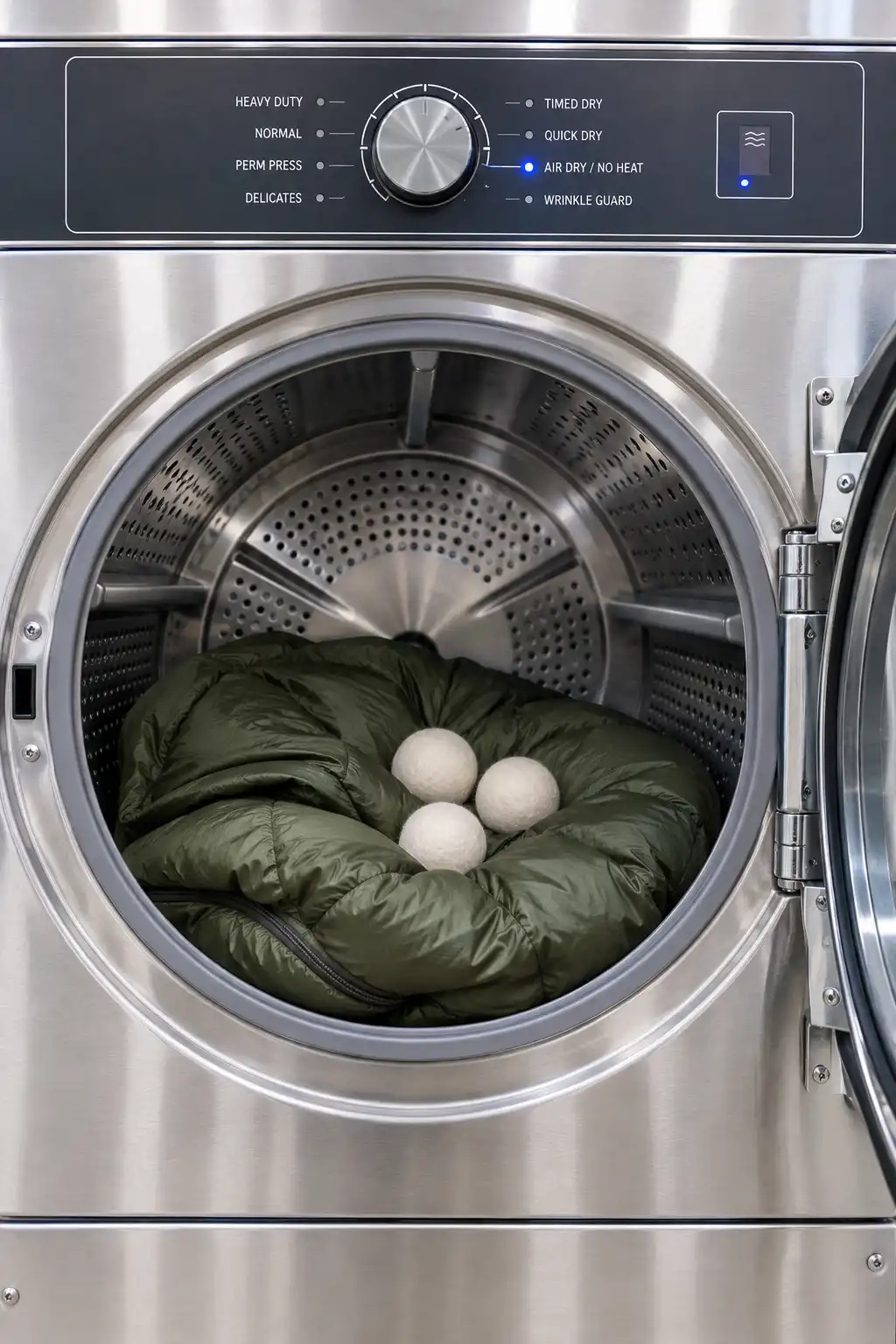
Put the bag in a large front-loading dryer with two or three wool dryer balls. Run it on air only, no heat, for 20 to 30 minutes. The balls bounce around and knock the matted fibers apart mechanically.
Size matters here. The bag needs room to tumble and expand, otherwise it just presses against the drum and nothing happens. Home dryers are usually too small for a winter bag, so a laundromat machine works better. Stop every 10 minutes, pull the bag out, and fluff it by hand before putting it back.
Step 5: Hold the bag up to a window
Take the bag to a bright window and hold it up. Light should not pass through the insulated panels. Any spot where you see daylight is a cold spot, and cold spots are where you will feel the ground at 3 a.m.
If you find a few, go back to step two and work those panels specifically. Persistent thin spots after a full cycle usually mean the fill has shifted or broken down permanently.
Should you use heat in the dryer or not?
Use no heat for a bag that is clean and dry, and low heat only for a bag you just washed. That split keeps the risk near zero while still getting the job done.
Heat is the one thing that can destroy a synthetic bag in minutes. REI warns that a dryer running too hot can melt the shell fabric or even the synthetic fill. Thin nylon shells melt long before you notice a smell.
So why use heat at all? Because a washed bag needs it. Big Agnes points out that synthetic bags need some heat to reactivate the water-repellent finish on the shell after a wash. Low heat, checked every 15 minutes, handles that.
For a dry bag that is simply flat from storage, heat adds nothing. The tumbling does the work, not the temperature.
Tennis balls or dryer balls? Both break up clumps. However, tennis balls hit harder, and modern lightweight fill is more fragile than the heavy synthetic batting of 30 years ago. Wool dryer balls are the gentler choice. If you only have tennis balls, use clean ones so no dye or fuzz transfers.
When should you wash a synthetic bag to bring back loft?
Wash the bag when the fill feels greasy, the hood looks darkened, or shaking and tumbling stopped helping. Dirt and body oil coat polyester fibers and stop them from springing back, and only a wash removes that film.
Get the details right or you will make things worse:
- Use a technical cleaner such as Nikwax Tech Wash. Regular detergent leaves residue that flattens fill further.
- Skip fabric softener, dryer sheets, and bleach completely. They coat fibers and wreck the shell’s water repellency.
- Use a front-loading machine. An agitator can rip seams and baffles.
- Rinse at least twice. Leftover soap is a common cause of stubborn flatness.
- Support the whole bag when you lift it out wet, not one end.
Synthetic fill dries far faster than down. Expect roughly an hour or two on low heat instead of an afternoon. Water temperature and soap quantity matter as well, so wash a sleeping bag without wrecking the fill by following the full process.
What should you never do to a flat synthetic bag?
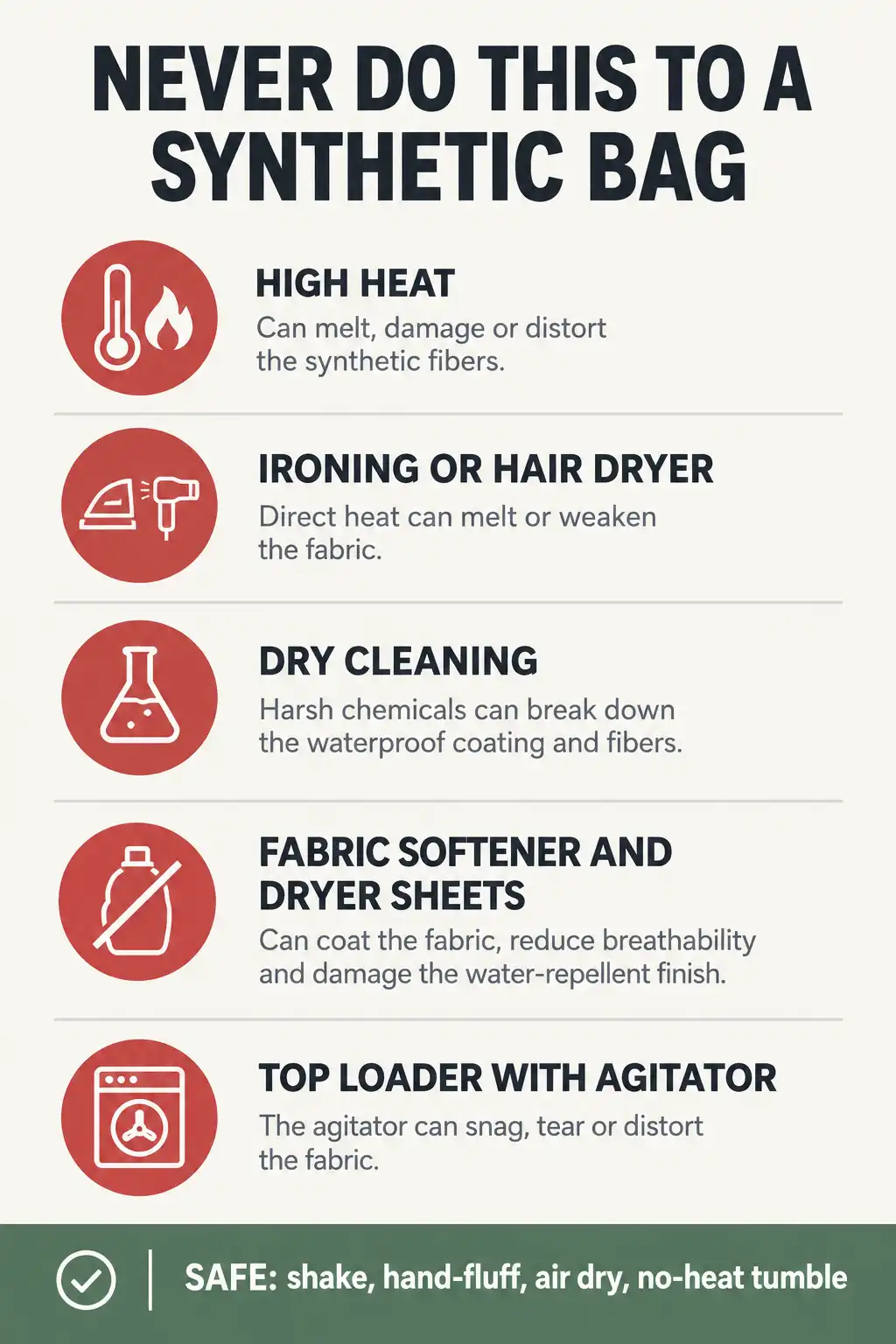
Never apply high heat, harsh chemicals, or blunt force. Each one causes damage you cannot undo, and none of them restore loft.
Avoid these:
- High heat. Melted fill and shrunken shells are permanent.
- Ironing or a hair dryer held close. Same melting risk, concentrated in one spot.
- Dry cleaning. Solvents strip finishes and weaken fibers.
- Beating it with a stick or a broom. That trick suits a cotton quilt. On a 20D nylon shell with bonded batting, it stresses seams for no gain.
- Top-loading washers with a center agitator. Seams tear easily under the weight of waterlogged fill.
- Direct midday sun for hours. UV degrades nylon and any coating on it.
How do you know the loft is gone for good?
Loft is gone for good if the bag stays thin and papery after a wash and a full tumble cycle. At that point the fibers themselves have broken, and no technique rebuilds a broken fiber.
Run this check. Lay the bag flat, let it sit an hour, then measure its thickness against what you remember or against the maker’s listed loft. Next, do the window test again. Widespread daylight through the panels after a wash means the fill is spent.
Fill type predicts a lot. Continuous filament insulation, such as Climashield Apex, uses long unbroken strands that resist compression and hold loft for years. Short-staple fills feel softer and pack smaller, but the chopped fibers shift and clump over time, which creates cold spots. Check your bag’s tag to see which one you own.
Most synthetic bags used regularly show clear loft loss somewhere in the three to seven year range. Cheap bags fade sooner. A worn-out bag can still serve for warm summer nights, though you should stop trusting its temperature rating.
How do you keep loft in a synthetic bag between trips?
Store the bag loose and dry, never compressed. This one habit protects loft better than any recovery method.
Do these four things:
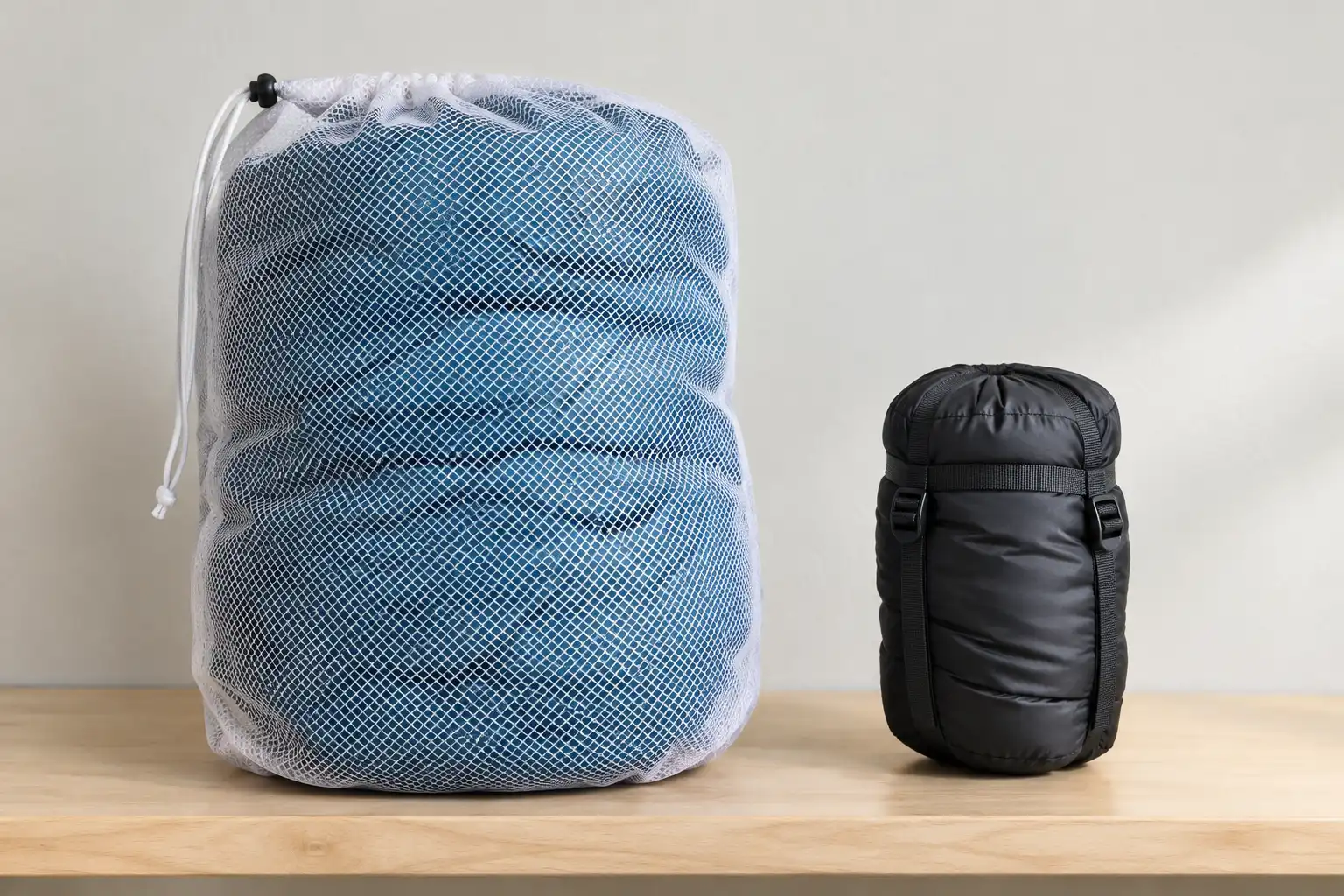
- Store it big. Hang it in a closet, or keep it in a large cotton or mesh sack. Compression sacks are for the trail only. Getting the sizing right when you are choosing a stuff sack for your kit also keeps you from over-compressing on trips.
- Dry it after every trip. Air the bag out at home before it goes away, even if it feels dry. Bags feel dry and still hold sweat.
- Use a liner. A cheap liner catches body oil and sweat before it reaches the fill. Wash the liner, not the bag.
- Sleep on a pad. Insulation under your body compresses flat no matter how new it is. The pad does that job, which is why it matters so much for staying warm inside your bag on cold nights.
On multi-day trips, I unpack my bag as soon as camp is set. Thirty minutes of loft before bedtime makes a noticeable difference. How you pack the bag into your backpack matters too, since a bag jammed into a tight compartment stays crushed all day.
FAQs about Fluffing up a synthetic sleeping bag

How long does it take to fluff up a synthetic sleeping bag?
Can I fluff a synthetic sleeping bag without a dryer?
Does a synthetic bag need less fluffing than a down bag?
Will a flat synthetic bag still keep me warm?
How often should I wash a synthetic sleeping bag?
Final Verdict
Start with the free methods. A hard shake, ten minutes of breaking up clumps, and a day flat on the floor recover most bags. Storage flatness is usually that simple to reverse. Move to a no-heat tumble with dryer balls if that is not enough, and wash the bag only when the fill feels greasy or coated. Then check your work at a window. If daylight still comes through after all that, the fill has aged out, and your next step is a new bag rather than another technique.